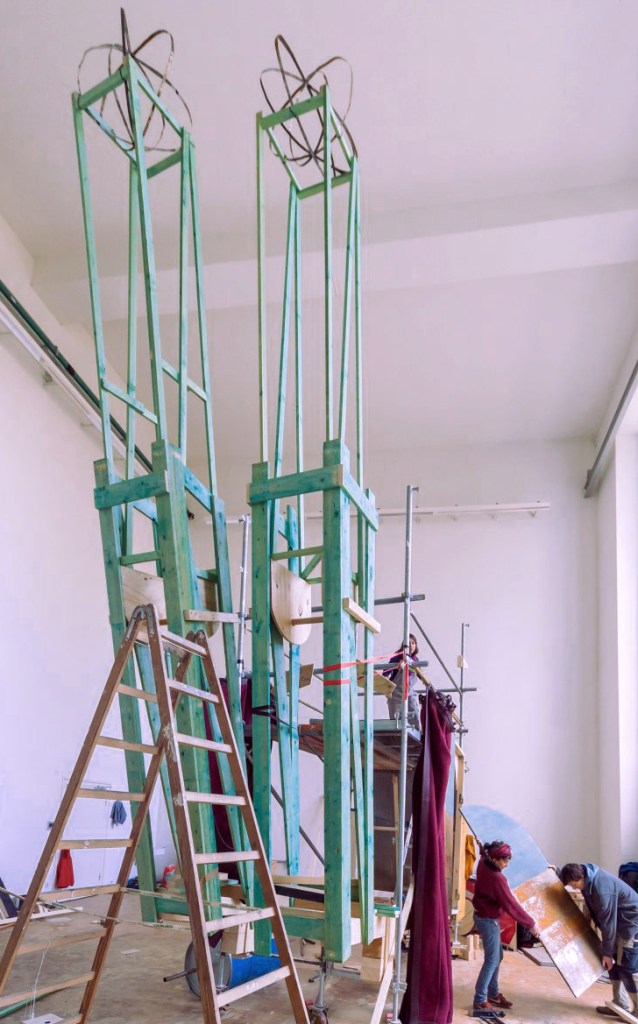
Author: elena carr

  • WIR MÜDE SCHLAFARCHITEKTUR

    WIR MÜDE SCHLAFARCHITEKTUR

  • Eine Ortsbeschwimmung // Tirol 2021

    Eine Ortsbeschwimmung // Tirol 2021

    Adapted from the 2018 Alltagsbühne Badeanstalt


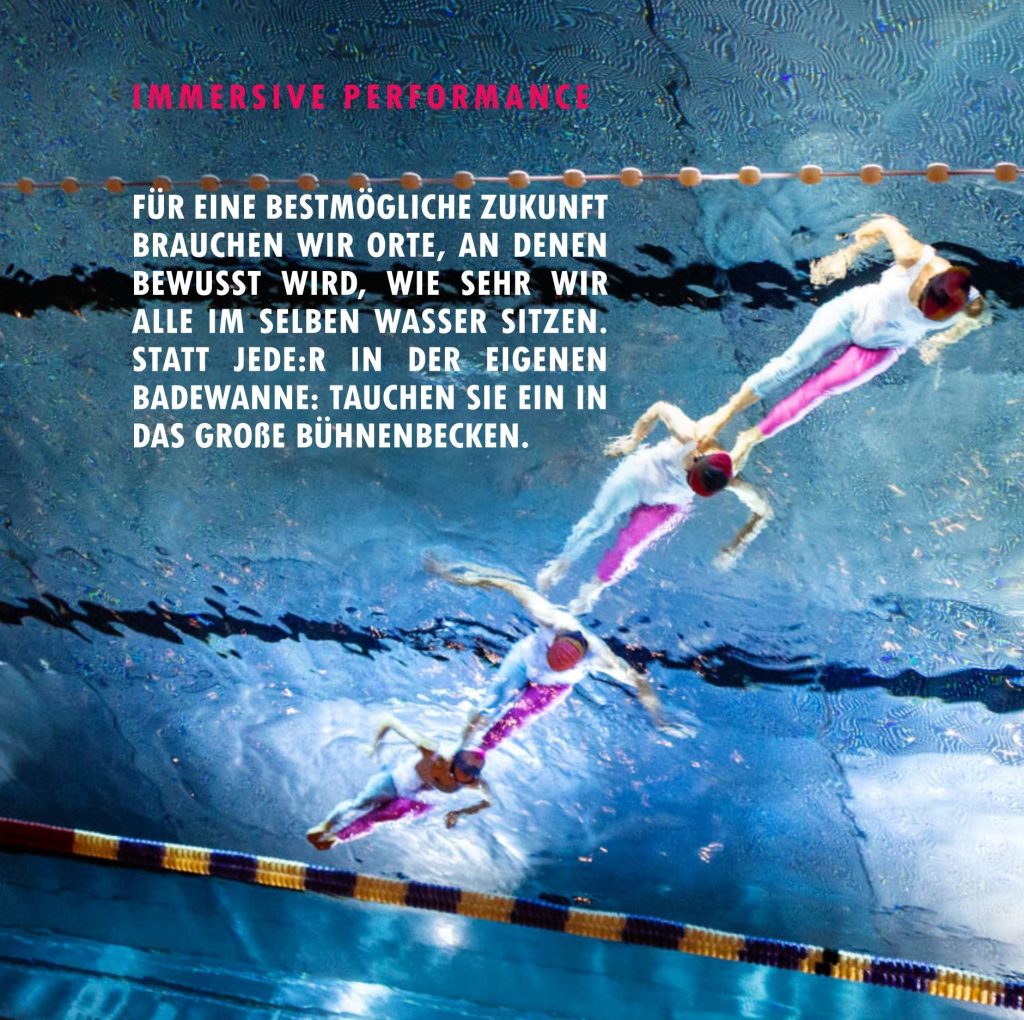
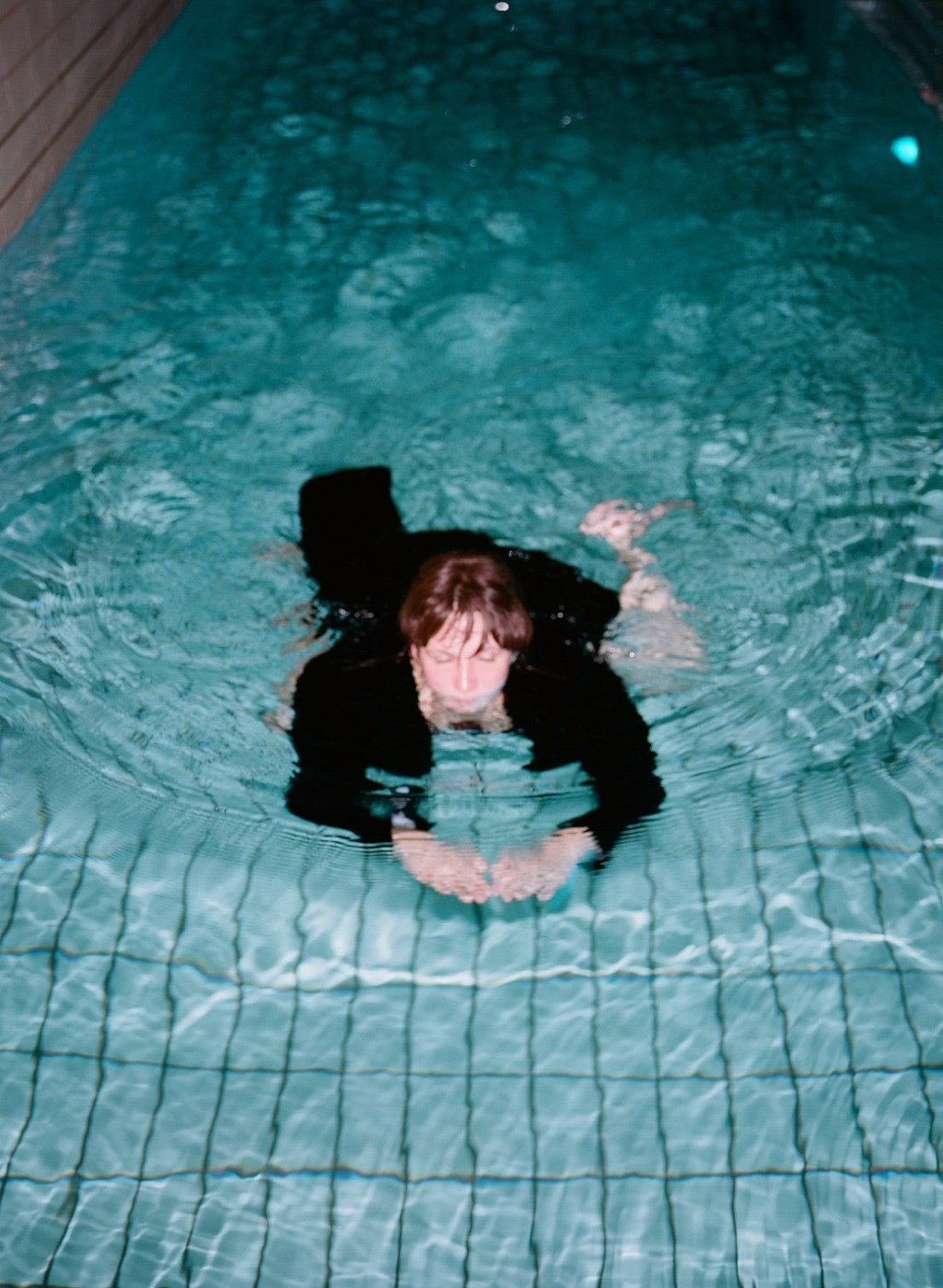
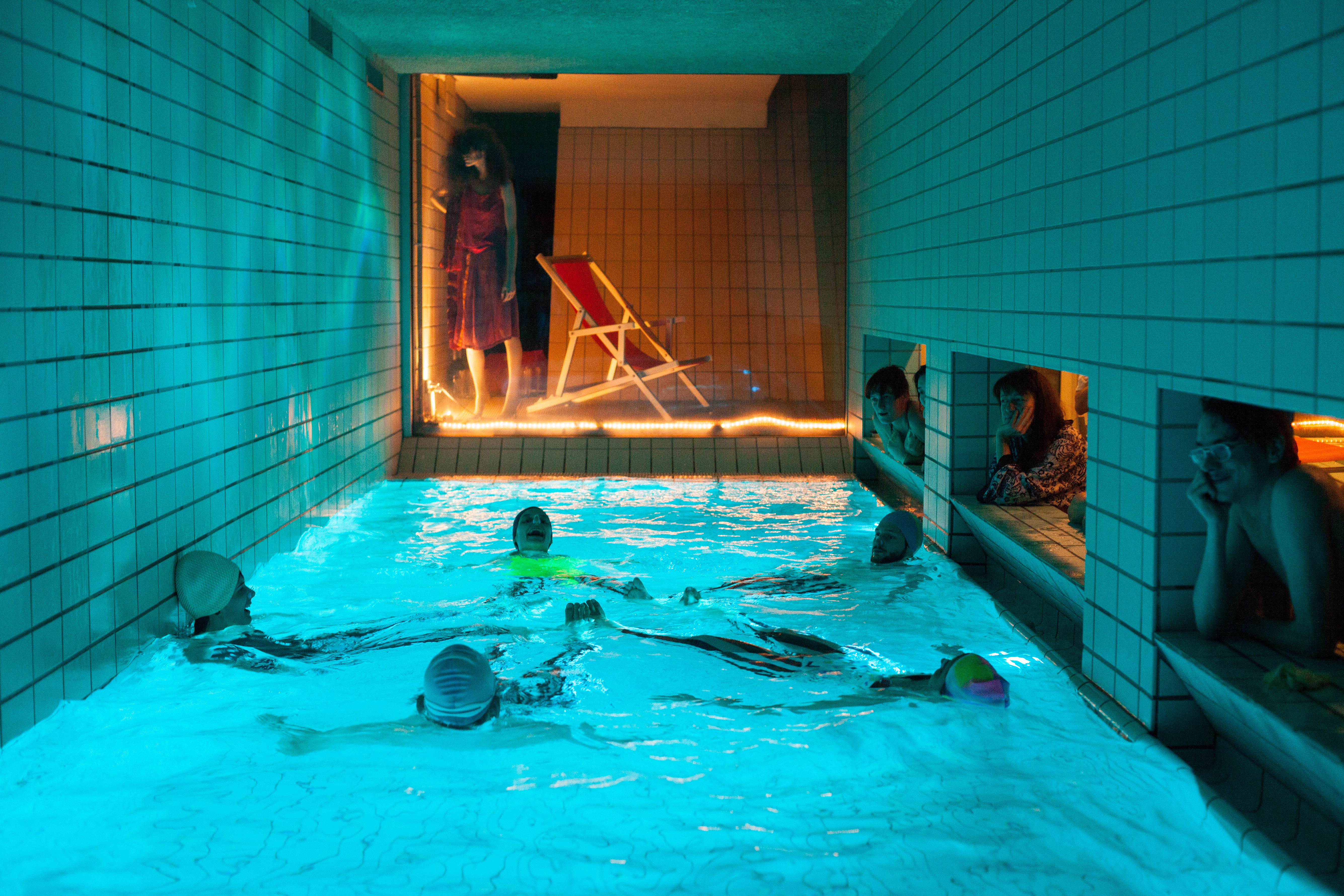
    It’s bathing season, the Ortsbeschwimmung invites you onto the liquid parquet.

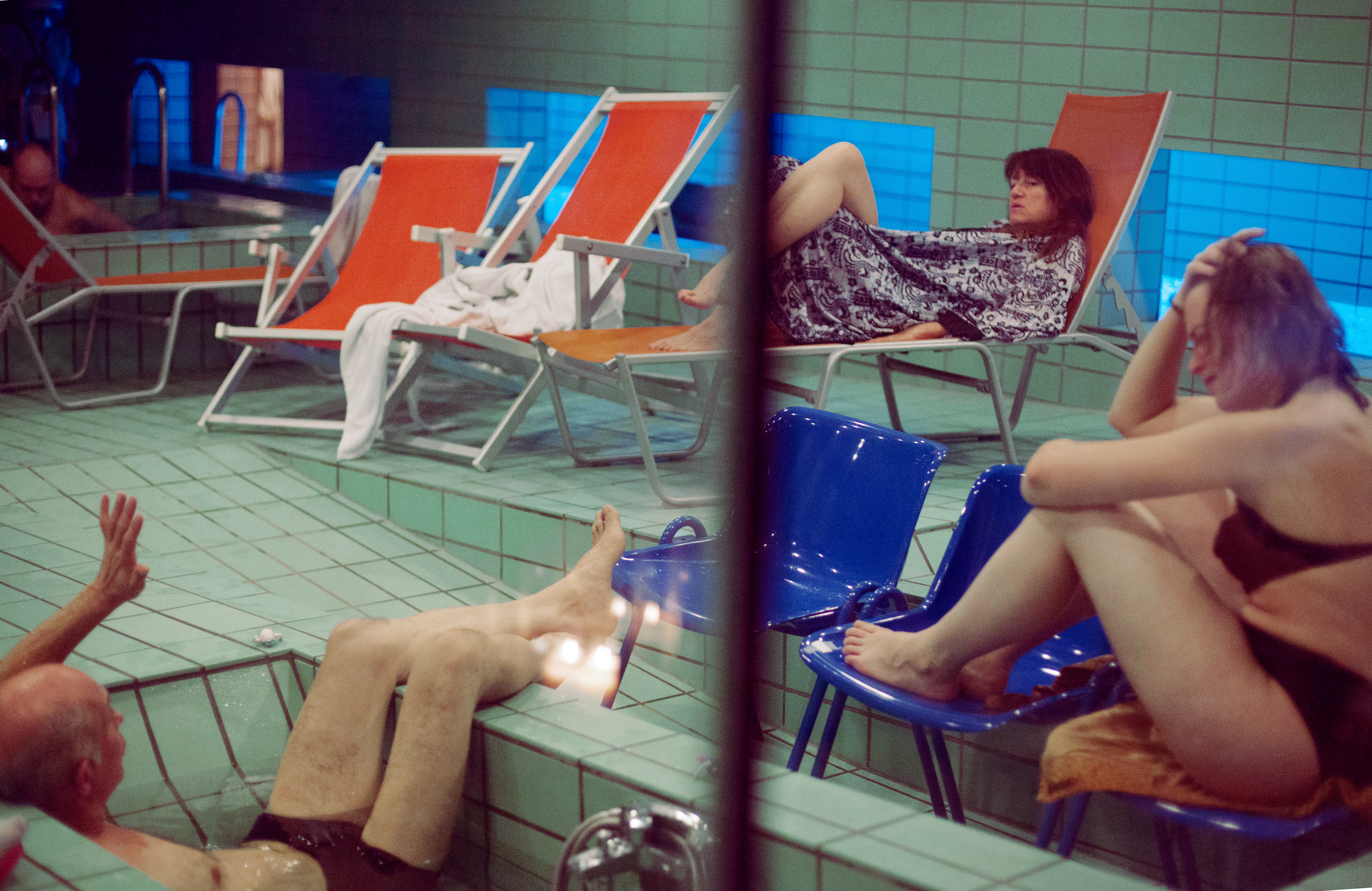
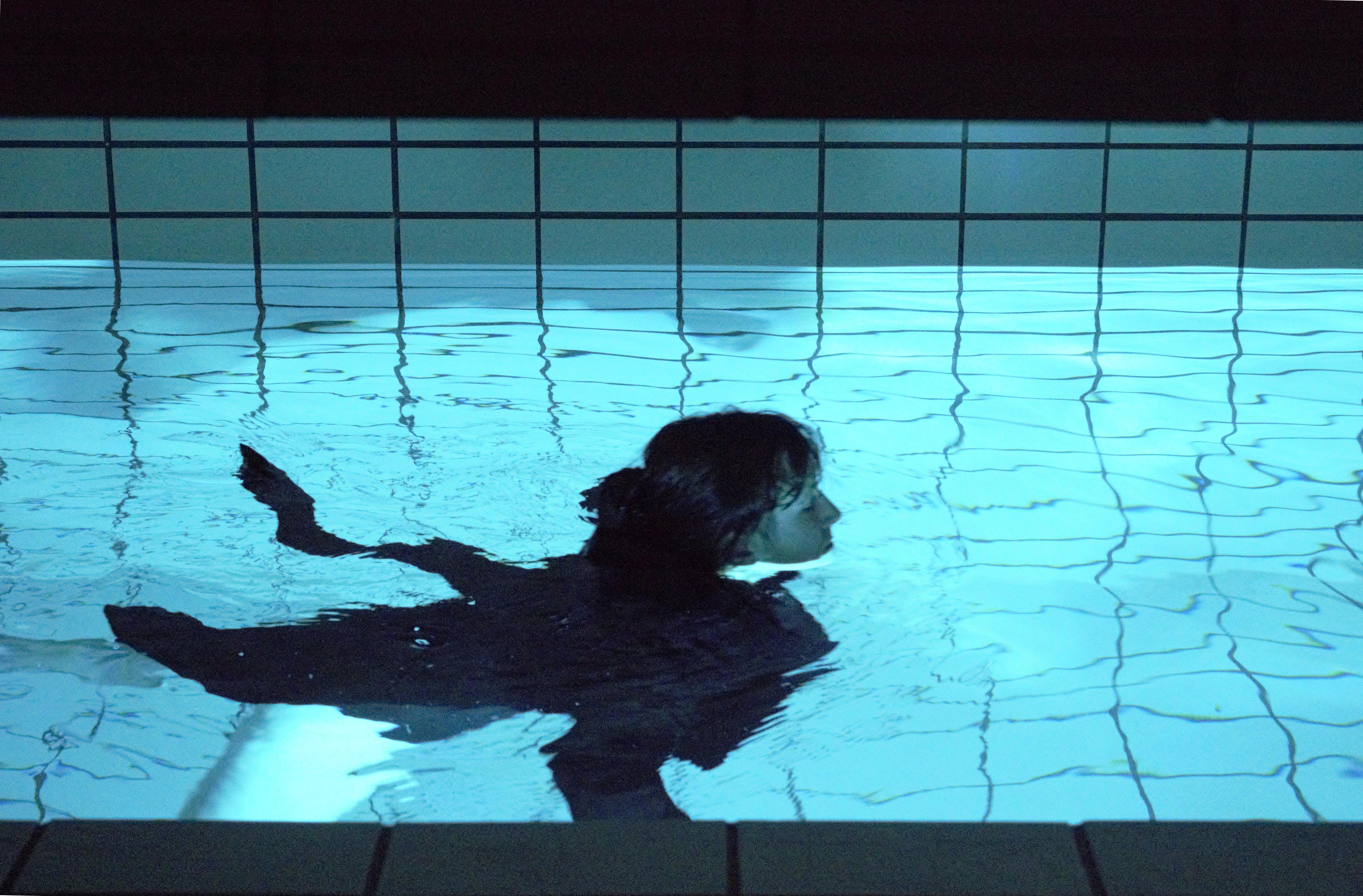
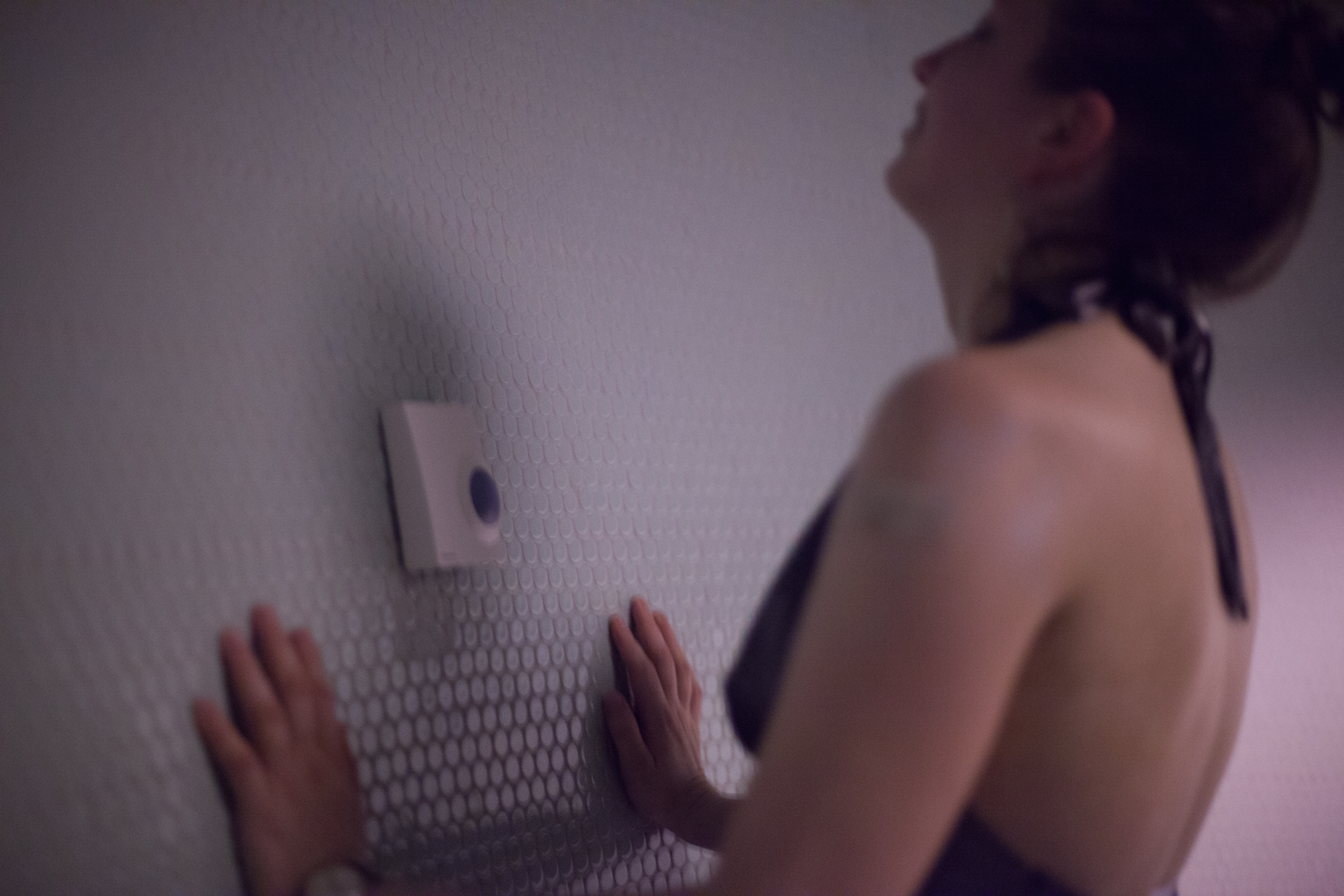
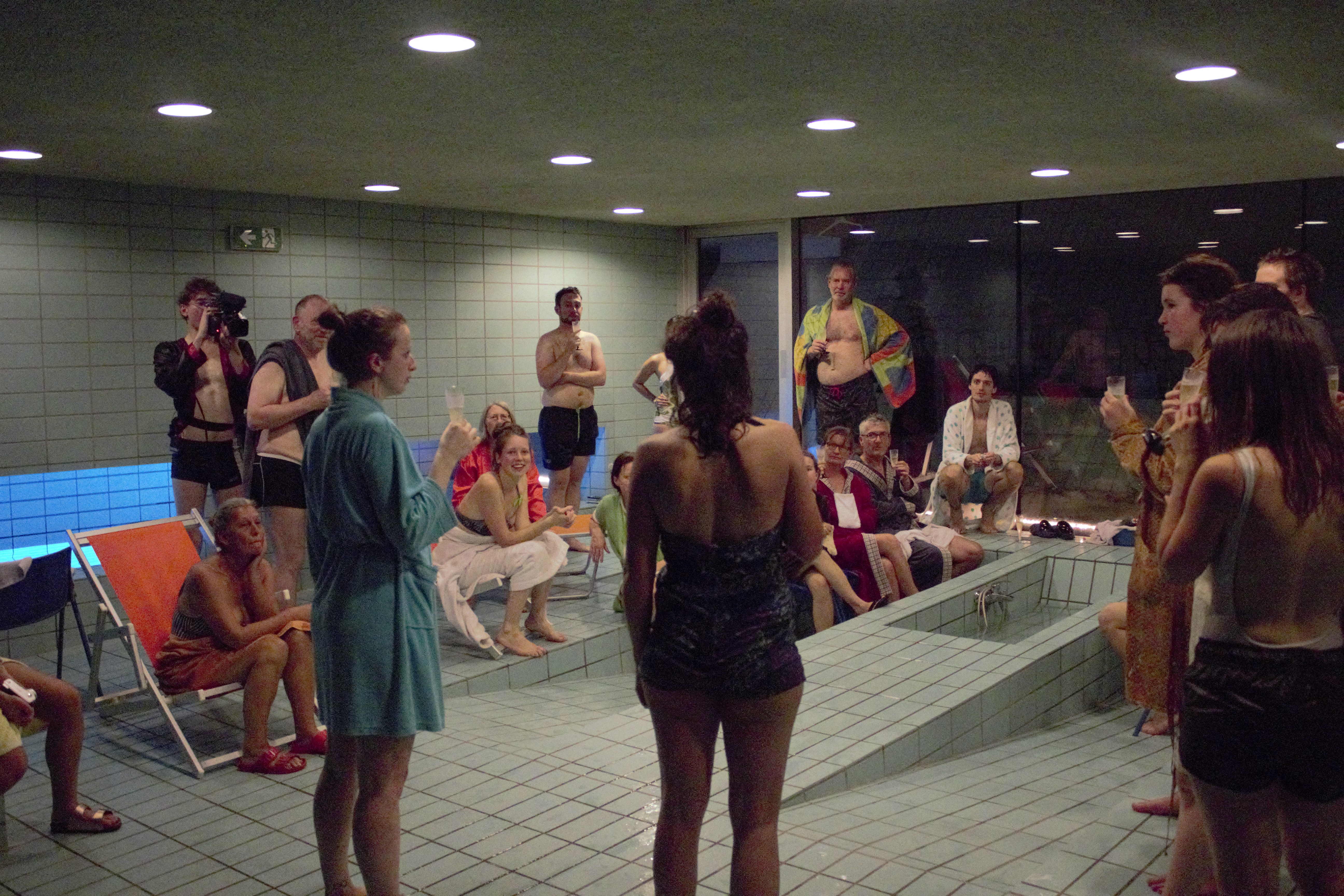
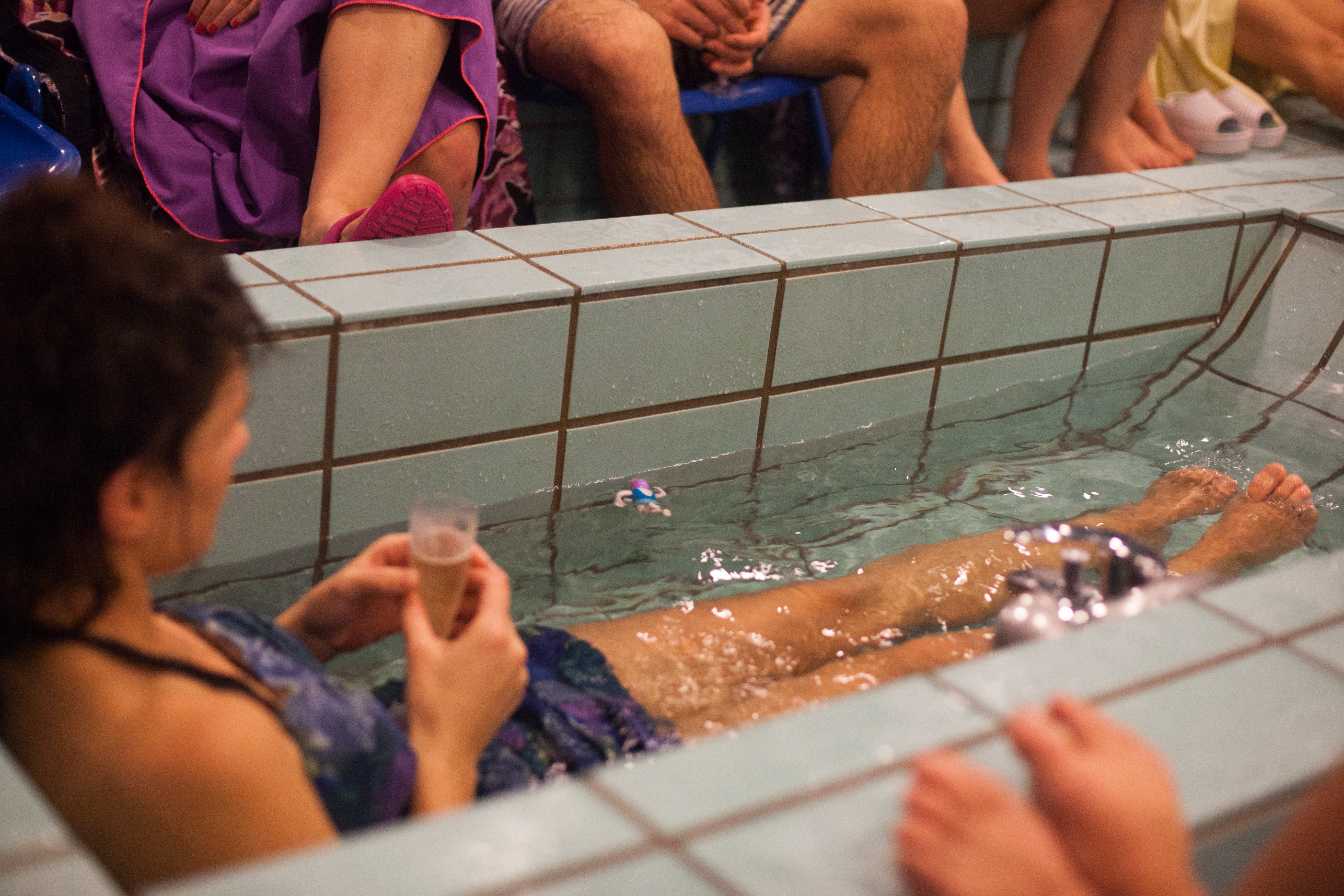
    Anecdotes from the cultural history of bathing are taken up in order to recognise the calming visit to the swimming pool as a strategy of everyday coexistence and thus to cultivate the common. We reactivate a past, collective ritual of bathing. Instead of everyone in their own bathtub: immerse yourself in the large stage pool, listen to the language of the performers that your body will understand. How you should sit in the sauna will be shown to you by the performer who has been assigned to you, watch the aquatic activities and find your own personal variation.
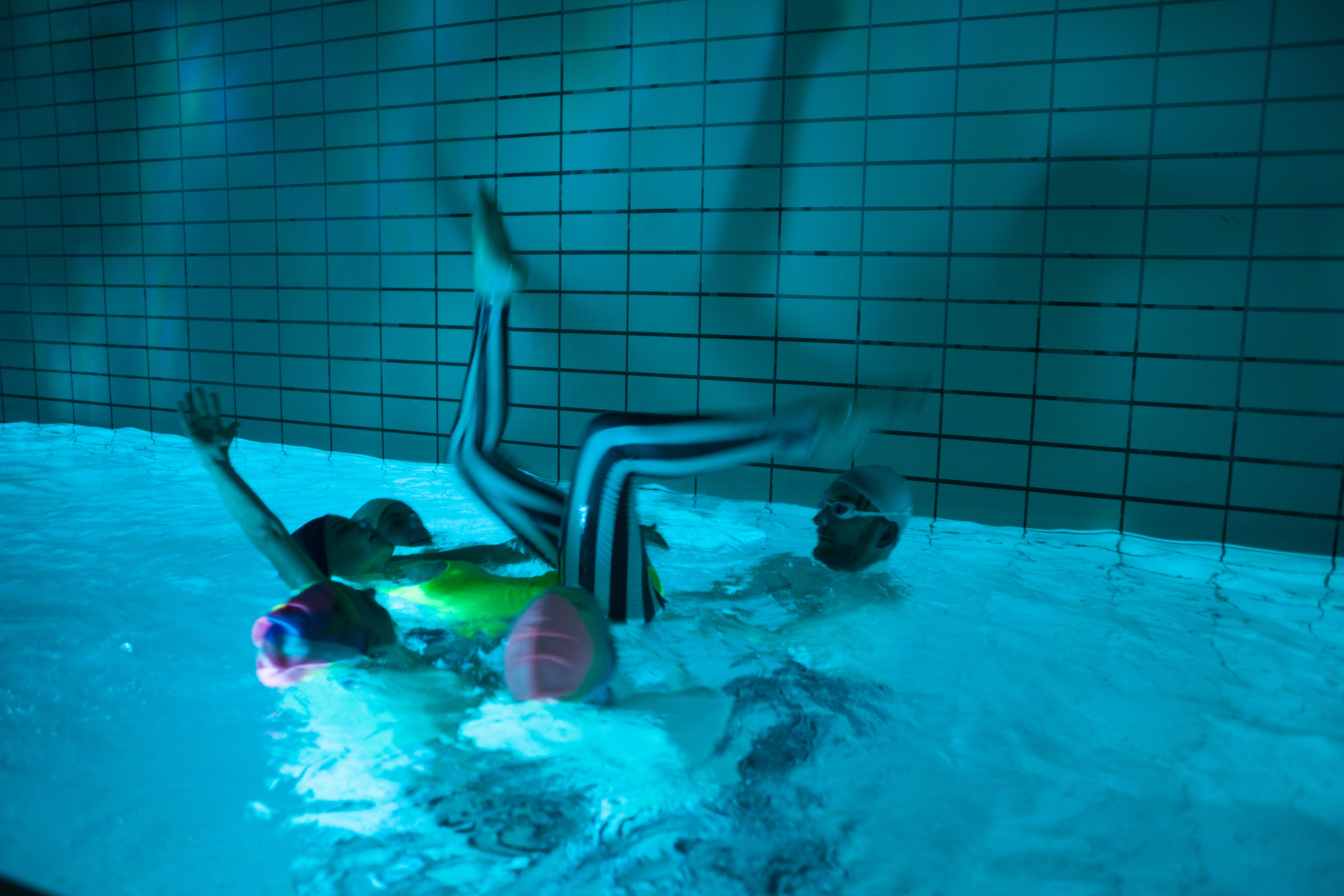
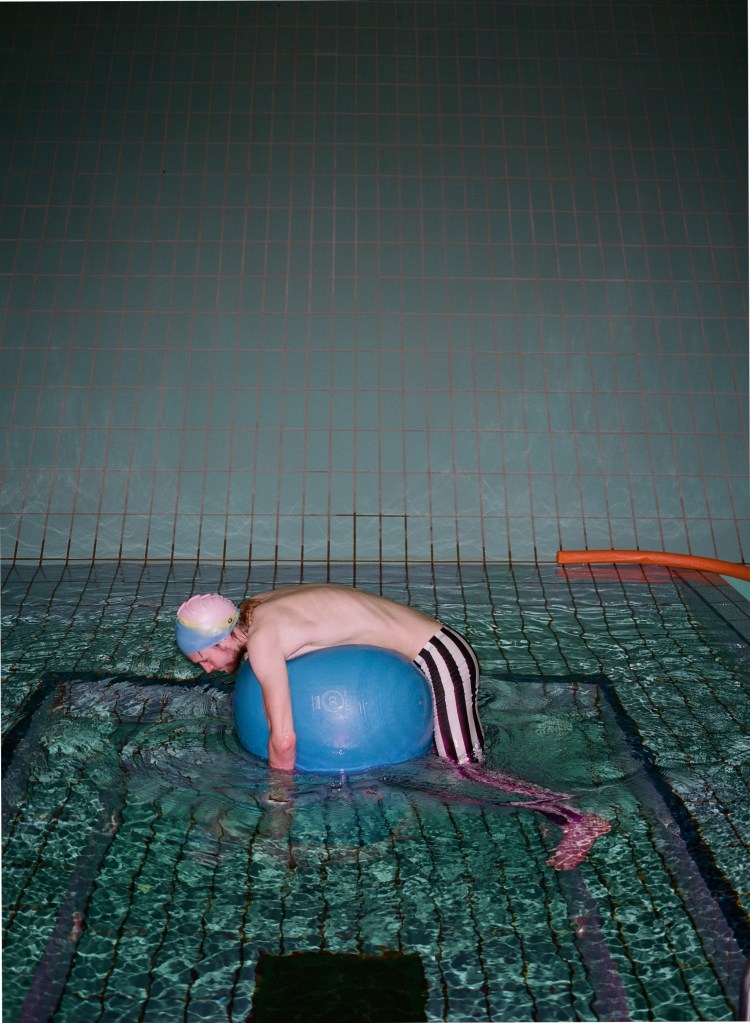
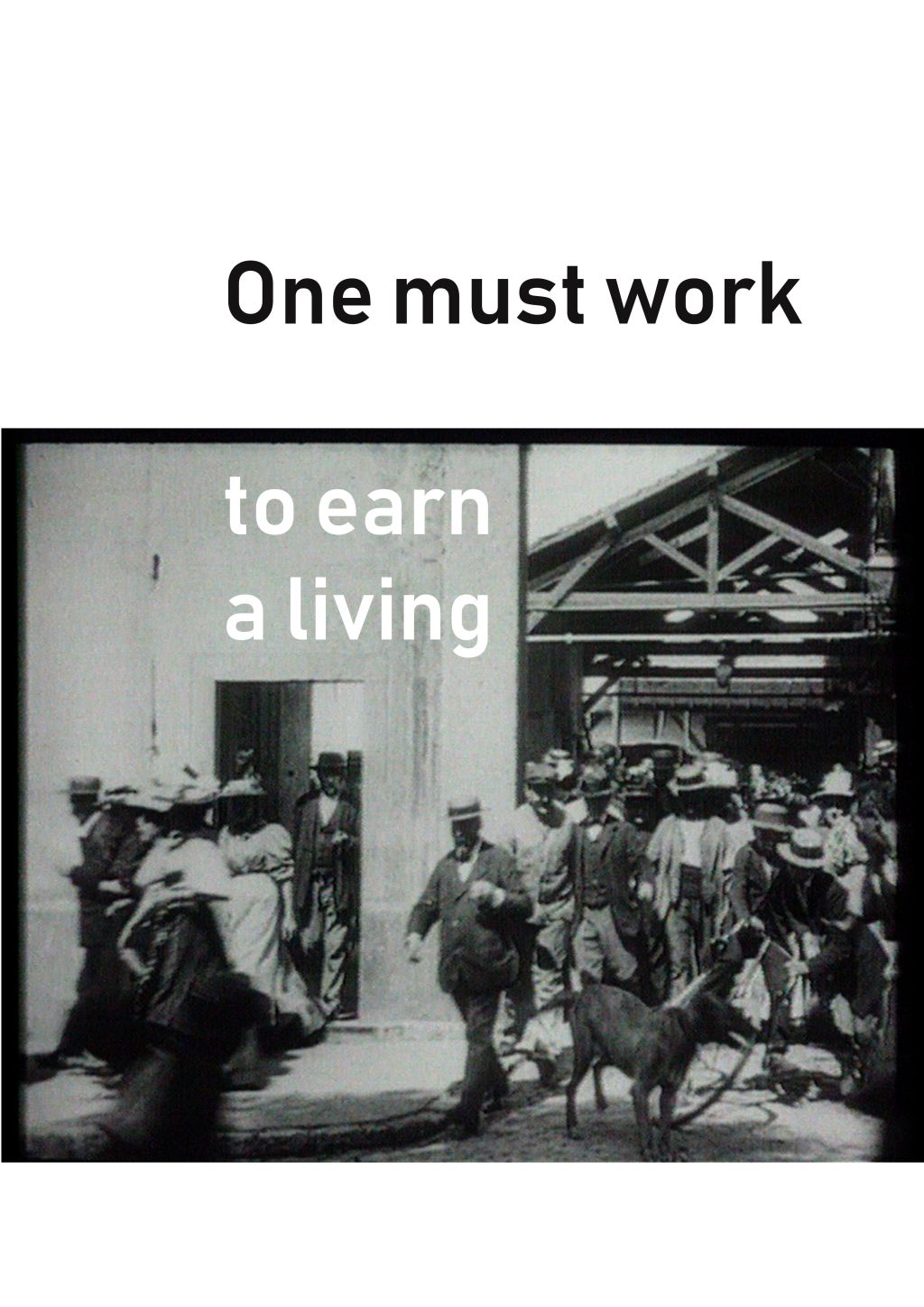
    Also take some time for the show performative sequences both in the pool and on land: synchronised swimming, water aerobics, speech choir, a sound backdrop as a live set and the film projection of historical pool recordings (1911 – 1972) from Vienna Stadt- und Landesarchivs being shown in the water cinema.

    Written and directed by ELENA CARR, FRANZISKA SCHINDLER
    Concept ELENA CARR
    Soundscape ANNA SOPHIE ADELT
    Stage & Costume Design ELENA CARR, FRANZISKA SCHINDLER
    Synchronised swimmer ADÉL HORVATH
    Off-voice MONIKA ZEISENBÖCK
    Performer ANNA SOPHIE ADELT, ELENA CARR, ADÉL HORVATH, KILIAN KLAPPER, ELISABETH RASS, AGNIESZKA SALAMON, FRANZISKA SCHINDLER
    Cinematography ANNA ROSA LEA DIETZE, SIMONA DE FABRITIIS, CLAUS SCHINDLER, THERESIA SCHINDLER
    Editing SIMONA DE FABRITIIS

    bathers

    PRESS

    >> […] schließlich bewegt sich das Publikum als Badegast durch die Schwimmanlage. Plantschen und Saunieren inklusive. Ebenso wie Filmschauen und Briefeschreiben – „Eine Ortsbeschwimmung“ ist alles gleichzeitig. Mit den ZuschauerInnen als mitschwimmende „Sehleute“. […] geht es bei „Eine Ortsbeschwimmung“ […] um das Bad als Ort der Zusammenkunft und mitunter des Voyeurismus, dessen Geschichte und kulturelle Bedeutung. Auf spielerische Weise lädt der siebenköpfige „Trupp“ aus SchauspielerInnen (und mehr) das Publikum ein, selbst aktiv zu werden. <<

    Tiroler Tageszeitung 25.08.21, Barbara Unterthurner

    >> Ein Hallenbad ist ein bemerkenswert egalitärer Raum, ein Raum der Begegnung im ursprünglichsten Sinn. Denn in Badebekleidung sind alle Menschen gleich nackt: Reiche wie Arme, Rechte wie Linke, Einheimische wie Fremde treffen aufeinander wie sonst nirgends. […] Die Künstlergruppe um Elena Carr und Franziska Schindler nutzt diesen Umstand für eine lustvolle Performance in Becken, Sauna und Imbiss, aus Bad wird Bühne. […] erzählen experimentell, humvorvoll und bezaubernd von Nähe und Distanz in Zeiten der Vereinzelung, von Kindheitserinnerungen und der Kultur des gemeinsamen Badens. <<

    Oberländer Rundschau, 25.08.21

    >> Unter Leitung der Bademeisterin heißt ein Trupp aus sechs PerformerInnen herzlich willkommen und führt durch den Abend. Es gibt außerdem Zeit, sich frei im Schwimmbad zu bewegen und das Bad in eigener Geschwindigkeit zu erkunden. Das Publikum darf sich also über bemerkenswerte Shownummern im Becken sowie am Trockenen freuen. “Das Publikum orientiert sich scheinbar selbstständig in der, das gesamte Schwimmbad umfassenden, Schau, außer es folgt den inszenierten Szenen”, so Carr und Schindler weiter. “Wasserkino, Wasseraerobik in den Becken, Hirnbeschwimmung am Trockenen, Sauna und Schwimmbadimbiss bilden den Kosmos, in den es einzutauchen gilt.” Die BetrachterInnen werden somit zu AkteuerInnen, die sich frei bewegen und den Kunstraum Badeanstalt erkunden. <<

    meinbezirk 18.08.21, Katharina Ranalter

  • Nachtwächter:innen

    Nachtwächter:innen

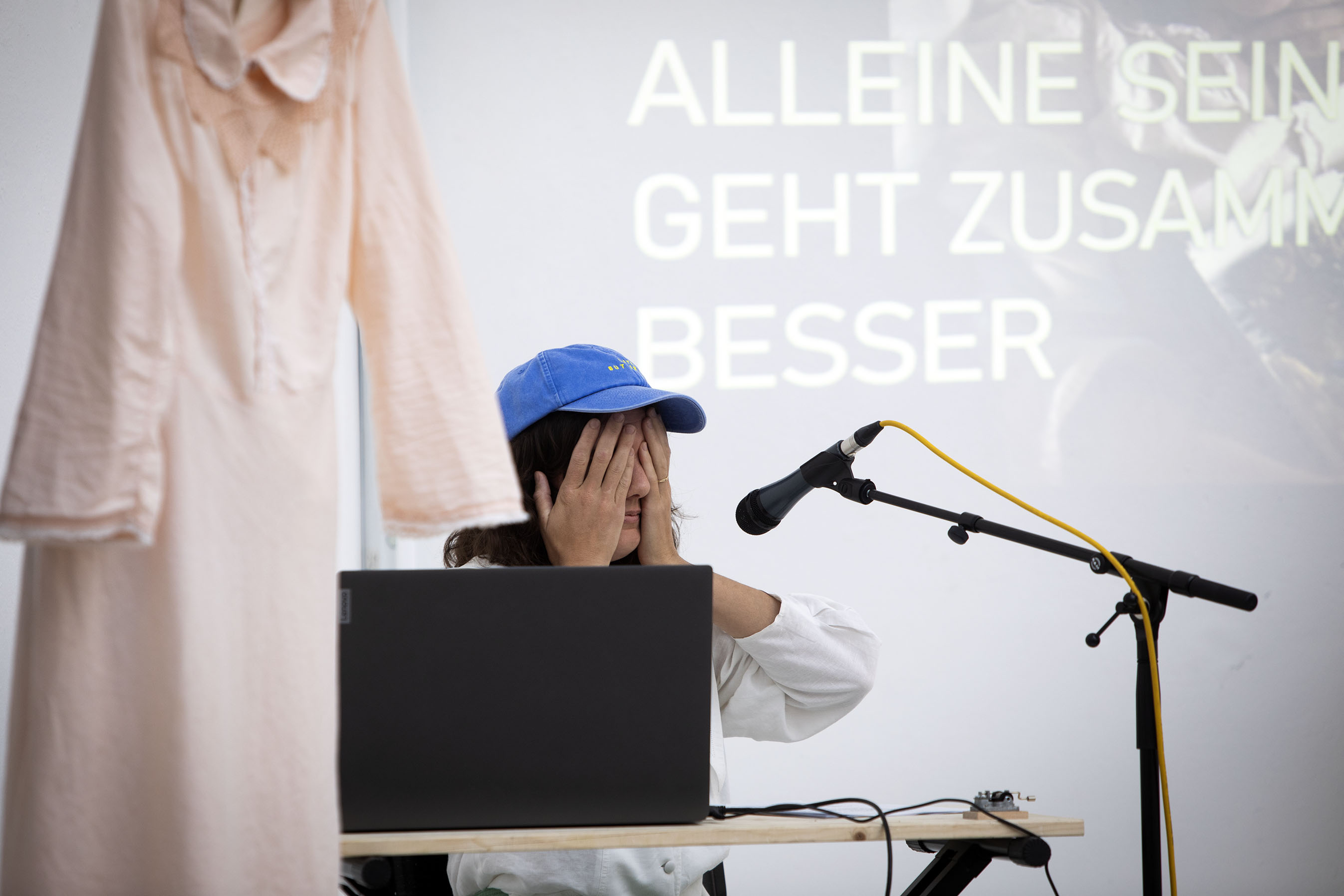
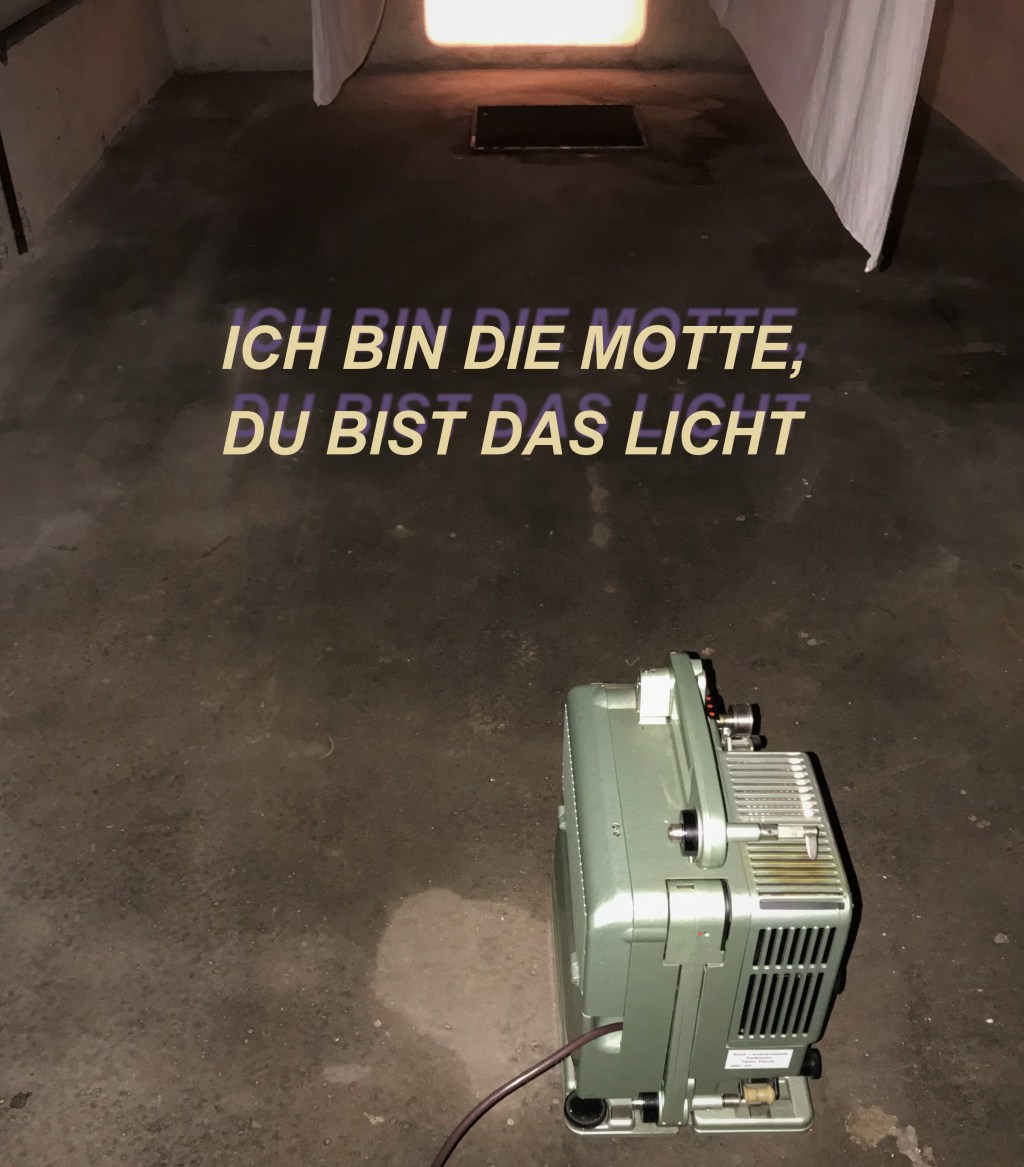
    “I am the moth and you are the light”,


    A. Sophie Adelt (States of Clay) Sound and Performance Artist, Linz (AT)
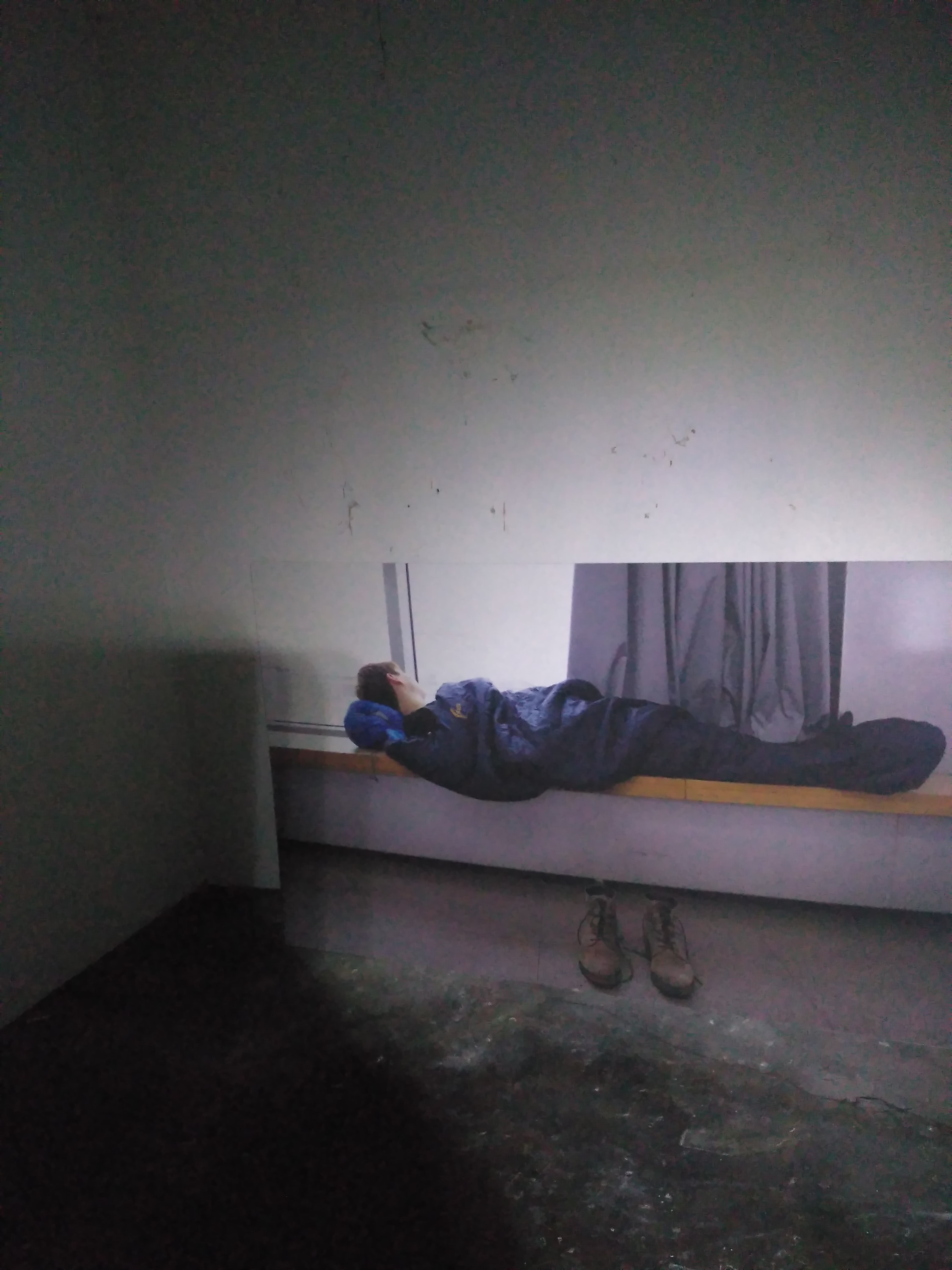
    Sophie, like many people, likes to sleep. In her sleep she digests food she has eaten late at night or things that occupy her mind. People know this, people say this.
    “If you dont dream you pretty much die.” said Erykah Badu, but whether dreaming has so much to do with sleeping itself?
    When you climb a high volcano, you first have to go up to the base camp and get up very early the next day, and before that you are not allowed to sleep. Only rest. So that your blood circulation doesn’t go down and you get cold. That was too steep for me and I stayed down. Sleep cures headaches and worries.
    The neighbour once said, “I’ve noticed that you always sleep so late!”

    David Carr, senior biostatistician, Starnberg/Melbourne (AUS).
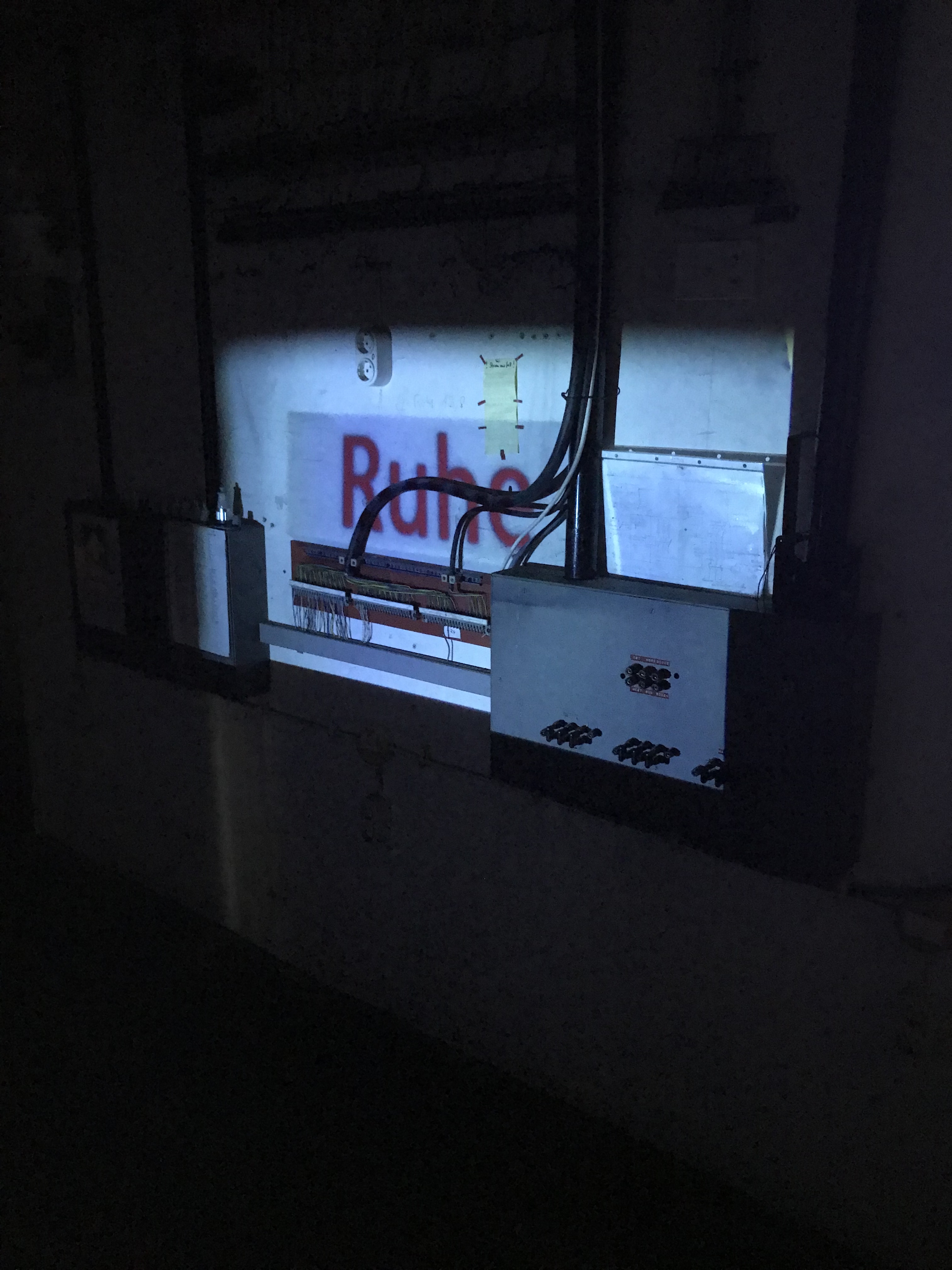
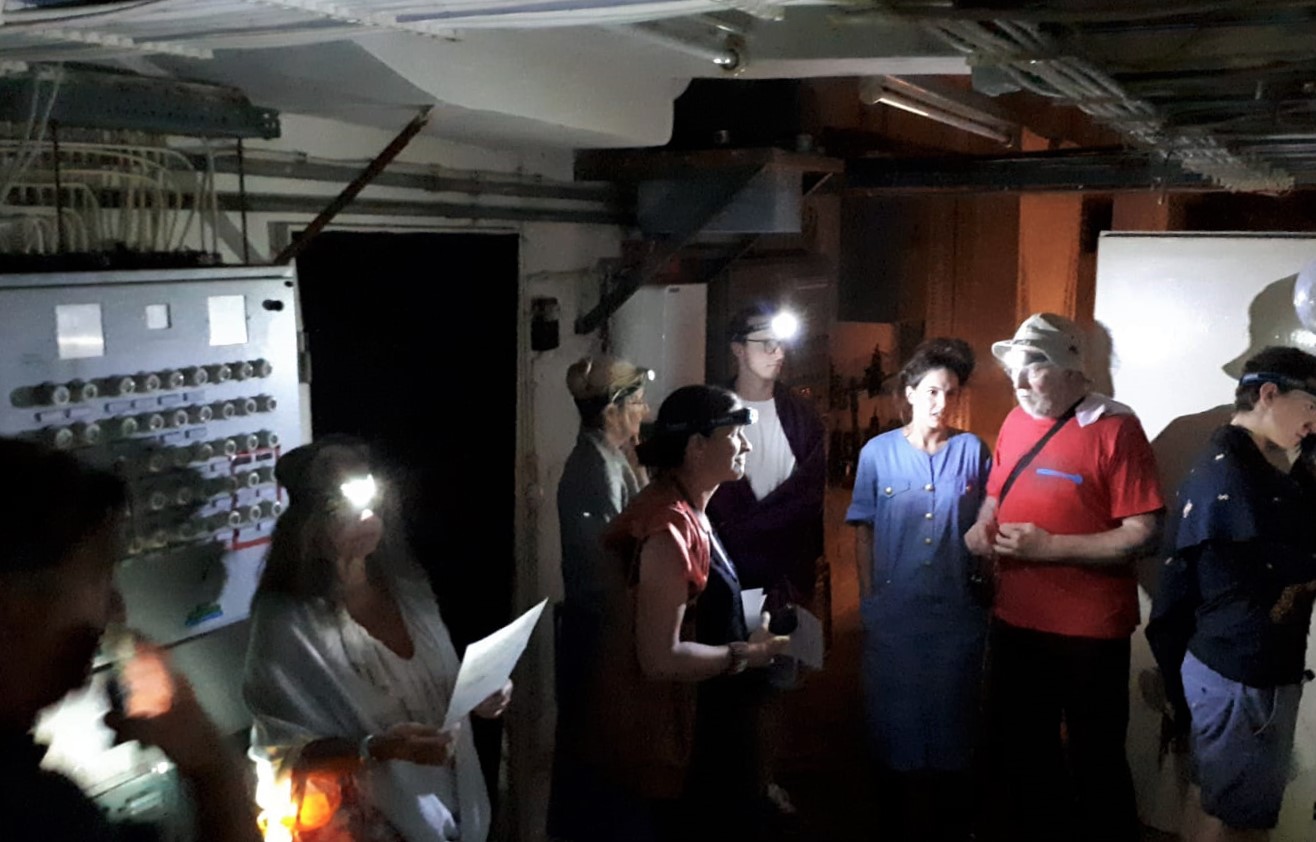
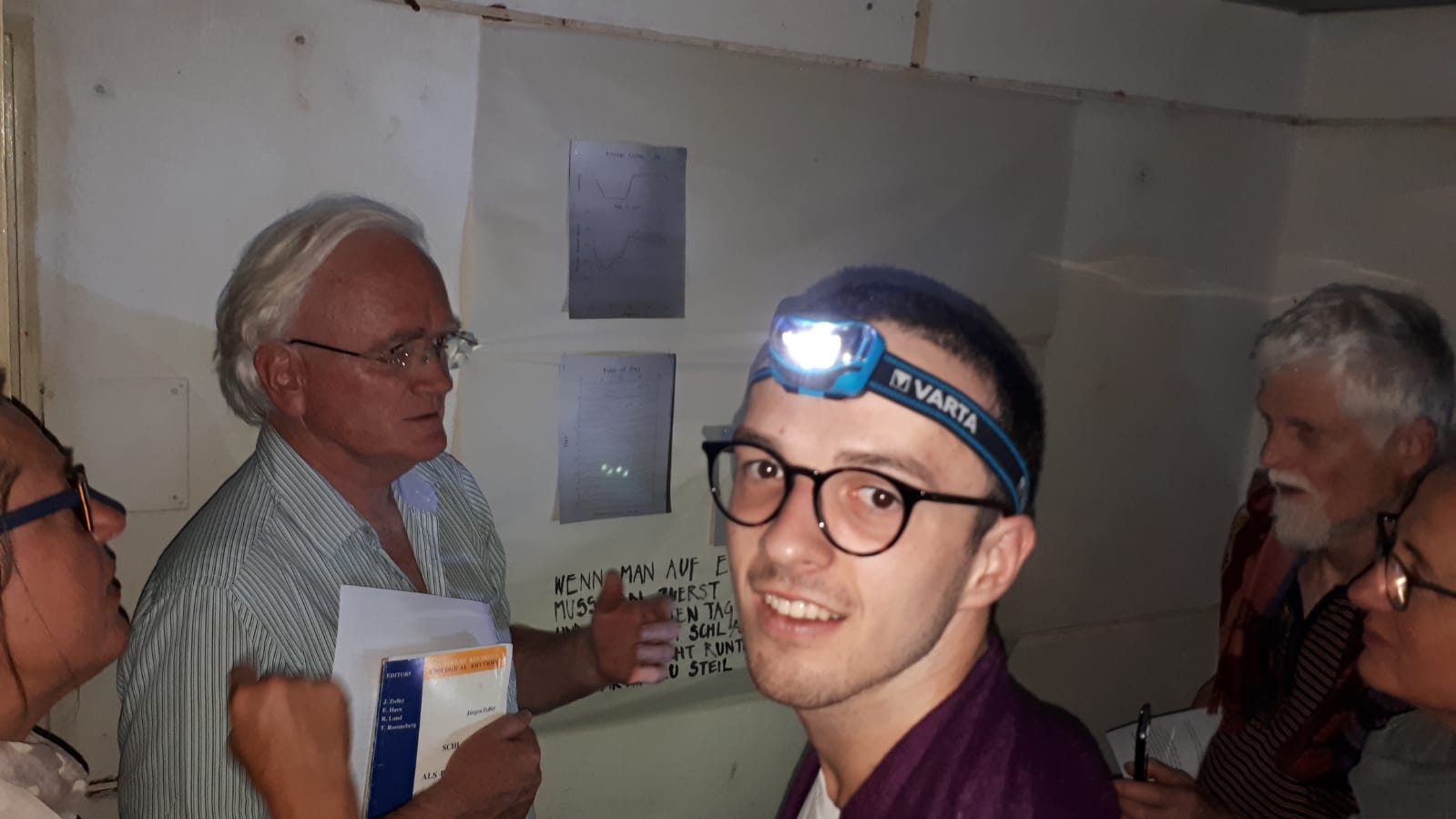
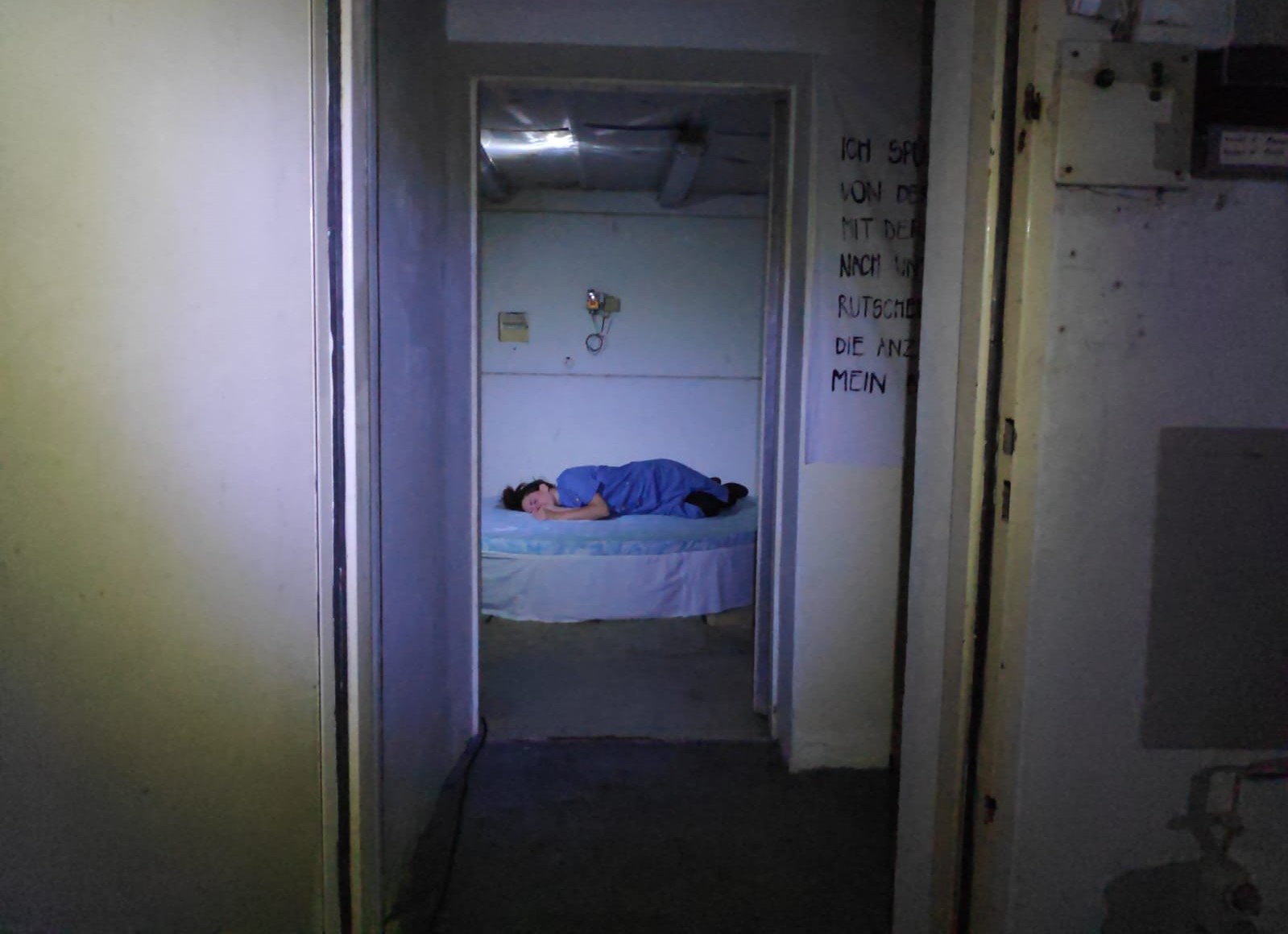
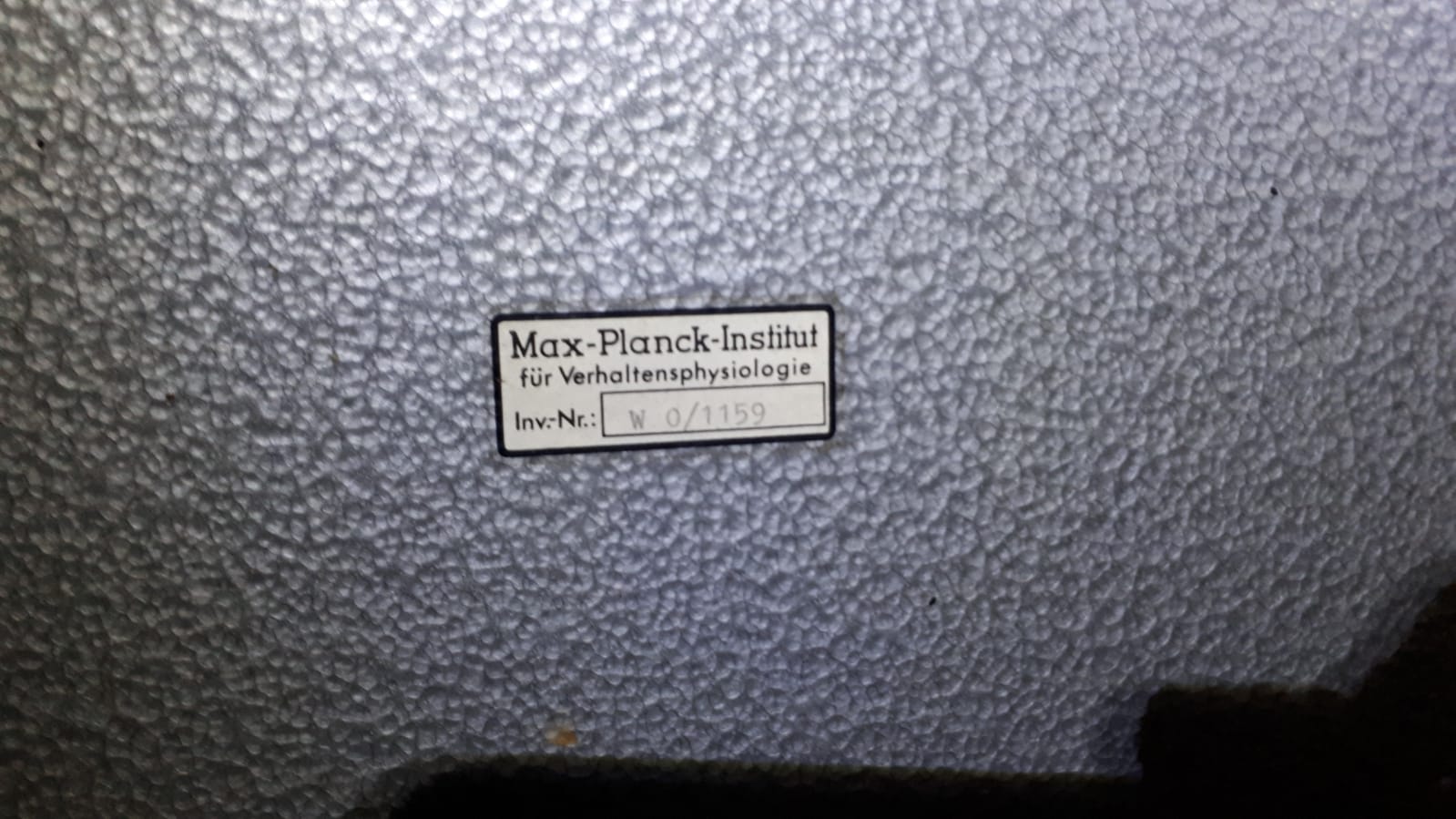
    D. worked as a research assistant in the sleep bunker in 1977 and later in the chronobiology department of the Max Planck Institute in the team of sleep researcher Jürgen Zulley. Sleep movements on his mattress in the scientific annexe of the bunker premises were also recorded throughout by sensors. D. tells of an experiment in which the wake-sleep rhythm of a test person in the sleep bunker ran over a 42-hour day, of which he spent about 30 hours awake and 12 hours asleep. Empathically, D. can empathise with the subject, who had never felt so good physically before. In New York, people lived this rhythm. D. continues to empathically report how terrible and socially indiscernible it was for these people. They became complete outsiders.

    Petra Anne Bernard
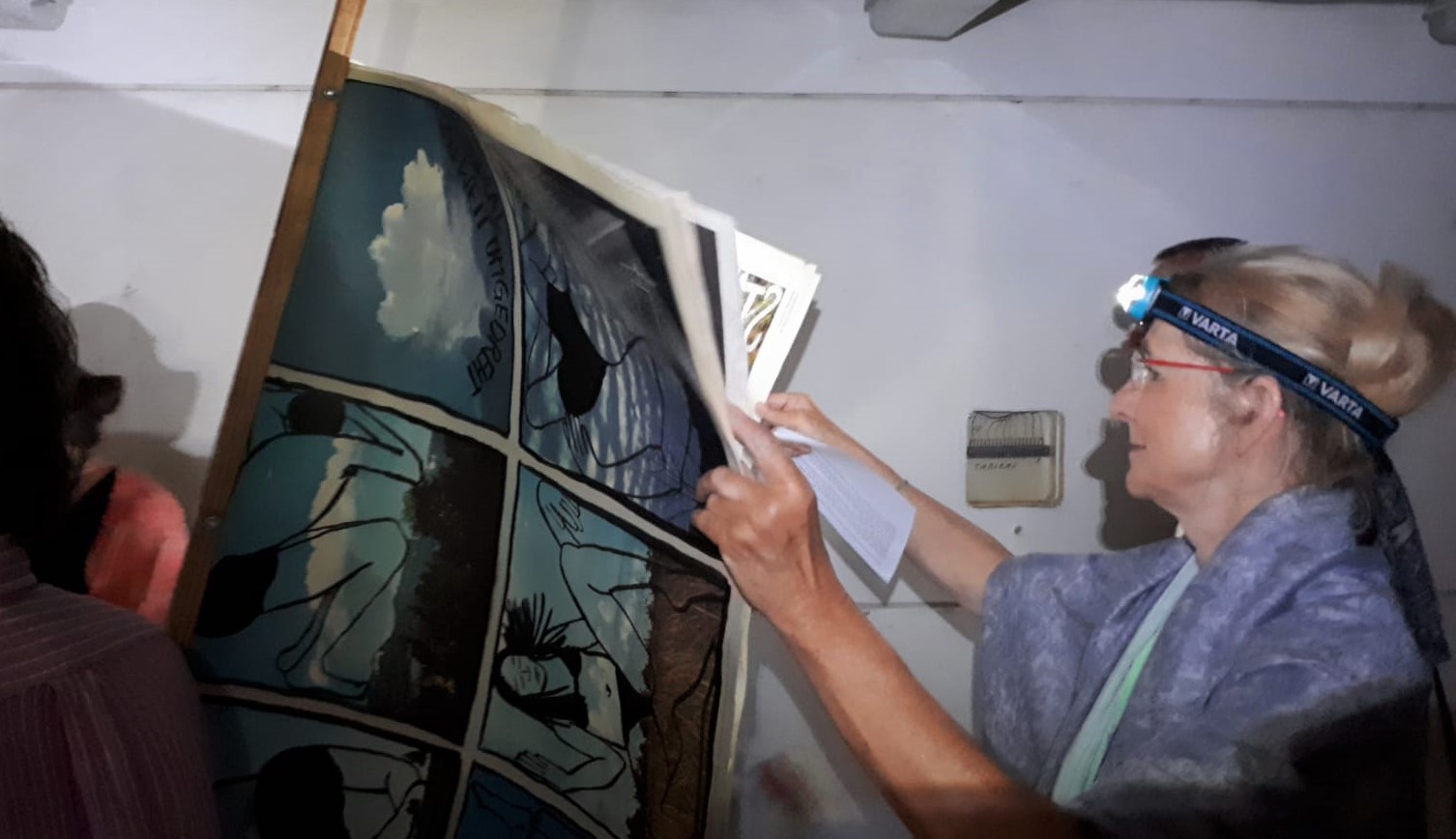
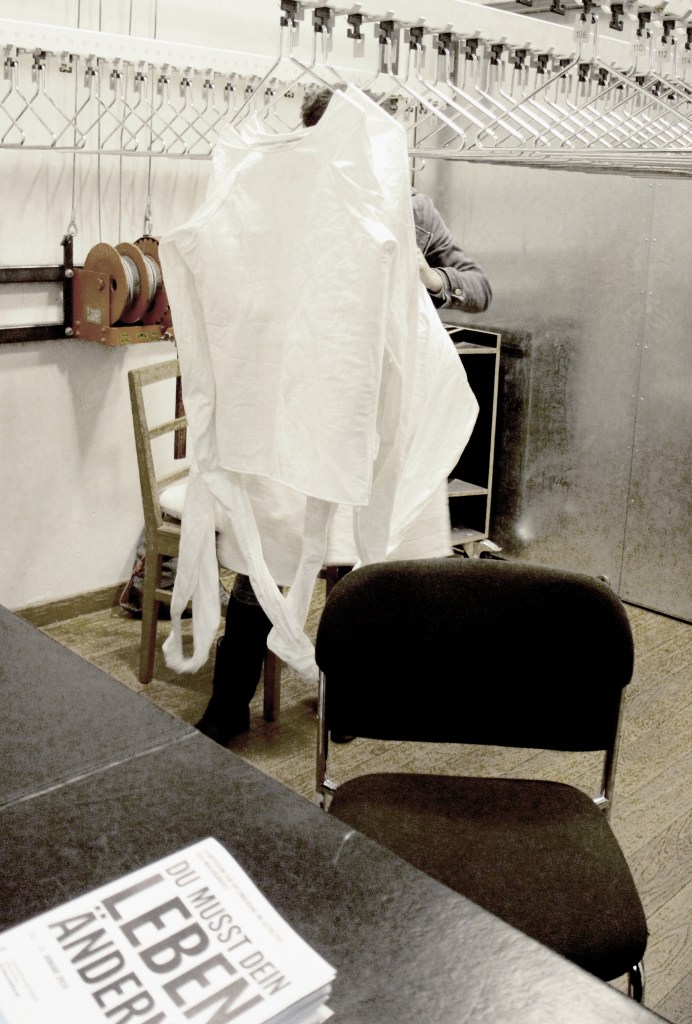
    The hanging of two sheets in the entrance area shows a section of Petra Anne Bernard’s preoccupation with sleep. She slept in both, meticulously noting her sleep in strokes and painting the sleeping body.

  • TROCKEN SCHWIMM SYNC

    TROCKEN SCHWIMM SYNC

  • Synchronstimme, geh runter

    Synchronstimme, geh runter

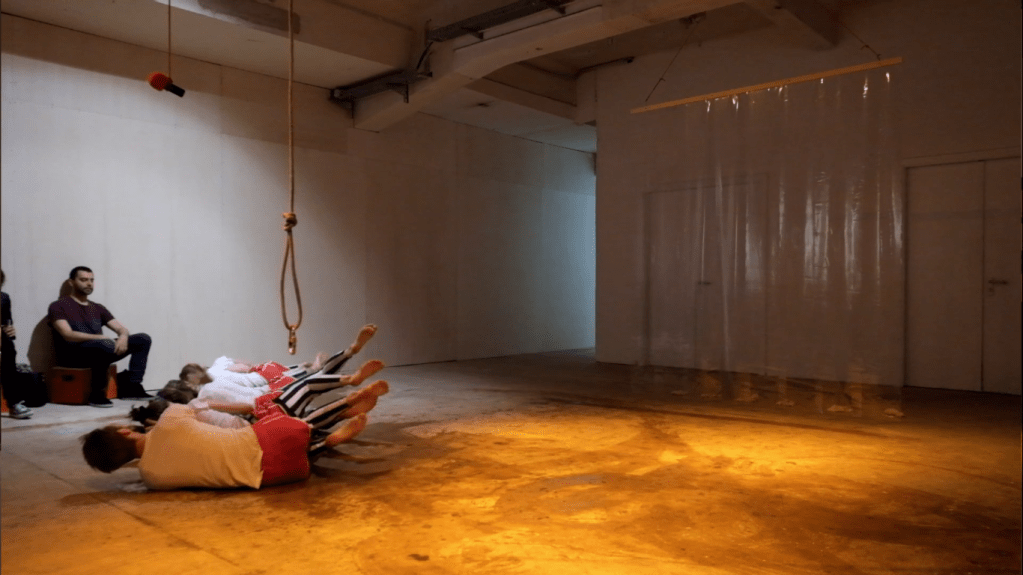
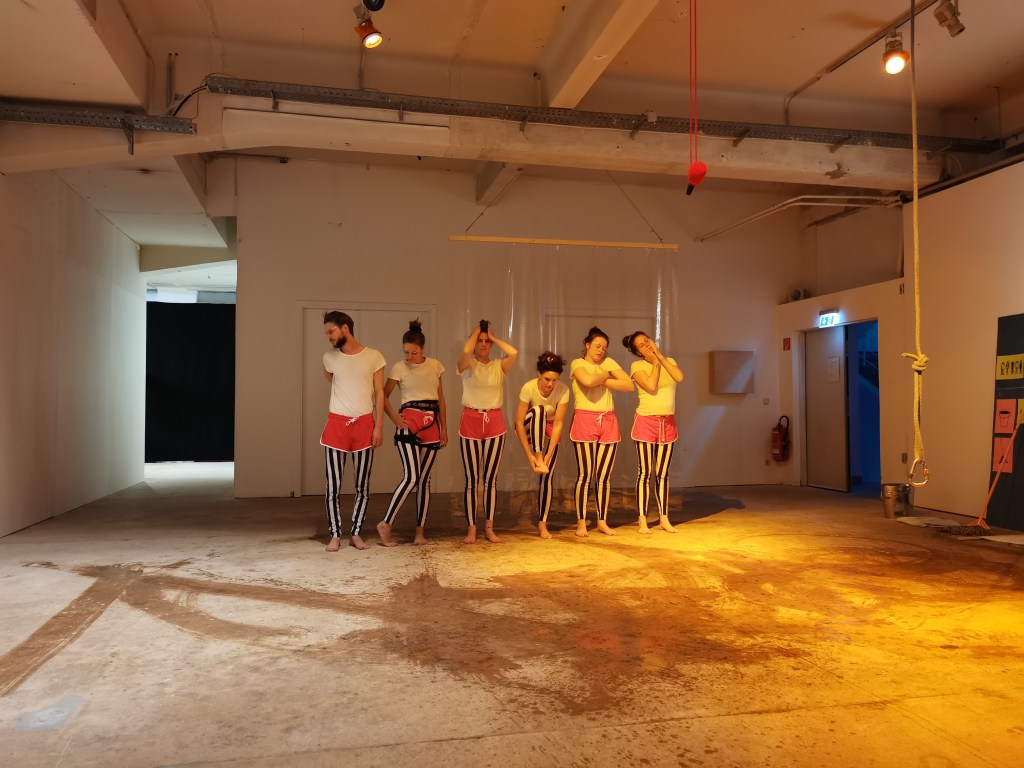
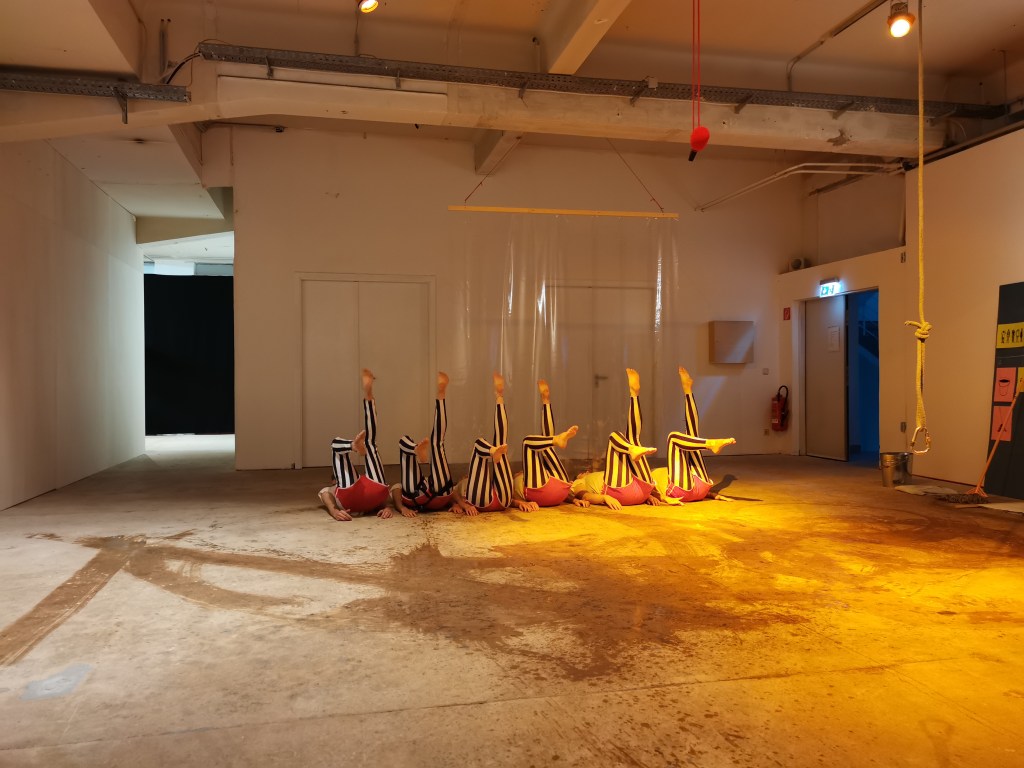
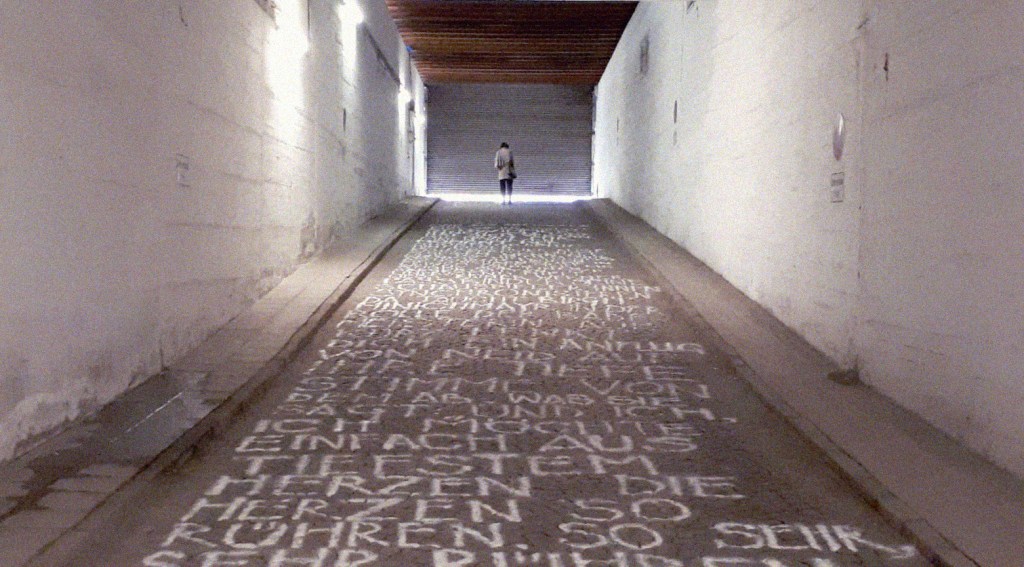
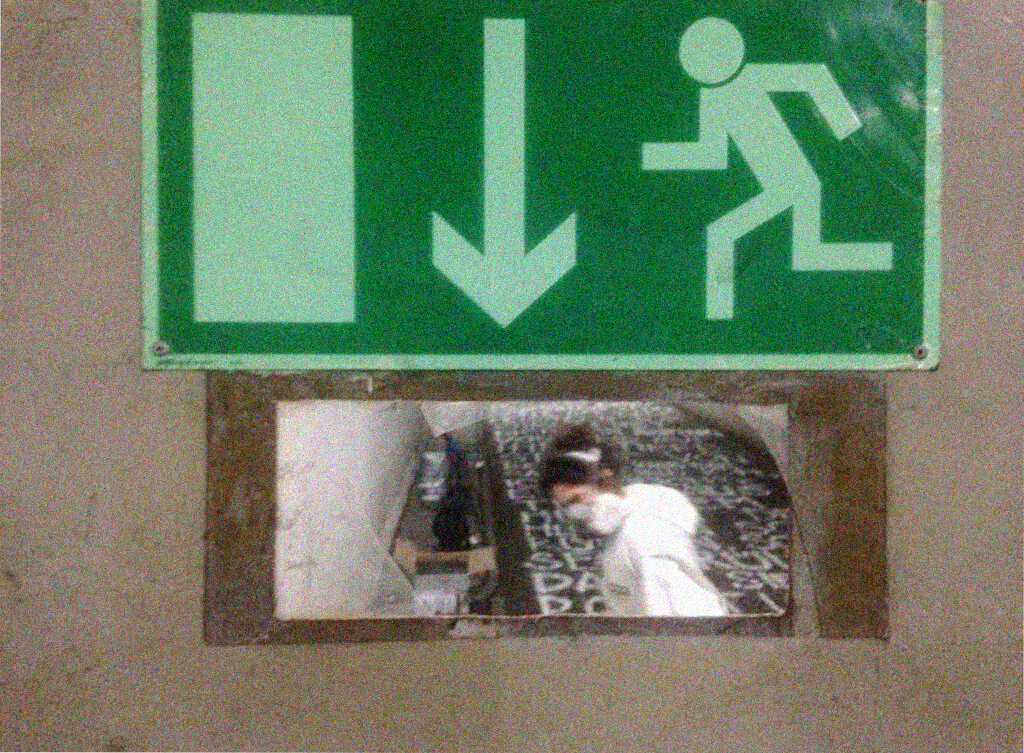
    Inside Z COMMON GROUND the text collage “Synchronstimme, geh runter” can be discovered on the floor of the basement ramp:

    When you are walking backwards and you scroll and you think you are reading but you are really just scrolling, the only thing close to your body is the phone.

    Photo: Luis Carr

    Photo: Campos Viola Photography

    Photo: Lea Wilsdorf

    Text collage, handwriting on ramp /Z common ground Munich 2019

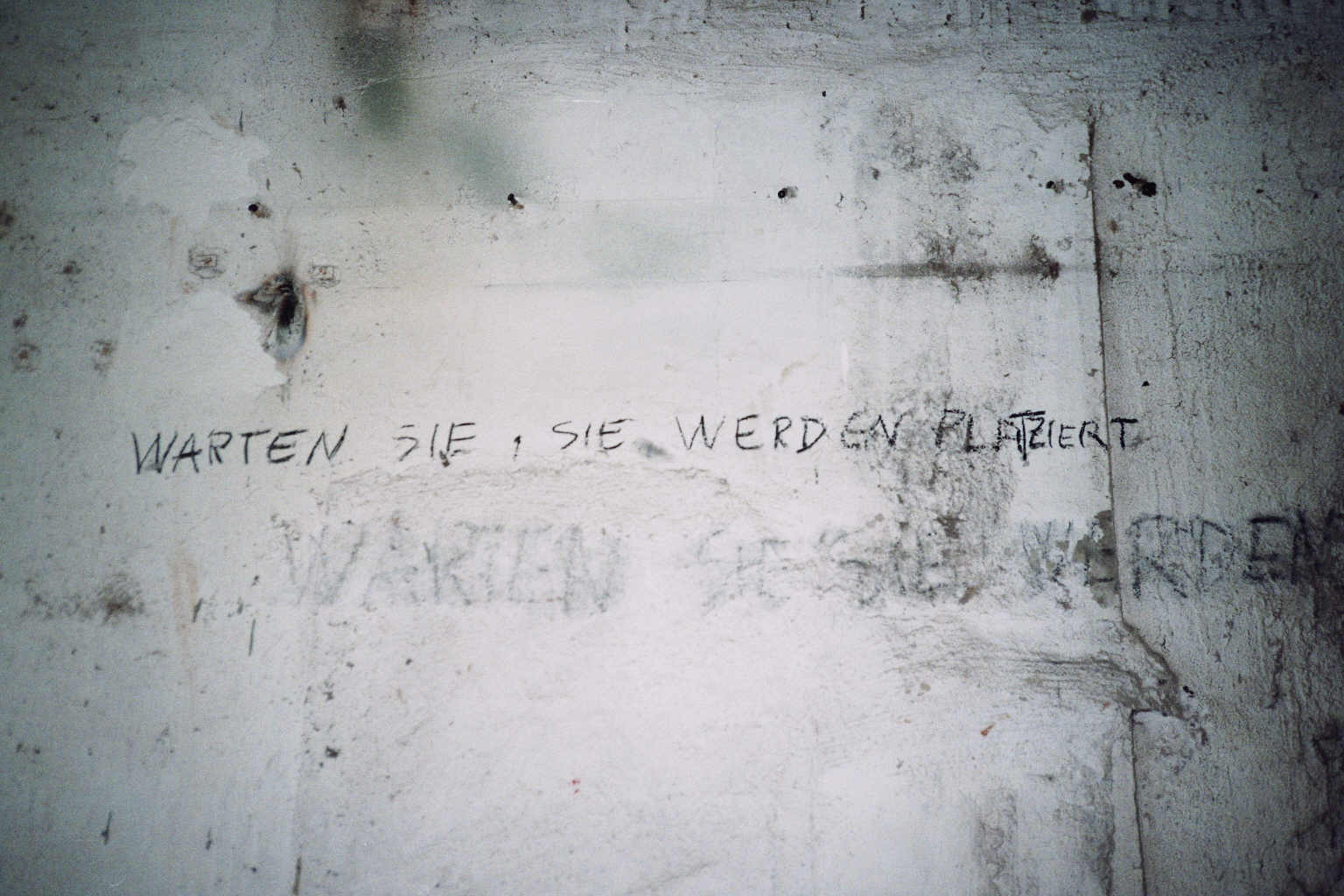
    2.500.000 Jahre v. Chr. ist der aufrechte Gang revolutionär in der menschlichen Evolution. Du steigst rückwärts ins Schwimmbad herab.
    Von Fassaden unzähliger Mietwohnungen umgeben, ist es im eigenen Kosmos versteckt.  Angeschlossen an die Wellenleitung schaust du auf dein Fon. Anweisungen kommen per Nachricht: >Du kannst die sanitären Anlagen im Fitnessstudio 2. OG besuchen, bist dazu aber nicht verpflichtet. Für Versorgung steht die Pommeskrake zur Verfügung. Im Duft der Fritöse verschwindet das Böse. Nah am Körper ist nur das Fon. Geh durch den vergilbten PVC-Vorhang in den Freischwimmer:innenbereich zum großen Bühnenbecken, die Lappen klatschen dir beim Durchgehen über die Schultern, vorbei an Skaterampen auf das liquide Parkett. Beobachte den GROUND und finde deine ganz persönliche Variation. Nutze die vorhandenen Sitzgelegenheiten zur Grübelei und als Ablagefläche.<
    Eine Weile schaust du den Synchronschwimmer:innen im großen Becken zu. Eine hat sich vertan, sie hinkt für einen kurzen Moment der Choreographie hinterher. Das menschliche Auge kann bereits unterscheiden, wenn Bild und Ton im Film nur wenige Millisekunden asynchron laufen. In deinem Kopf geht die Synchronstimme weiter. Wenn er die Stimme für den dargestellten Typ unpassend hielt ließ Rainer Werner Fassbinder seine Schauspieler:innen synchronisieren.
    Da taucht die Bademeisterin vor dir auf, gespielt von Birgit Minichmayr. Kurz lenkt dich ein Anflug von Neid auf ihre tiefe Stimme von dem ab, was sie sagt: „Und ich, ich möchte einfach aus tiefstem Herzen die Herzen so rühren. So sehr, sehr rühren, dass sie sich politisch verhalten.“
    Der Applaus erfolgt mit schrumpelnden Fingern.

    With text fragments by Elena Carr, Birgit Minichmayr, Monika Rinck, Lea Wilsdorf

  • ALLTAGSBÜHNE BADEANSTALT // Sargfabrik Vienna 2018

    ALLTAGSBÜHNE BADEANSTALT // Sargfabrik Vienna 2018


    Bath house Sargfabrik Vienna | 2018

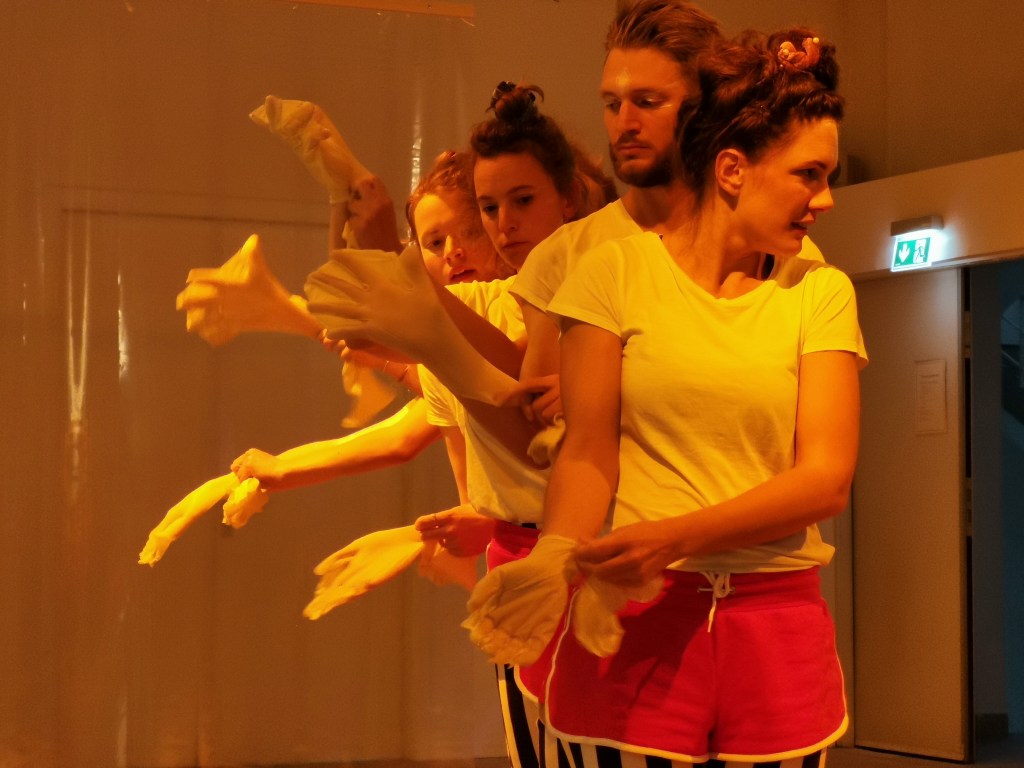
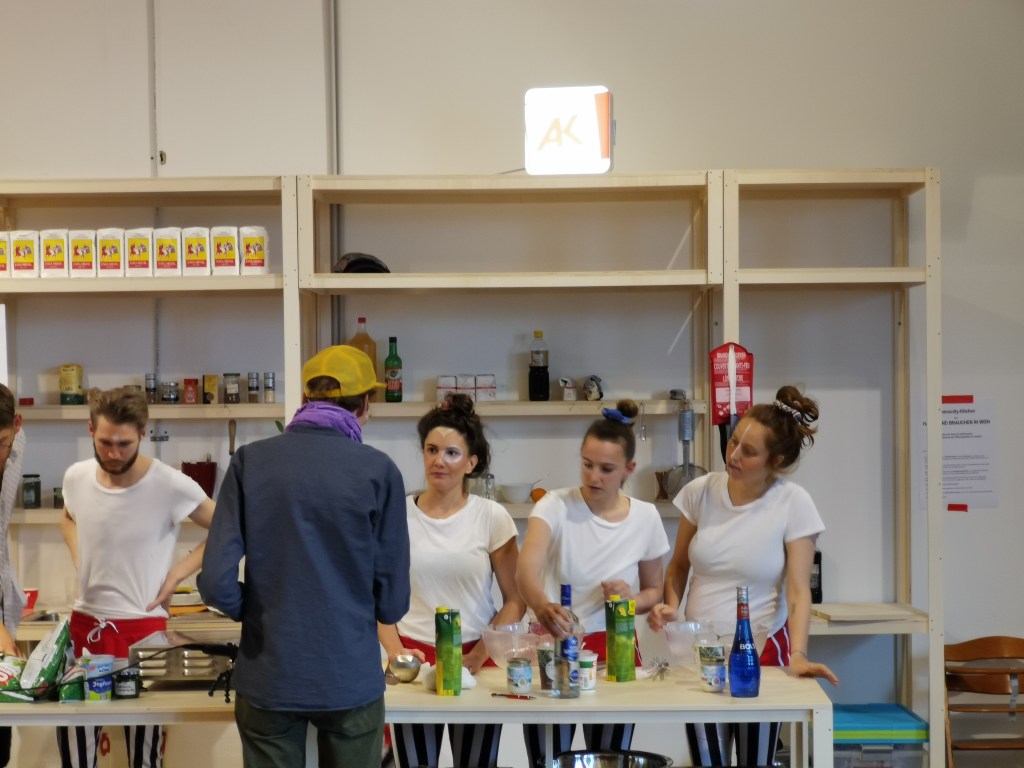
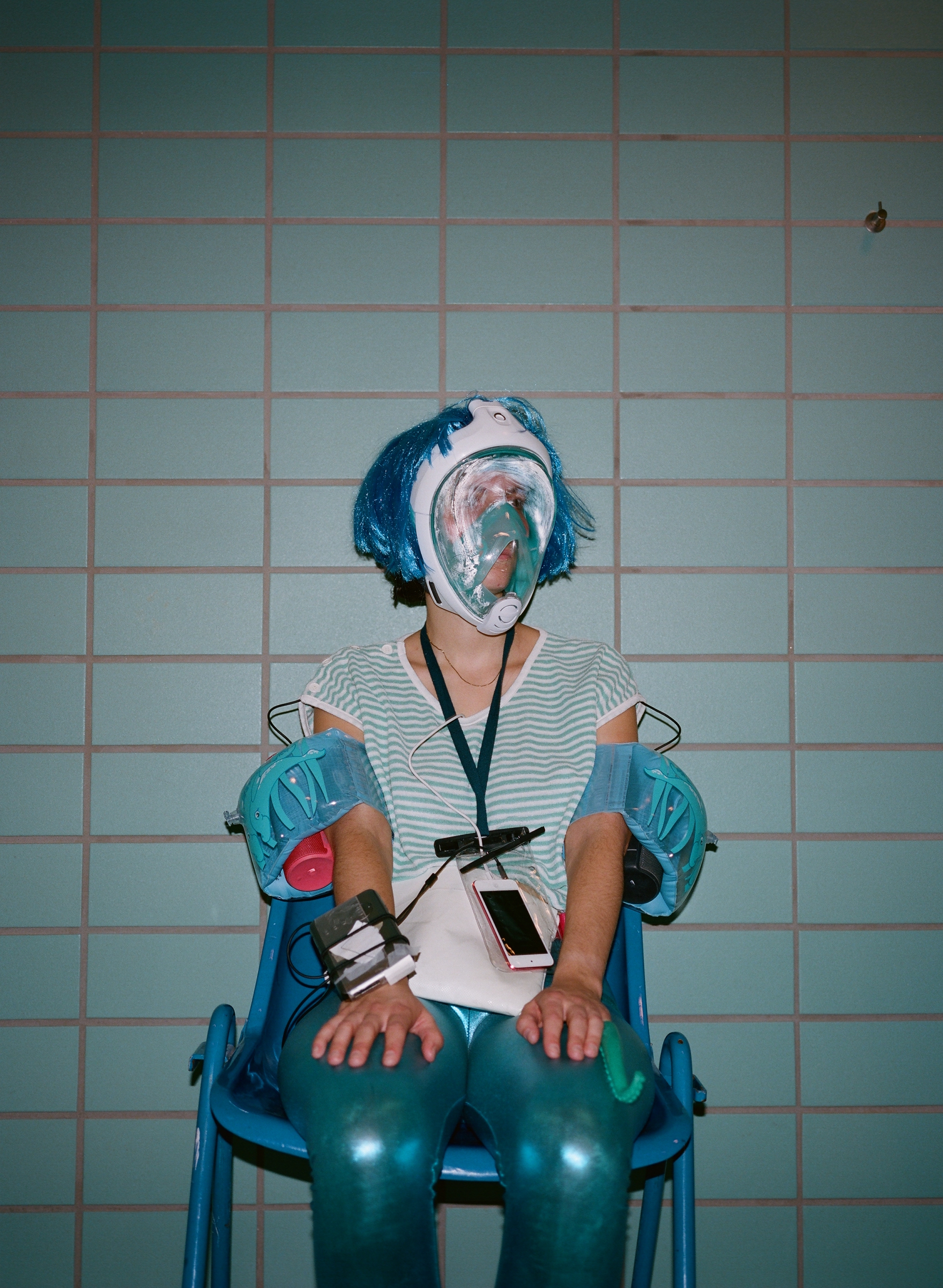
    People like you frequent bathing establishments. They watch the colourful bathing life and enjoy it as if it were another institution of the entertainment industry. One evening in the cold, wet month of November, you are invited into a warm parallel world. Once you are inside the show bath becomes a bubble bath and reality blurs with artificial bathing romance.
    Dressed in swimming costume you wander through a performance and water landscape and find yourself in a bubbling lake. Like all humans, you are looking for rest and relaxation, but imagine doing so in an environment that seems incredibly inhospitable. The shore of the salt lake is unkempt and marked by run-down industrial architecture. Chemicals flow into the water through huge pipes and form unappetising islands of foam.
    On the everyday stage of the baths, your imaginary images meet the projection surface of the swimming pool. In the historically grown abundance of Viennese baths, the semi-public bathing house in the former coffin factory Maschner & Söhne in Vienna’s 14th district opens up to all for a spot of swimming. Steps lead down to a hidden place, in green-blue not far from the urban noise.
    Your mobile phone is a pool. Hold it horizontally, the reflective surface is there to be dipped into.
    The performance plays with moving alone in the midst of many through social places, some filled with water, and exposes the audience to the tension between a sense of security and the uncanny. In the show, which explores the entire bath, Elena Carr, with and through her performers, questions the necessity of single-cabin architecture and wellness offerings.

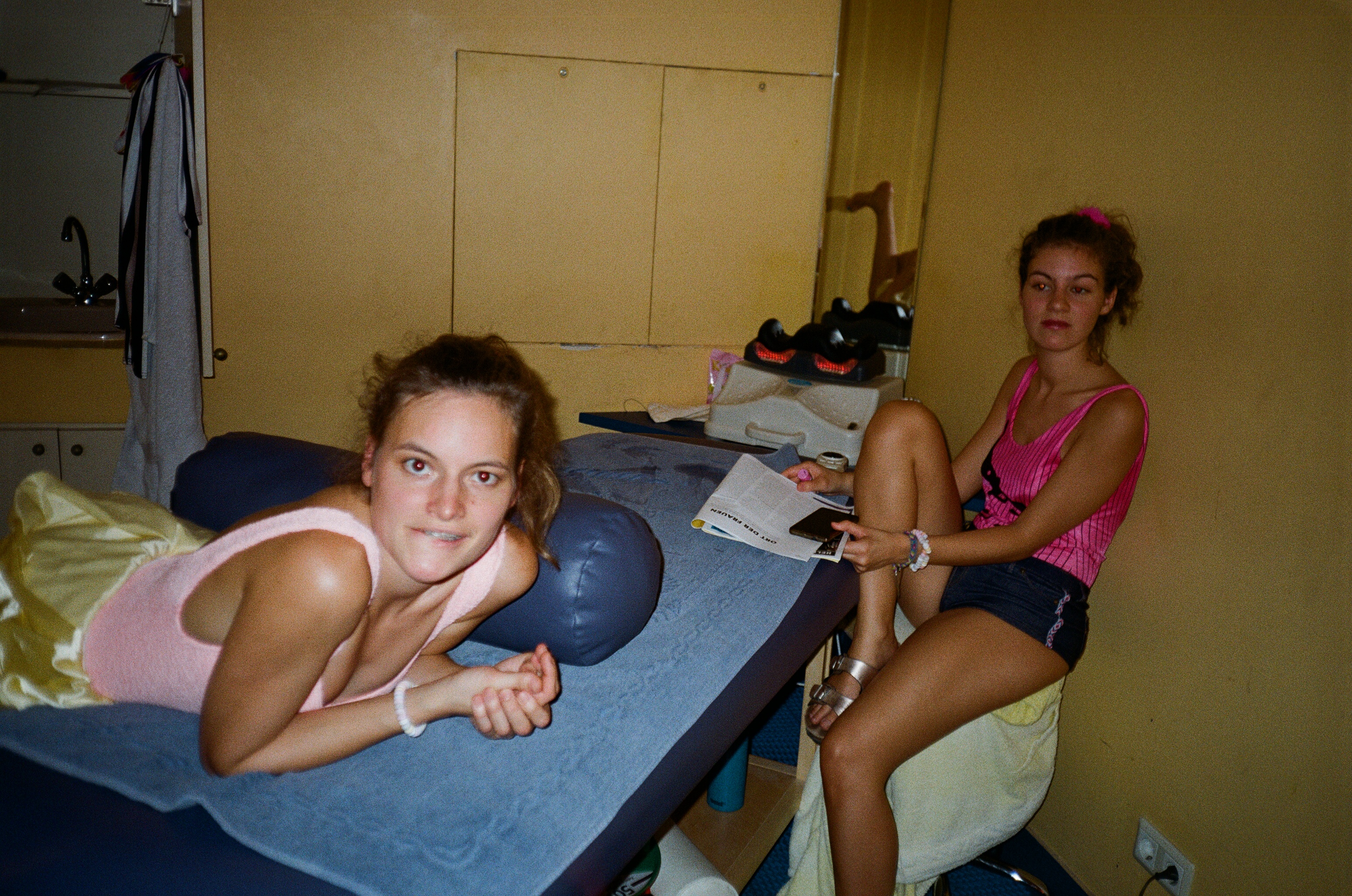
    “First impression: Ok. I can manage. Should I approach the blue-haired masked woman? I don’t because I have no idea what to say. The mobile phones flying into the pool in a high arc: Is that true? Are you going that far? Is that my phone in there now? A brief pause: No, I’m sure you don’t go that far. But you have lured me out of my reserve. I do care about my phone, especially because of all the pictures I don’t want to lose. Obviously I need a phone as a visual aid. The next experience: I don’t find athlete’s foot disgusting, in fact I find very little disgusting at all, and there’s no head cinema going on. Nevertheless, I find the situation on the massage divan with swinging feet unpleasant. I don’t really know what to say and decide to flee forward. Afterwards I would have preferred to say less, especially because the camera is rolling. Attack on my privacy successful, but different from what I thought. Quite different in the sauna. Sweaty skin rubbing against sweaty skin in an oversized T-shirt: I don’t mind at all, I even find it pleasant. Erotic feelings do not arise, which I am quite happy about. I would have hated to expose myself to that. The webbed latex gloves remind me of bloodied hands – without a concrete image in my mind’s eye. In any case, I don’t feel like a fish in primordial soup. And then there’s the brutal curiosity: the story about the Berlin restaurant with the aquarium and the bathing mermaids is new to me, a nice story to tell. But I realise that I have something to gain from the nakedness of others, so the bathing establishment becomes a show aquarium for me, and I’m right in the middle of it. So that’s how it is.”

    Florian, bather


    Concept & artistic direction Elena Carr
    Direction and production assistance Franziska Schindler
    PerformerAnna Sophie Adelt, Kitti Asztalos, Elena Carr, Christa Durun, Daniela Fessl, Aurelia van Kempen, Kilian Klapper, Johannes Krenner, Caroline Schindler, Franziska Schindler, Lea Wilsdorf
    Choreography synchronised swimming Adél Horvath
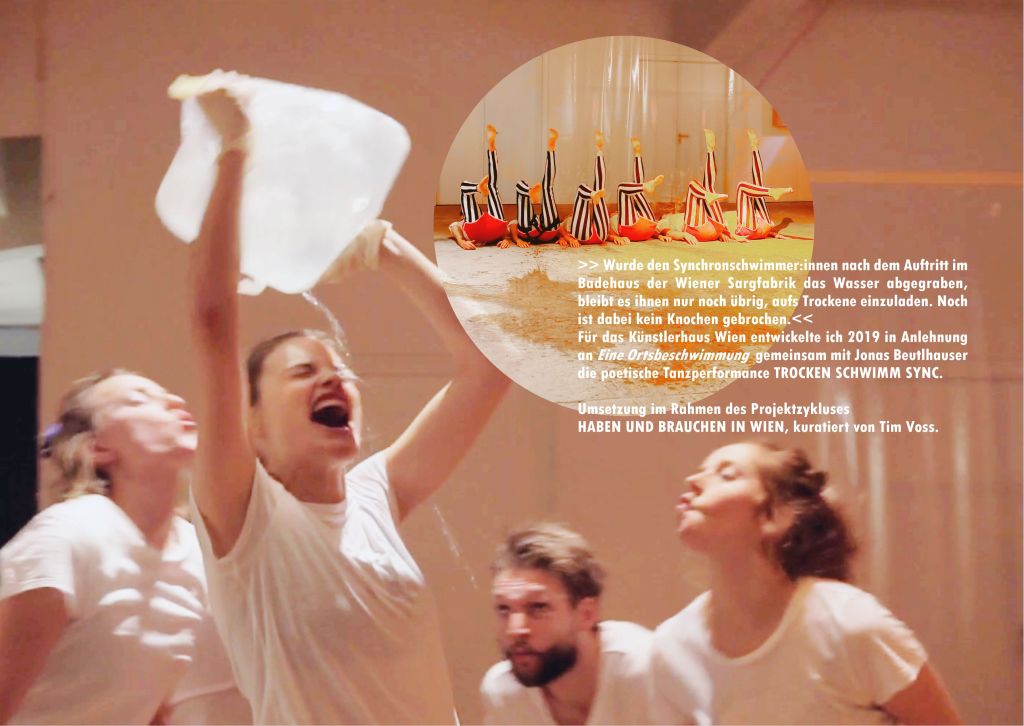
    Synchronised swimmers Elena Carr, Jonas Carr, Aurelia van Kempen, Johannes Krenner, Franziska Schindler
    Costume & Stage design Elena Carr with Franziska Schindler, Lea Wilsdorf
    Tailors Anna Sophie Adelt, Conny Laaber, Theresia Schindler
    Off-Voice Franziska Schindler
    Sound editingOskar Kozeluh
    Video message Stefanie Sargnagel
    Cinematography & Editing minthe Produktion
    Photography Klemens Kohlweis, Daniel Rajcsanyi

  • K in Summercamp

    K in Summercamp

    K in summercamp – a performative installation

    WERK X | Vienna AT 2018
    Duration 4h

    “We are the theatre that has a place for everyone, everyone in his [her] place!” reads the Natural Theatre of Oklahoma’s recruitment poster on the last pages of Franz Kafka’s unfinished novel Amerika. Along with many others whose curiosity is stirred by that poster, Kafka’s protagonist Karl, who had to leave Europe and arrives in America as an immigrant, finds himself in front of this poster after many trials and tribulations, including unsuccessful job attempts. After the auditions, a large group of those who got hired by the theatre boards a train that takes them to their new destination of working and living – to an unknown place with an unpredictable future. The narrative abruptly ends in the middle of this train journey, leaving the plot unfinished and opening up space for speculation: what is our future, where are we headed to, what have we said YES to, are we just a brick in the fortress of capitalism? Are we participating in a society arena or are we observers seated in the auditorium? Are we lured by the invitation and by trusting the word “welcome”, are we ready to risk and/or trade everything we have, solely based on a promise? Where do we position ourselves in the pyramid of a capitalist society? Is the yet unknown place already pre-defined and projected, no matter to where we move? Do we feel free if we accept the offer? Why do we move?

    The authors of K in summercamp tackle these questions through a performative installation. It is a culmination of a five week research of the WienWoche Working group, formed through an open call for participants without a selection procedure. With a place for everyone, but with conditions to be negotiated and decided, the interdisciplinary group, with members coming from performance, visual art, literature, theory, stage and fashion design background – used Kafka’s writing as a trigger for a study of our contemporaneity. With its surgically precise depictions of power structures, administration and precarity 100 years ago, this classic still is a diagnosis our current social condition.

    K in summercamp uses the very performance space and its surrounding spaces, as well as buildings’ mechanisms in creating paths, parcours and environments. The audience follows artistic interventions / stations that criticize, strip bare, illustrate or deconstruct key notions from the research: invitation as interpellation, migration, camp, precarity, media and ideology disorientation. The spatial dramaturgy leads from a flashy and seductive, mediatized ‘lobby’ into a more segmented and strict space of organization, control and regulations happening in front of our eyes. Locating Kafka’s iconic character K in the summercamp points out to the menacing omnipresence of the politics of the camp that still is the operating logic of society that functions on inclusion and exclusion.

    By and with Elena Carr, Bojan Djordjev, Mirjana Djotunović Mustra, Jana Dolečki, Siniša Ilić, Asija Ismailovski, Srđan Knežević, Eva Kovač, Kristina Malbašić, Franziska Schindler and Mirjam Stängl
    Artistic direction Siniša Ilić and Bojan Djordjev
    Guest performers Amar Kulenović, Jan Liefhold, Vid Jeraj, Agnieszka Salamon and Eliah Stängl

  • Verlegene Anekdoten

    Verlegene Anekdoten

    DER FAHRENDE RAUM MÜNCHEN
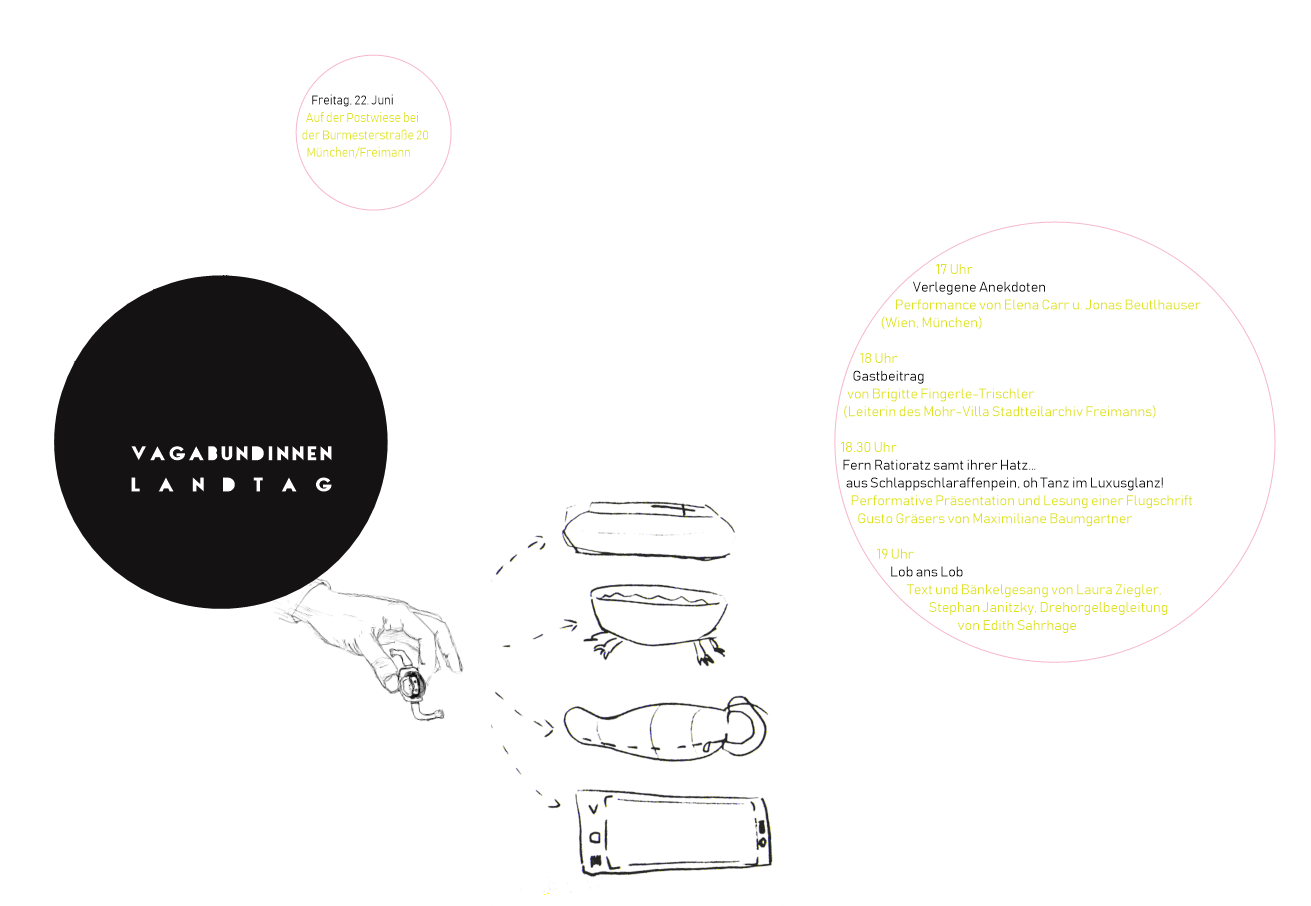
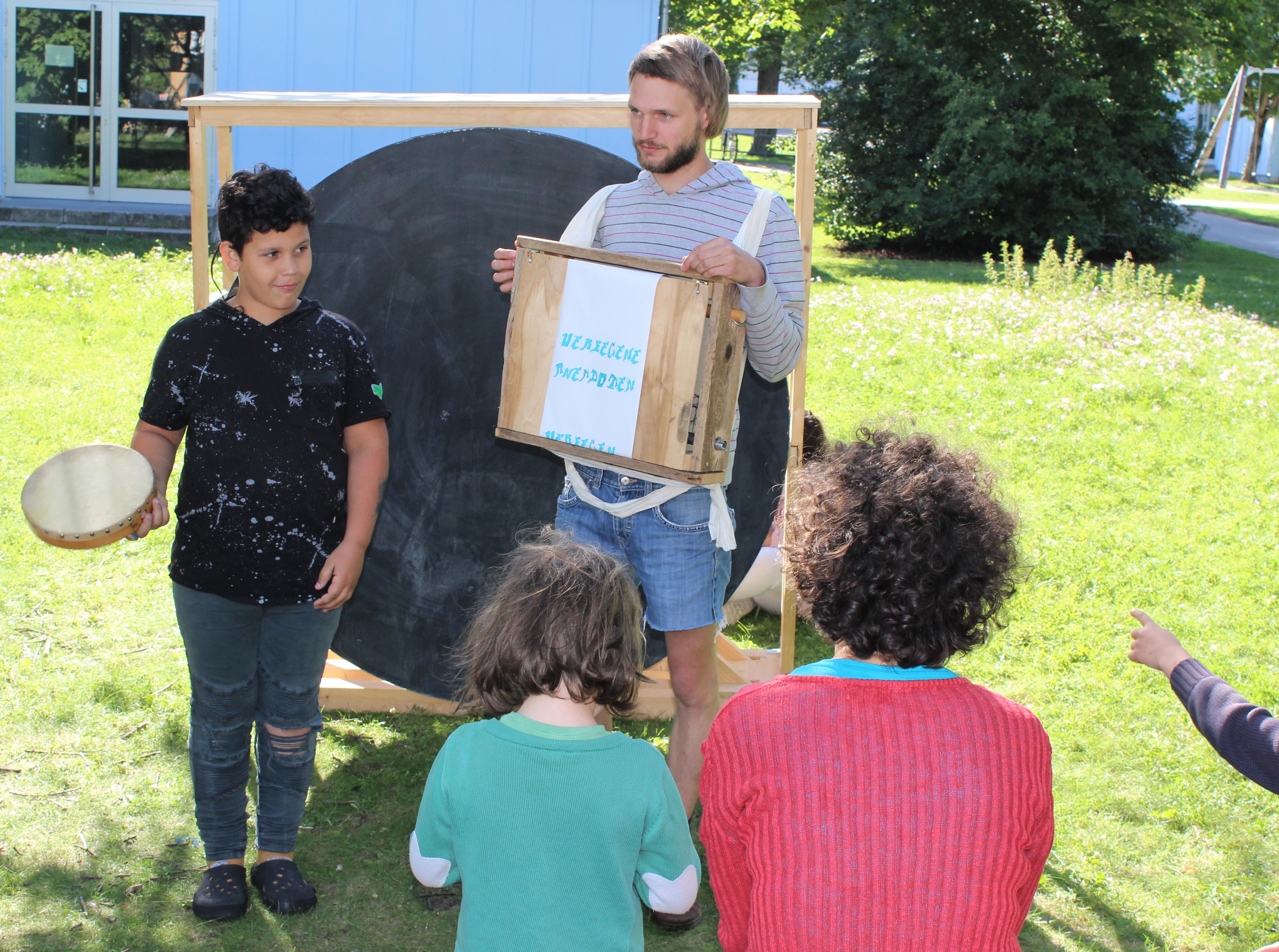
    AKTIONSRAUM Vagabund:innen Landtag with performances and readings on the work of Gusto Gräser

    Gusto Gräser went far away to be published. He wanted to publish his poems under the title Wortfeuerzeug. But only within the local authorities he found publishers , who kept sending him out of the country. He felt that this orderly and strict remote treatment of all power masters was mistreatment. In contrast, his own language was addressed directly to his counterpart. For this exchange, he was prepared to travel long distances.
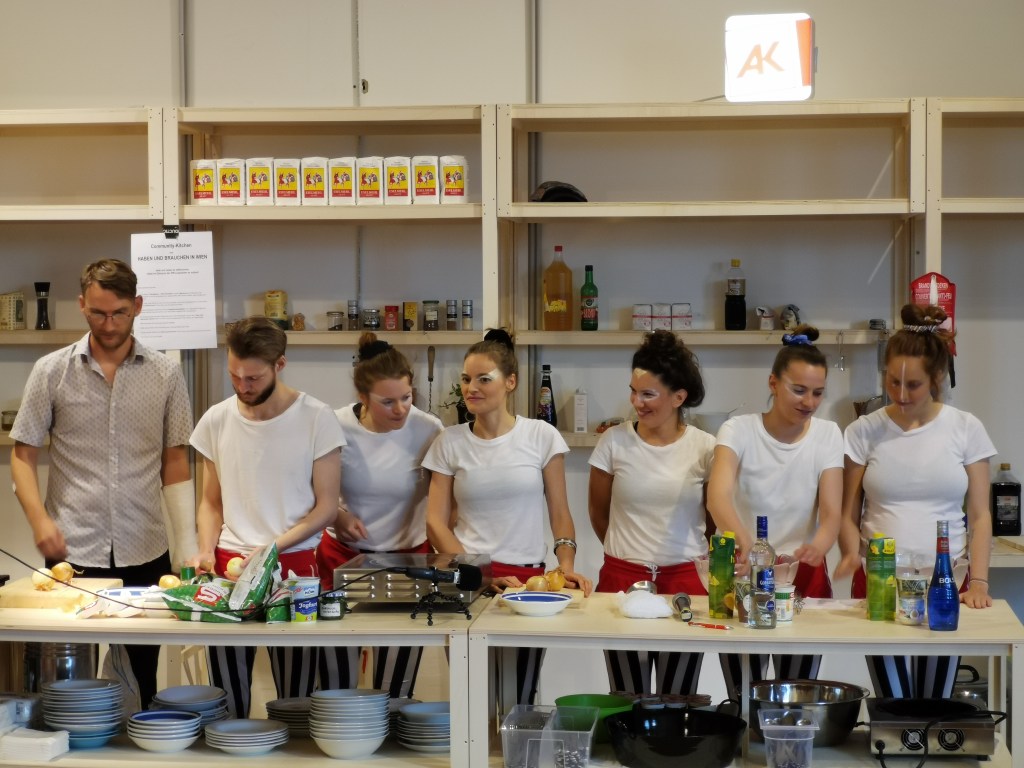
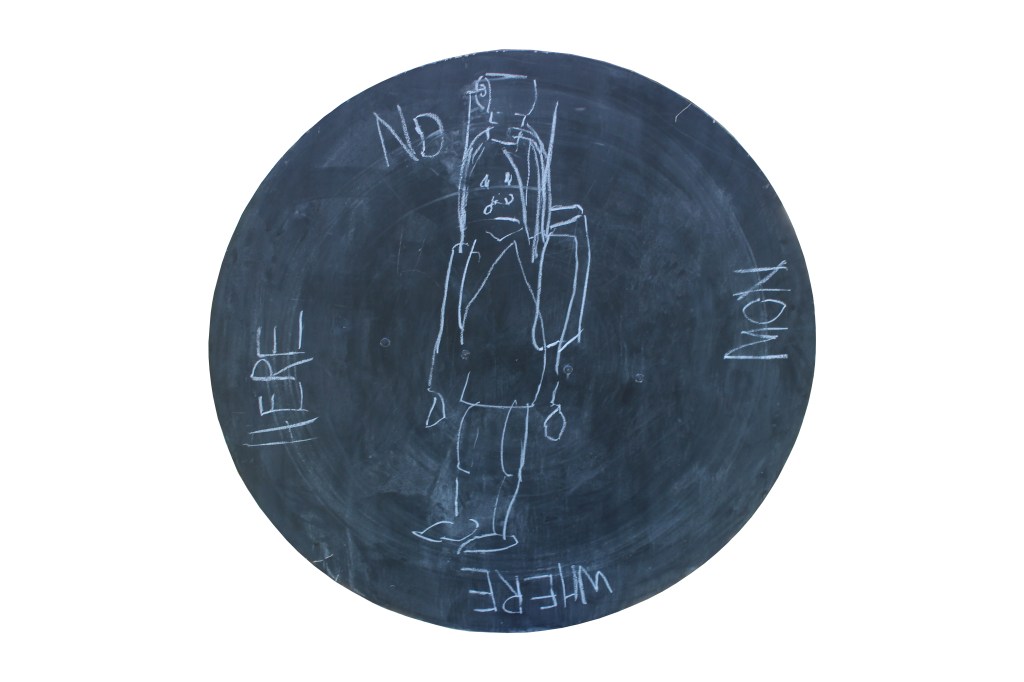
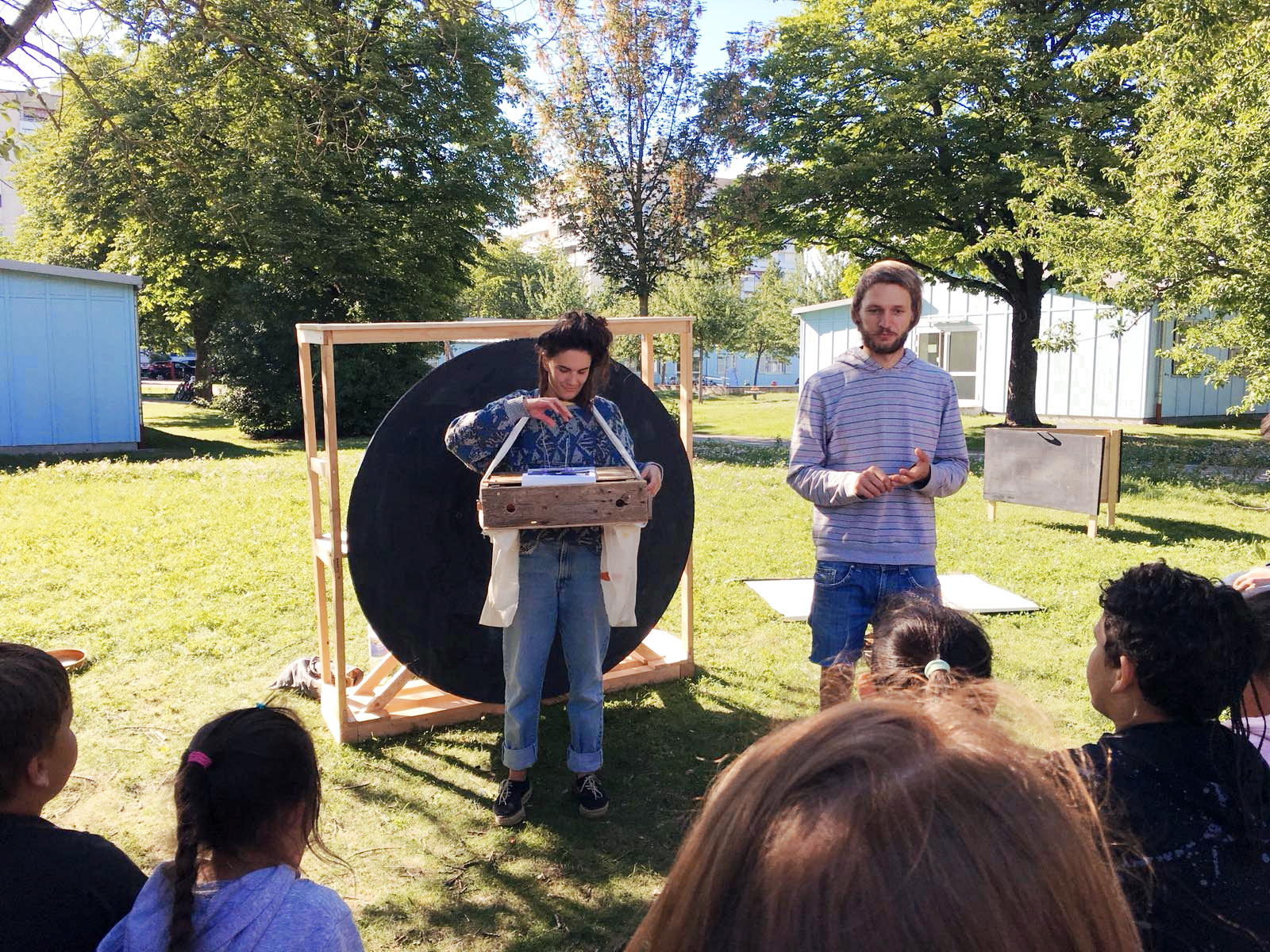
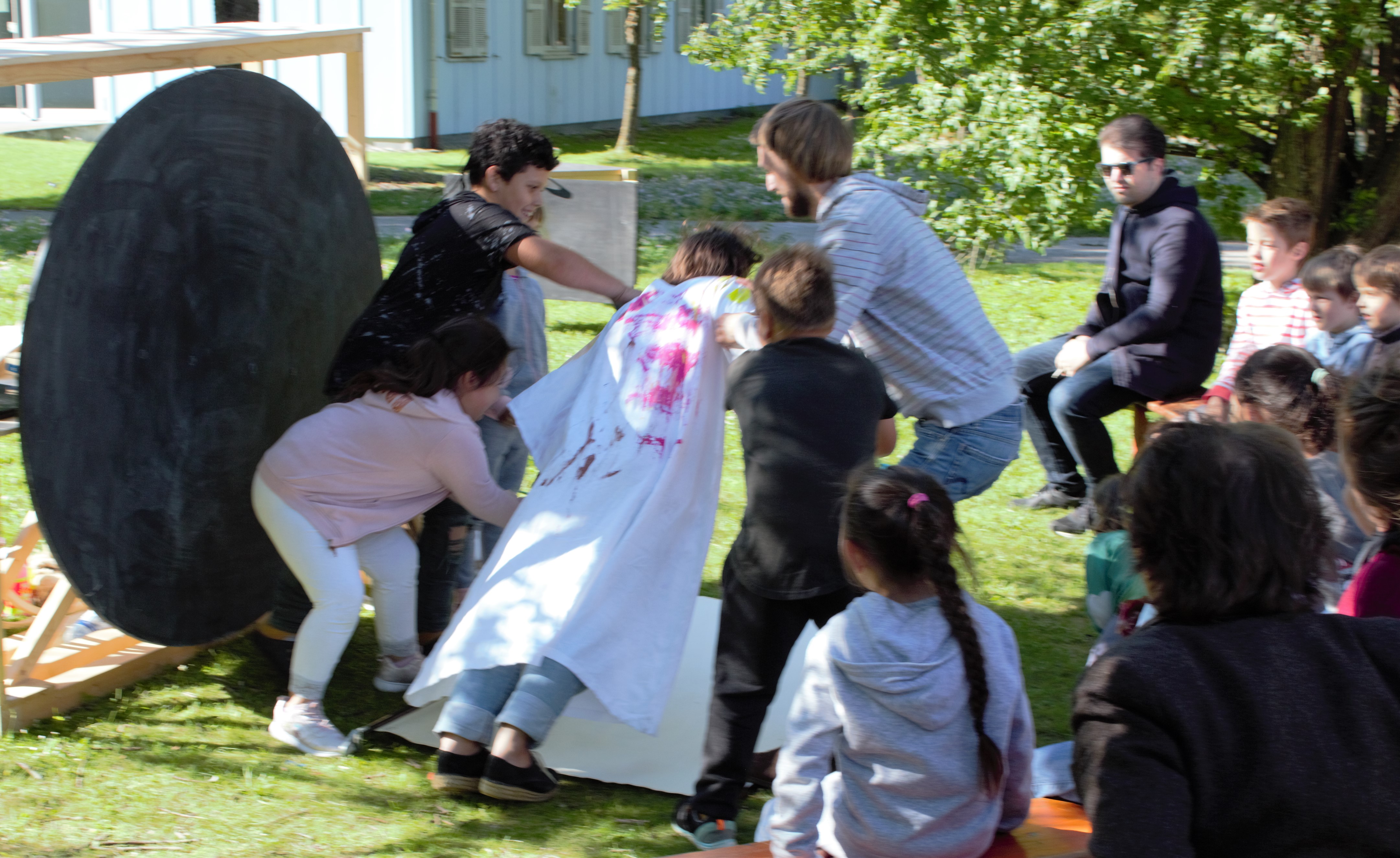
    Elena Carr’s and Jonas Carrr’s sculptural works also address the viewer directly. In the interaction of object and bodily gesture, they devote themselves to the anecdote, as a direct and oral form of language that has not been misplaced.
    At this Land Tag, historical anecdotes and images from one’s own everyday life come together.

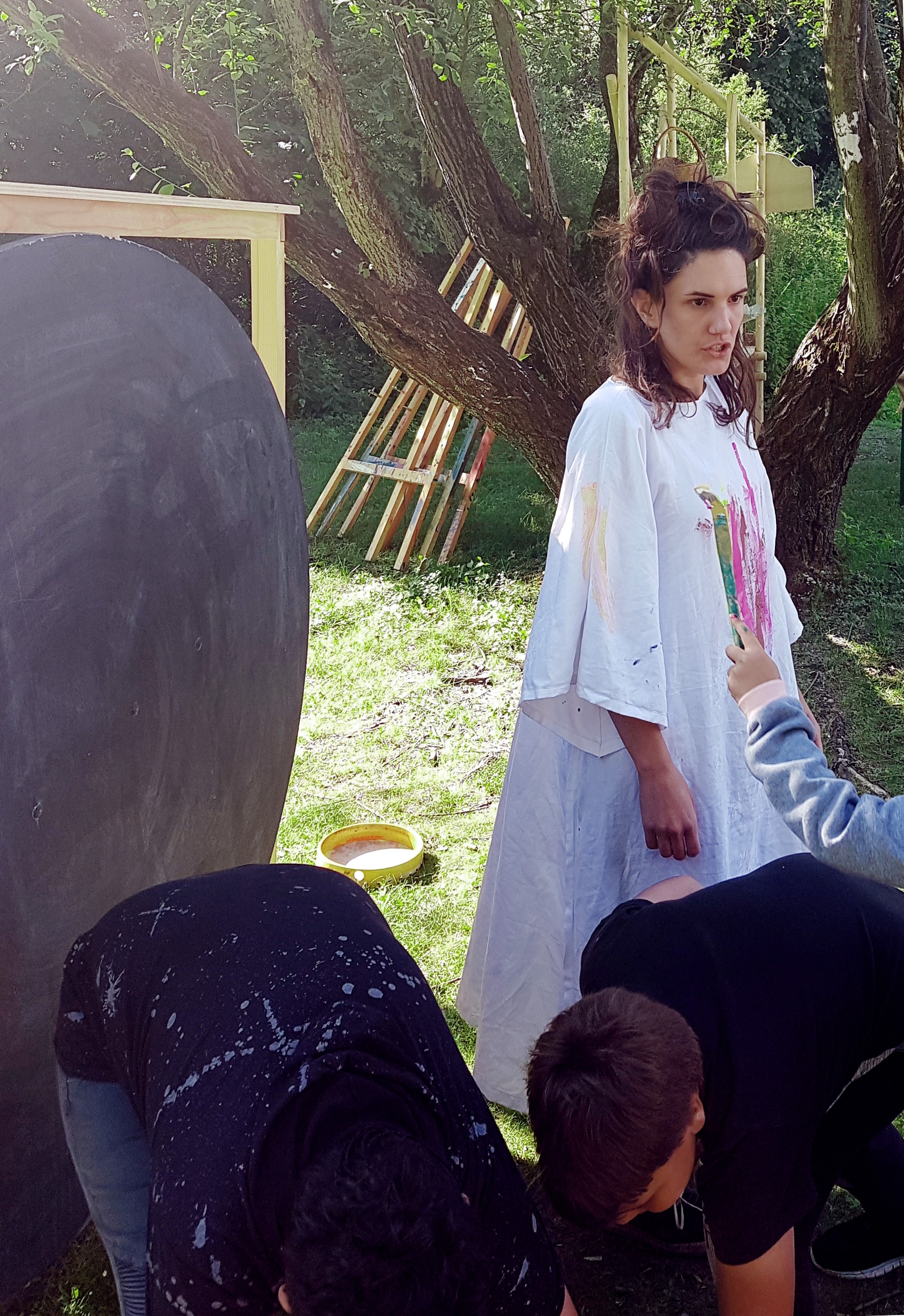
    Objects and performance in collaboration with Jonas Carr and kids of Der Fahrende Raum
    Action space Vagabund:innen Treff | Der Fahrende Raum, Munich 2018

    Verlegen im Sinne von schamhaft, scheu, schüchtern, beschämt, bang, beklommen, gehemmt, genierlich, verschüchtert, zaghaft, betreten, ängstlich, hilflos, verschämt, bedeppert, auf Hilfe angewiesen, verzagt

    Losgelöst
    losgelöst
    losgelöst von allen andern
    will ich einsam wandern

    Verlegen im Sinne von abordnen, auslagern, ausquartieren, aussiedeln, beordern, bringen, entsenden, fortbringen, fortschaffen, hinbeordern, kommandieren, platzieren, verpflanzen, wegbringen; auslogieren; verbringen

  • Haltung Einnehmen

    Haltung Einnehmen

    .

    .

    Photo Nila Thiel, Süddeutsche Zeitung

    .
    .

    .
    .
    .

    In 1968, actors and actresses at the Münchner Kammerspiele collected money for weapon donations for the Viet Cong during Peter Stein’s production of the Peter Weiss play Viet Nam Discourse. This soon led to the cancellation of the production by the theatre director. 50 years later, the Kammerspiele invites artists to occupy the theatre.

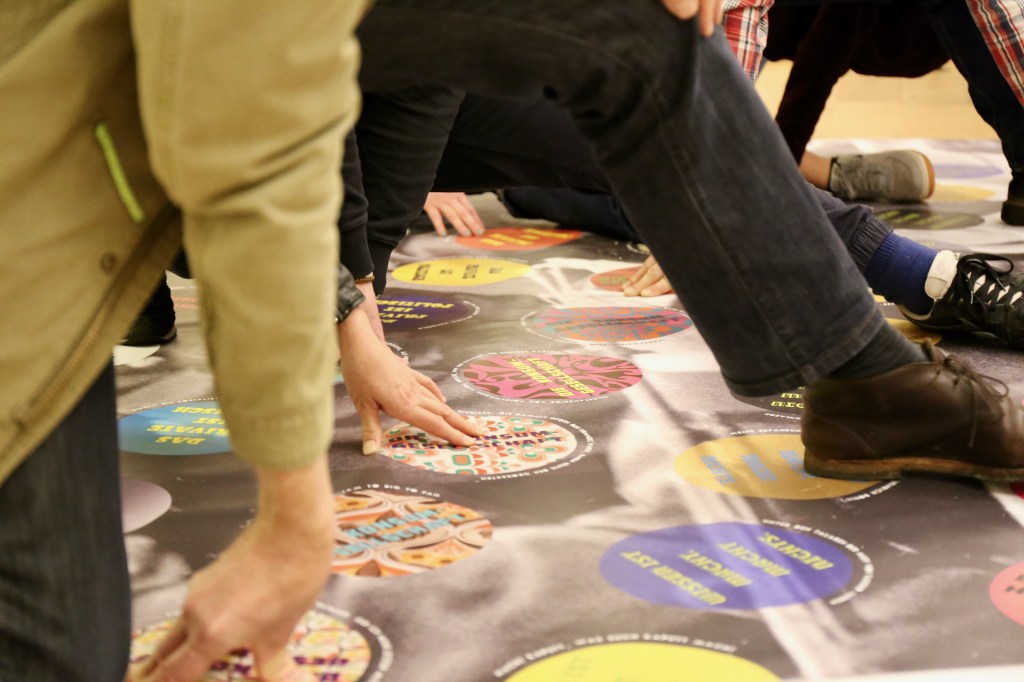
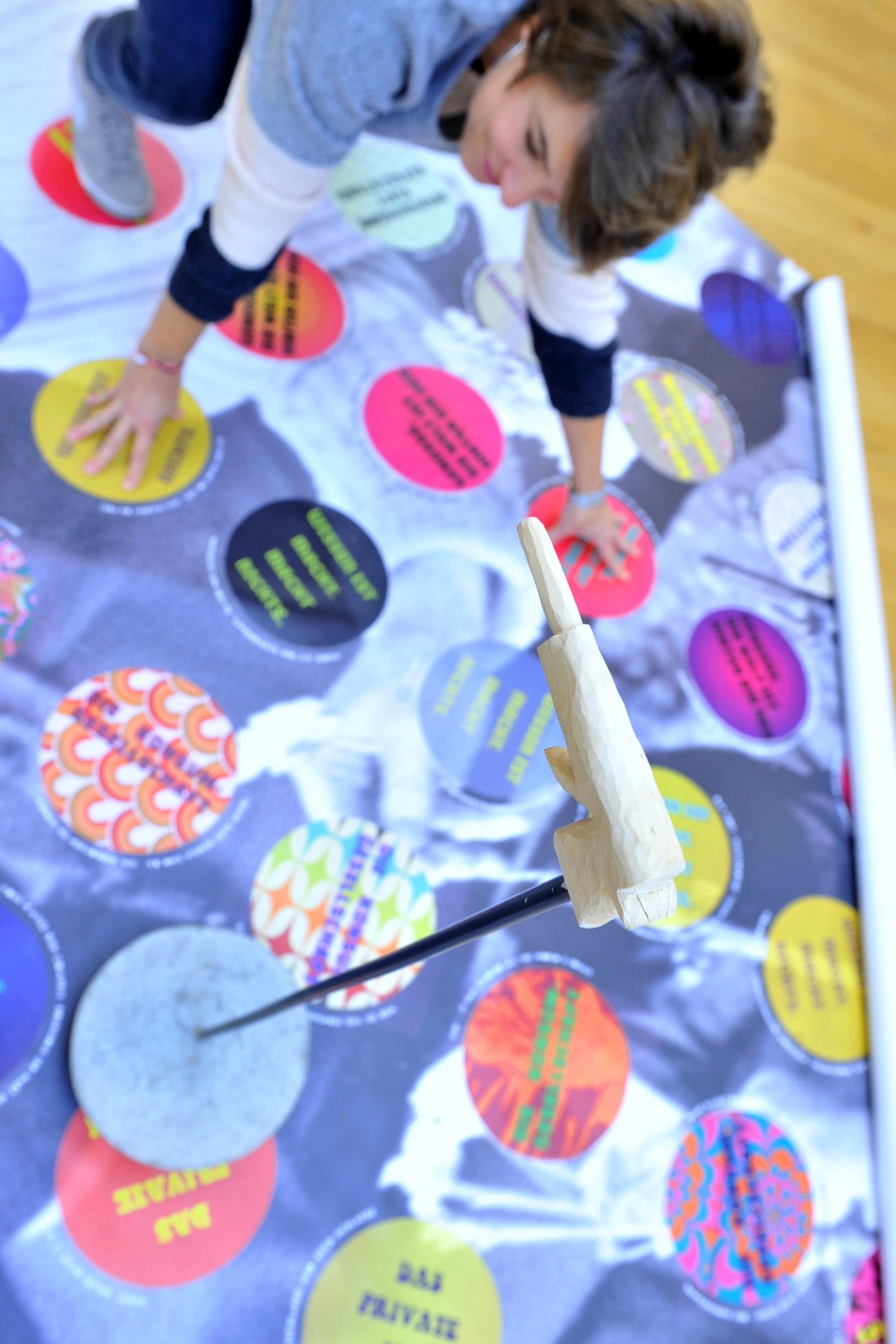
    In addition to readings by Thomas Zacharias (Akademie und Irrwitz) and Norbert Frei (1968 – Jugendrevolte und globaler Protest), ReReRevolte present the parlour game Haltung Einnehmen (Taking a Stance). Those who cannot stand change and proximity lose. The number of players is arbitrary.

    Slogans and sayings of revolutionary contexts from the time around 1968 as well as from today are assigned to contrasting typographies. The research of the third generation forms the playing surface of the parlour game Haltung Einnehmen in graphic arrangement.
    ReReRevolte are Michaela Andrae, Elena Carr, Lorenz Mayr, Angela Neumair and Lea Wilsdorf. The third generation.

  • Rasten

    Rasten

    Exhibition view | Graduate exhibition, Academy of Fine Arts Munich 2017

    Rastraum
    Graduate exhibition, Academy of Fine Arts Munich 2017


    Sound installation inside the bonnet: Der gelassene Mensch (Dampf, Dampf!)
    Elena Carr, Manuel Neboisa, Lorenz Schreiner | 2015

  • Cinema Românesc

    Cinema Românesc

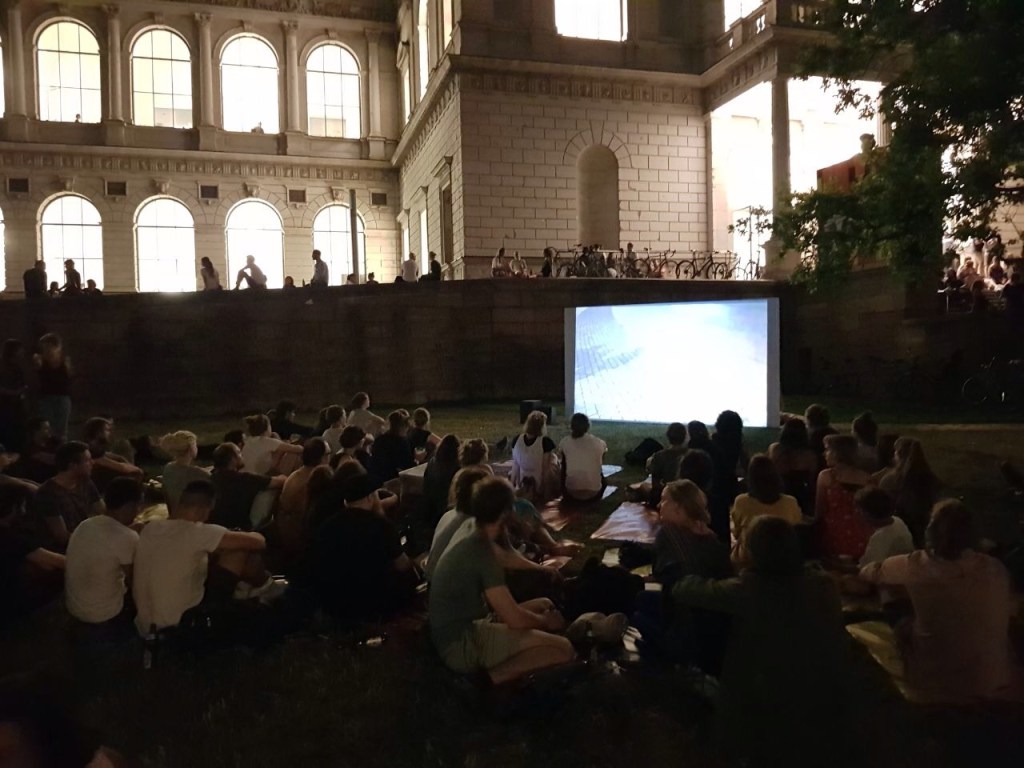
    Short Film Screenings 2017

    PAO (Potoc /RO)
    Subzentrale Maximiliansforum Munich (GER)

    Annual Exhibition, Academy of Fine Arts Munich (GER)
    Faculty of Fine Arts Timișoara (RO)

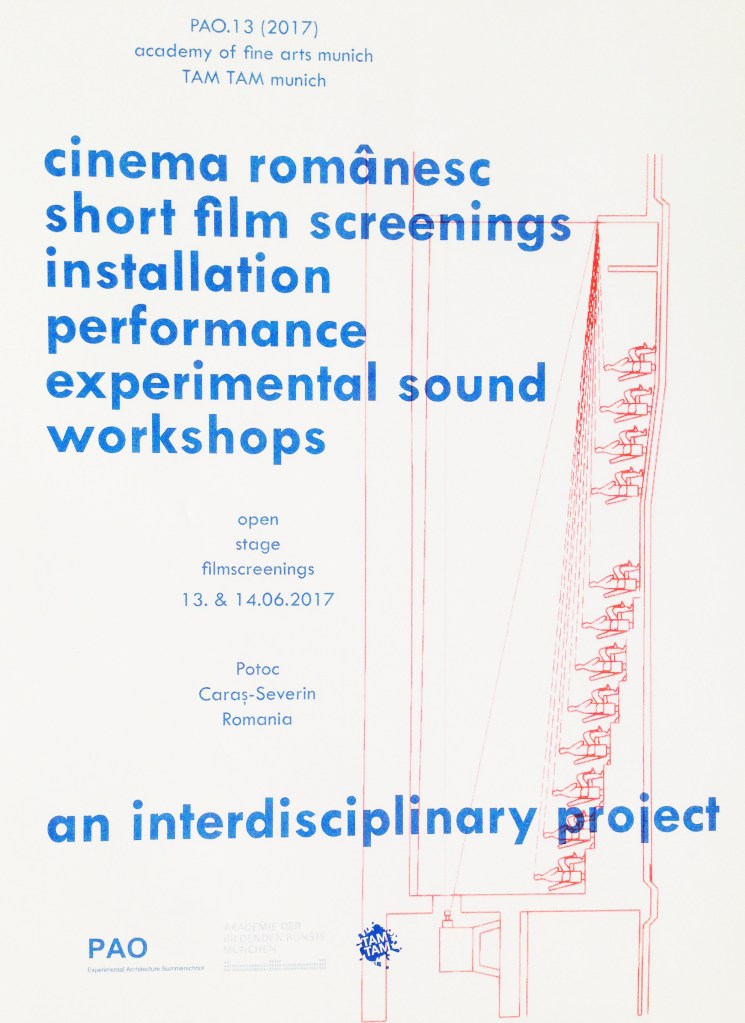
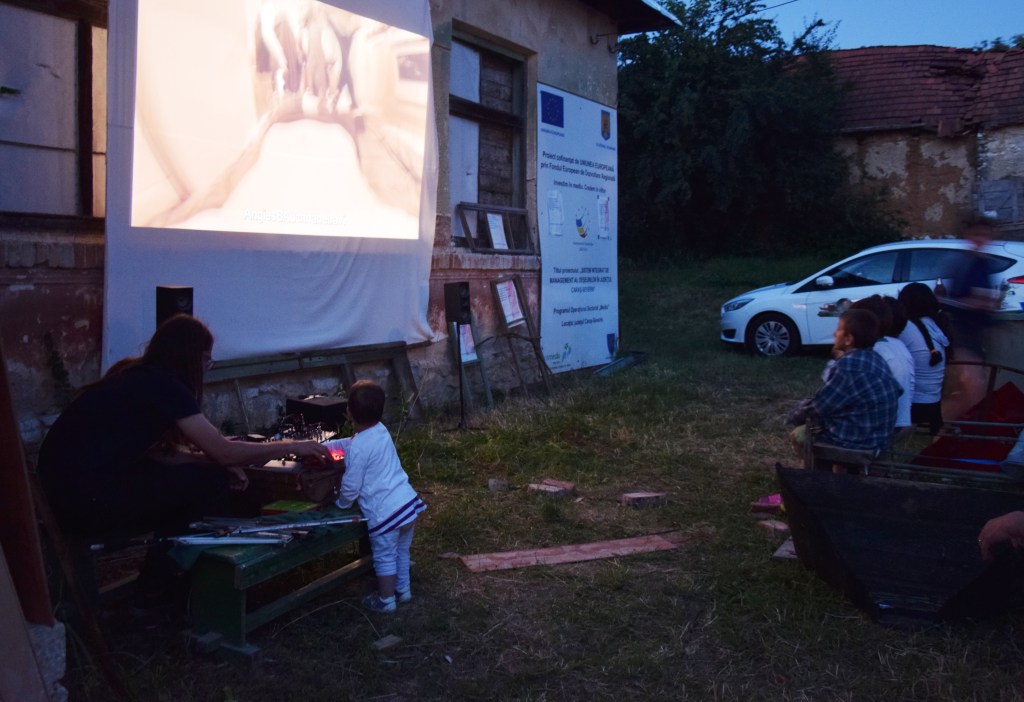
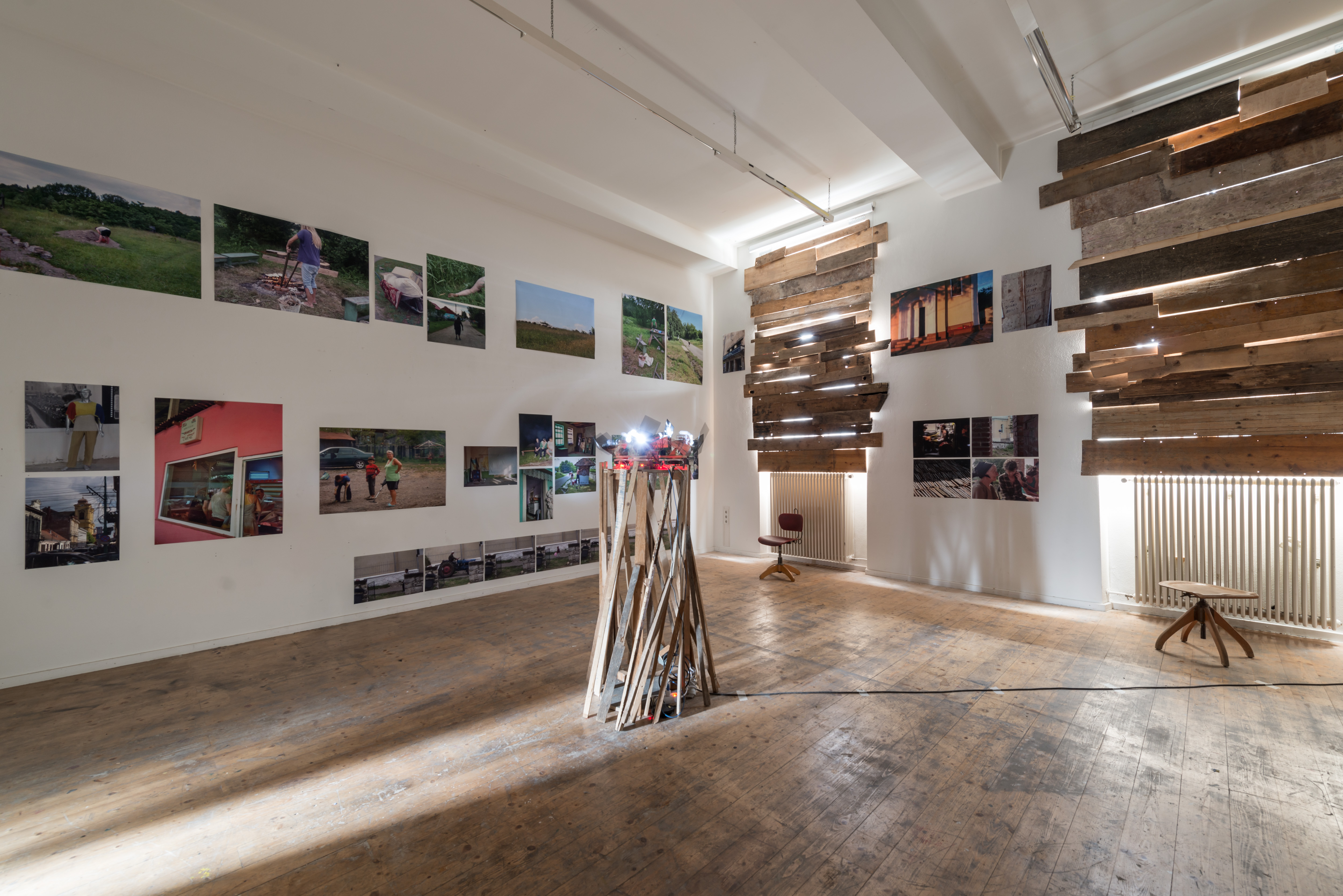
    Students from different classes at the Academy of Fine Arts embark on a transdisciplinary journey to Romania with the Munich collective TAM TAM to develop a multimedia workspace on site. In collaboration with the Romanian Experimental Architecture Summerschool PAO, a cinematographic installation is being created. The project will take place in a former school building in the village of Potoc, which will become an open stage for Cinema Românesc, short film screenings, installations, performances, experimental sound and workshops. Fragments of images will be juxtaposed associatively.

    Coordination Elena Carr, Katharina Deml u. Lea Wilsdorf
    With Anca, Michaela Brandl, Constantin von Canal, Costas Coman, Katharina Deml, Hardy Funk, Elena Haas, Peter Herr, Lorenz Mayr, Lucia Mirlach, Julia Mußgnug, Manuel Neboisa, Angela Neumair, NOT YET, Eveline Reinholz, Claudia Röhrle, Rumpeln, Cordula Schieri, Agnes Sophie Sowa, Hias Stadler, Nelly Stein, Pauline Stroux, Janina Totzauer, Sonja Wahler, Michael Wieczorek

    Romanian Roulette, a narrative moment
    Exhibition view Annual Exhibition Academy of Fine Arts Munich, 2017

    Photo: Kilian Blees

    The studio space becomes a shade, turn yourself inside the installation in a film made of single photos. The machine tells the story. A journey through time, a time shift, a small village in western Romania. A former village school becomes a working space. Fragments of images are juxtaposed associatively. Photographs build a film script while NOT YET realises the movement mechanism.

  • Das Gehirn schwimmt doch auch

    Das Gehirn schwimmt doch auch

    Franka Vogel writes about the tireless work ethic of the human brain and the attempt to calm the mind with Far Eastern meditation practices. Elena Carr takes a look at the everyday stage of the bath house and wonders about the necessity of single-cabin architecture and wellness services.
    How to cope with life away from the beach?
    Why does the increasing rationalisation of the world of work take us to the swimming pool and what does the architecture of the Munich Olympic swimming hall have in common with a cubicle office?
    At Munich Salon Irkutsk as well as in the Sub.TV Studio, the texts of the two art students met associatively, perhaps combining to form neuronal networks in the floating brains of the audience.


    Das Gehirn schwimmt doch auch
    Lecture Performance & Risography print series
    Franka Vogel & Elena Carr
    Salon Irkutsk München curated by TAMTAM 2017
    Akademie der Bildenden Künste München curated by Sub.TV Studio 2017


  • Gaunerzinken Glücksrad

    Gaunerzinken Glücksrad

    >>
    Where do they come from?
    They come from wherever you and the other protagonists come from:
    From telephone conversations, from the toilet, from the couch or from the swimming pool.

    You don’t list yourself on the flyer, I think you could have done that. The city of Straubing is listed as the director. There is no target audience.
    After all, who produces feelings in an exhibition, if not you or me?
    <<

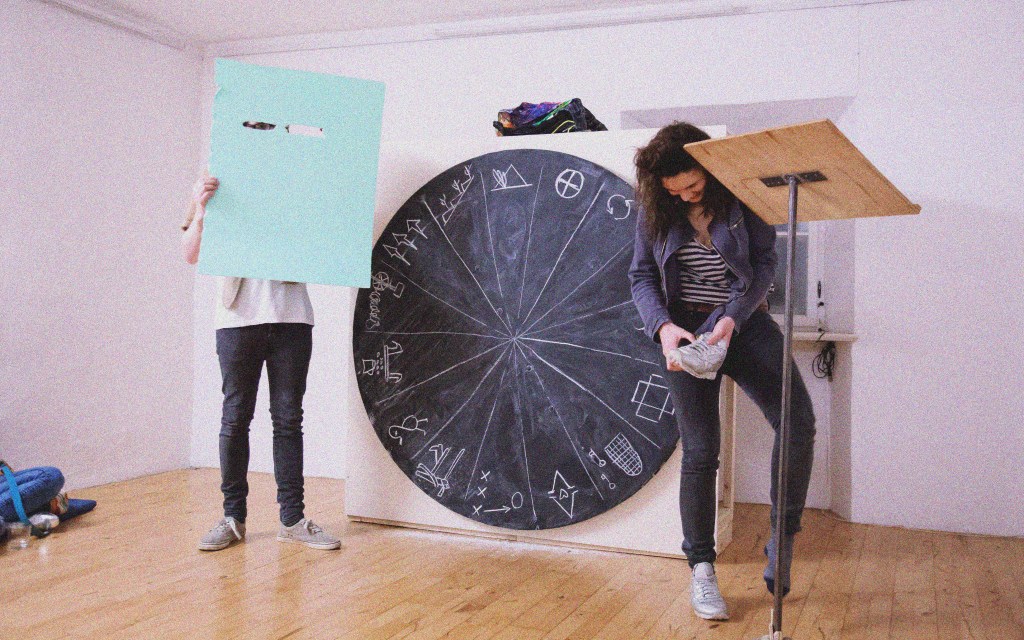
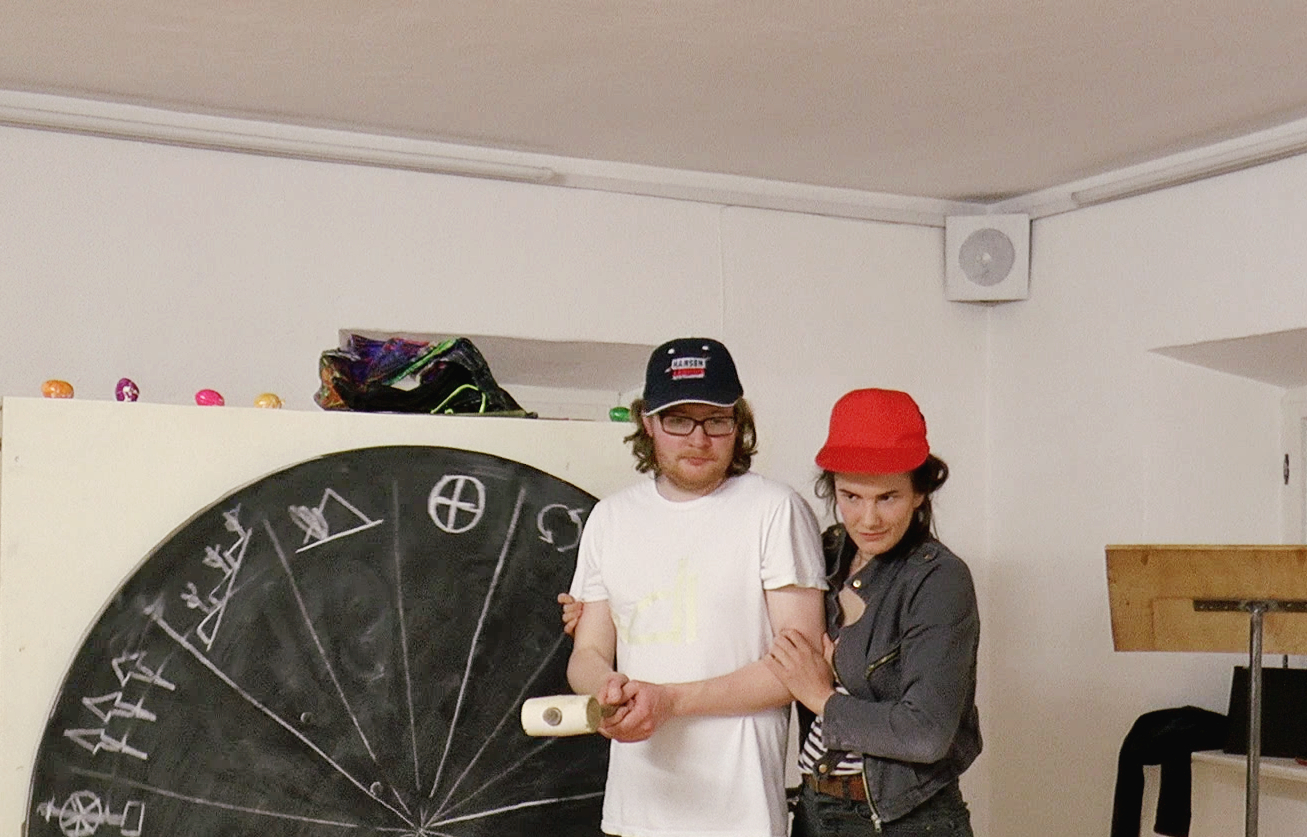
    The city of Straubing is indicated as the director | Exercise 1 – 14

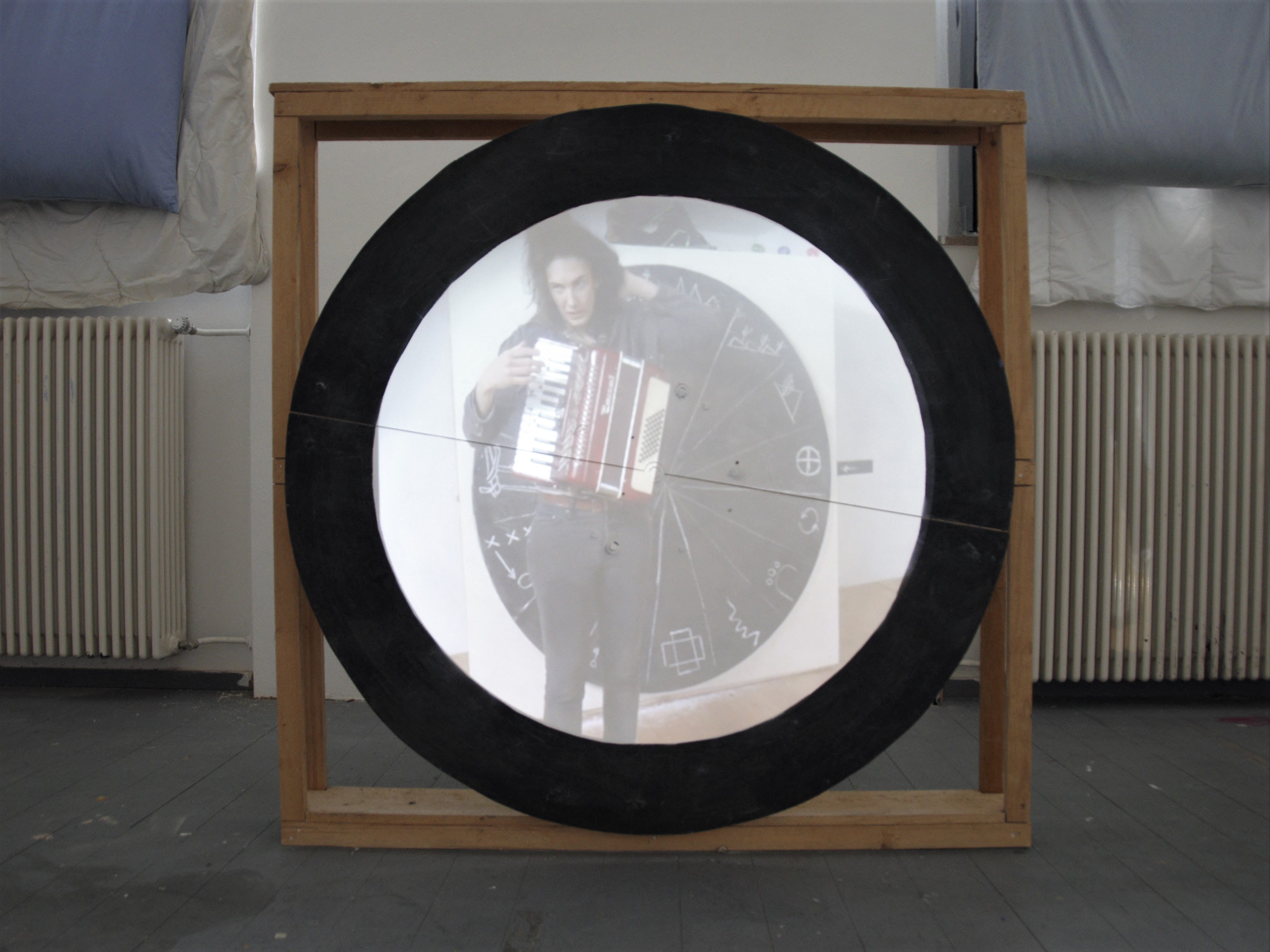
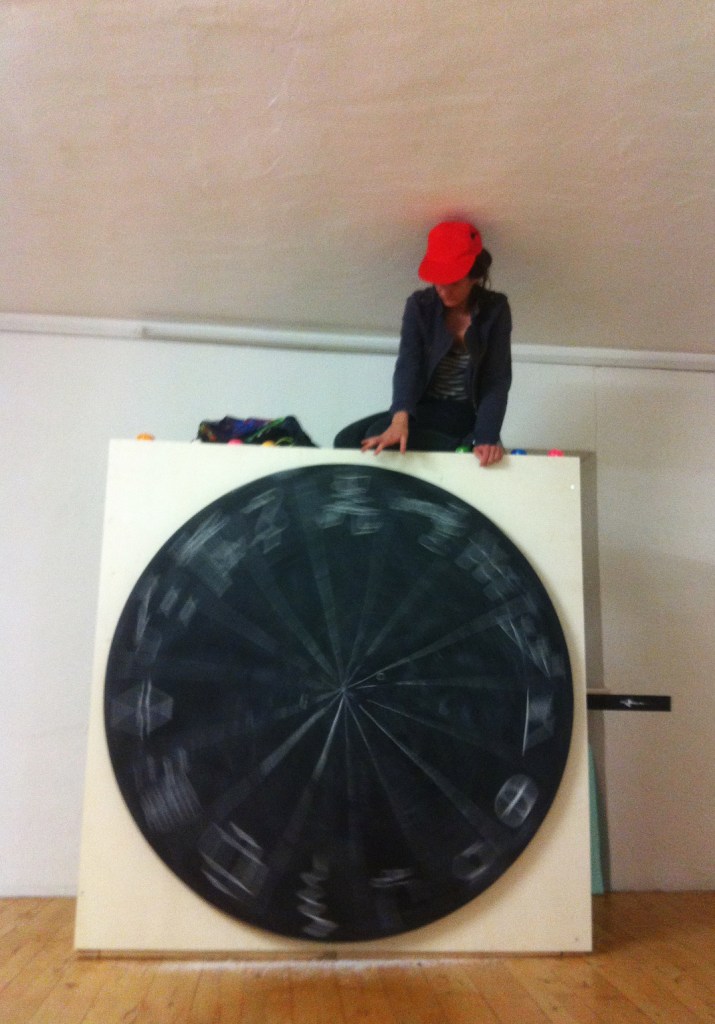
    Wheel Elena Carr and Jonas Carr, 2014/17
    Kinetic object | Wood, axle, ball bearing, board varnish, chalk

    Text Jonas Carr and Leo Heinik
    Performance Elena Carr and Marius Meusch
    Video installation Elena Carr


    Liederliche Subjekte | Exhibition at Weytterturm Straubing 2017
    Organisation: Association of Visual Artists in cooperation with the Cultural Office of the City of Straubing


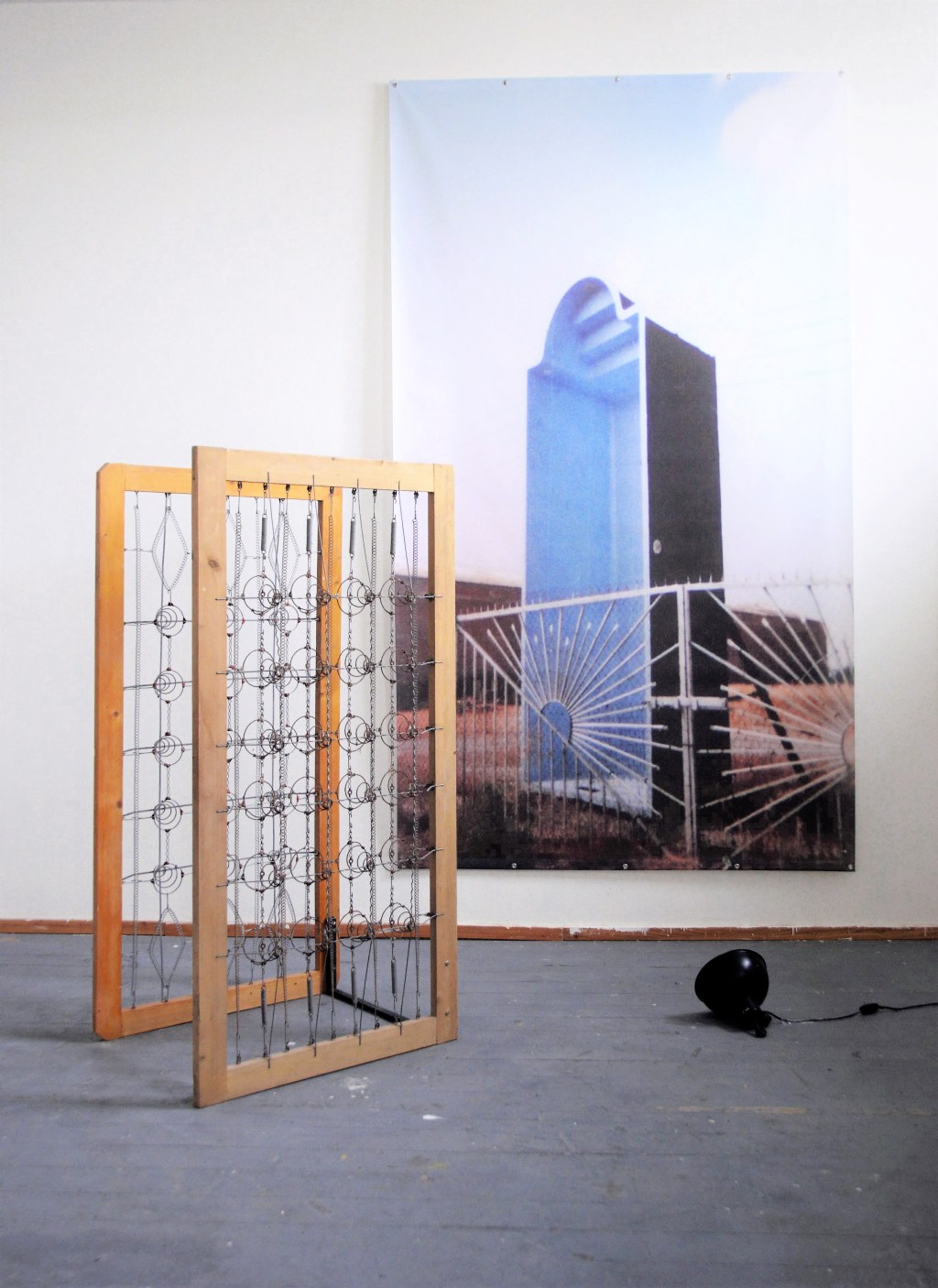
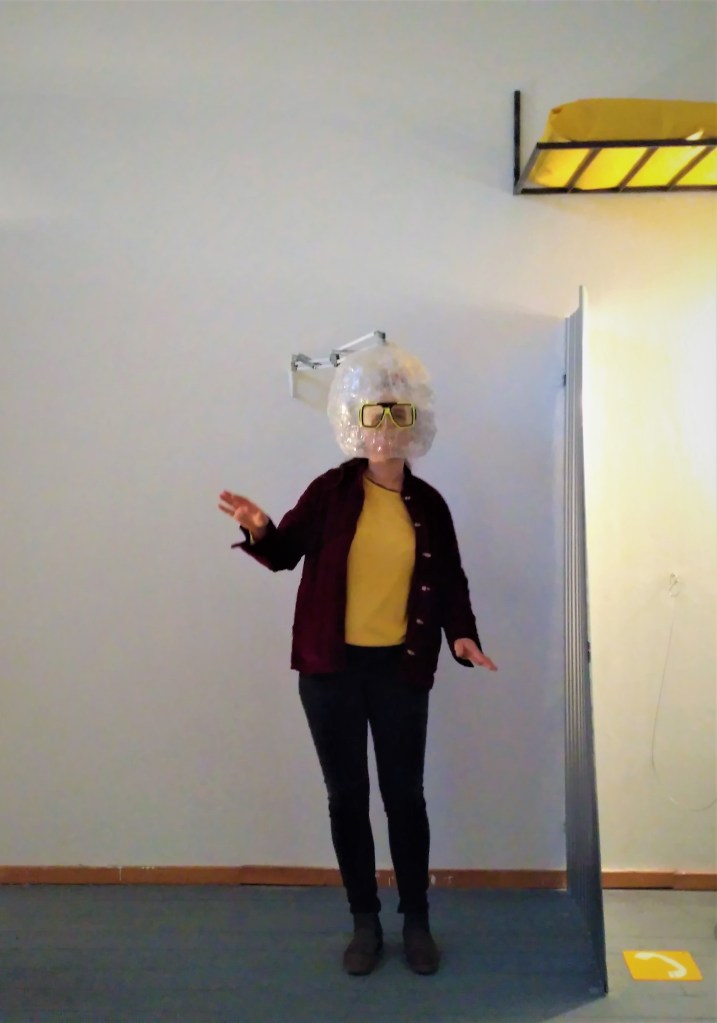
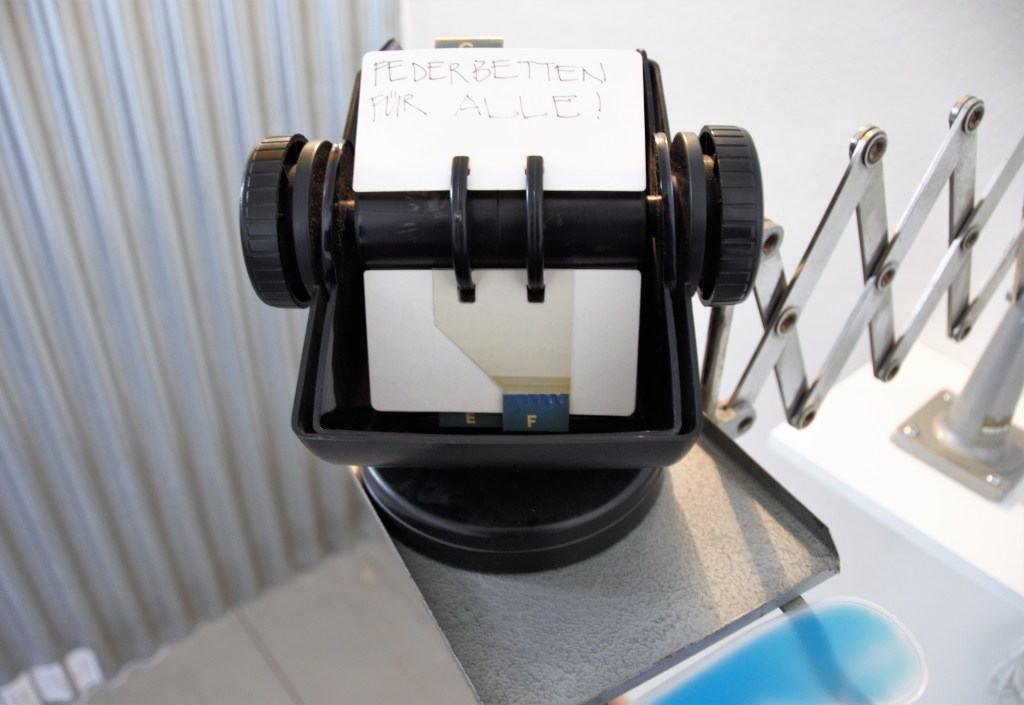
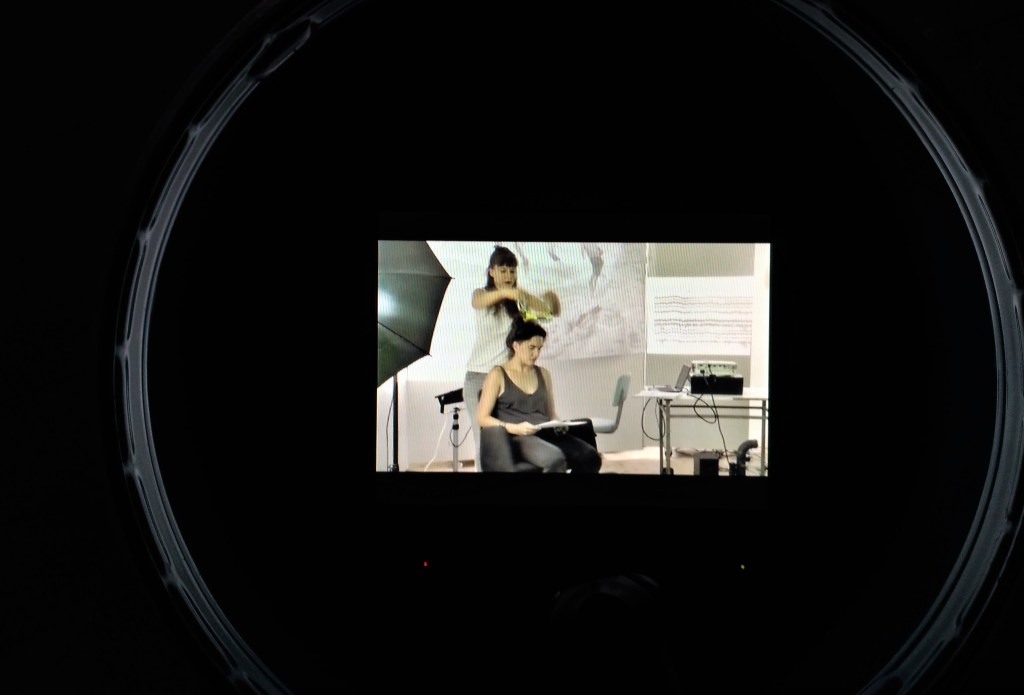
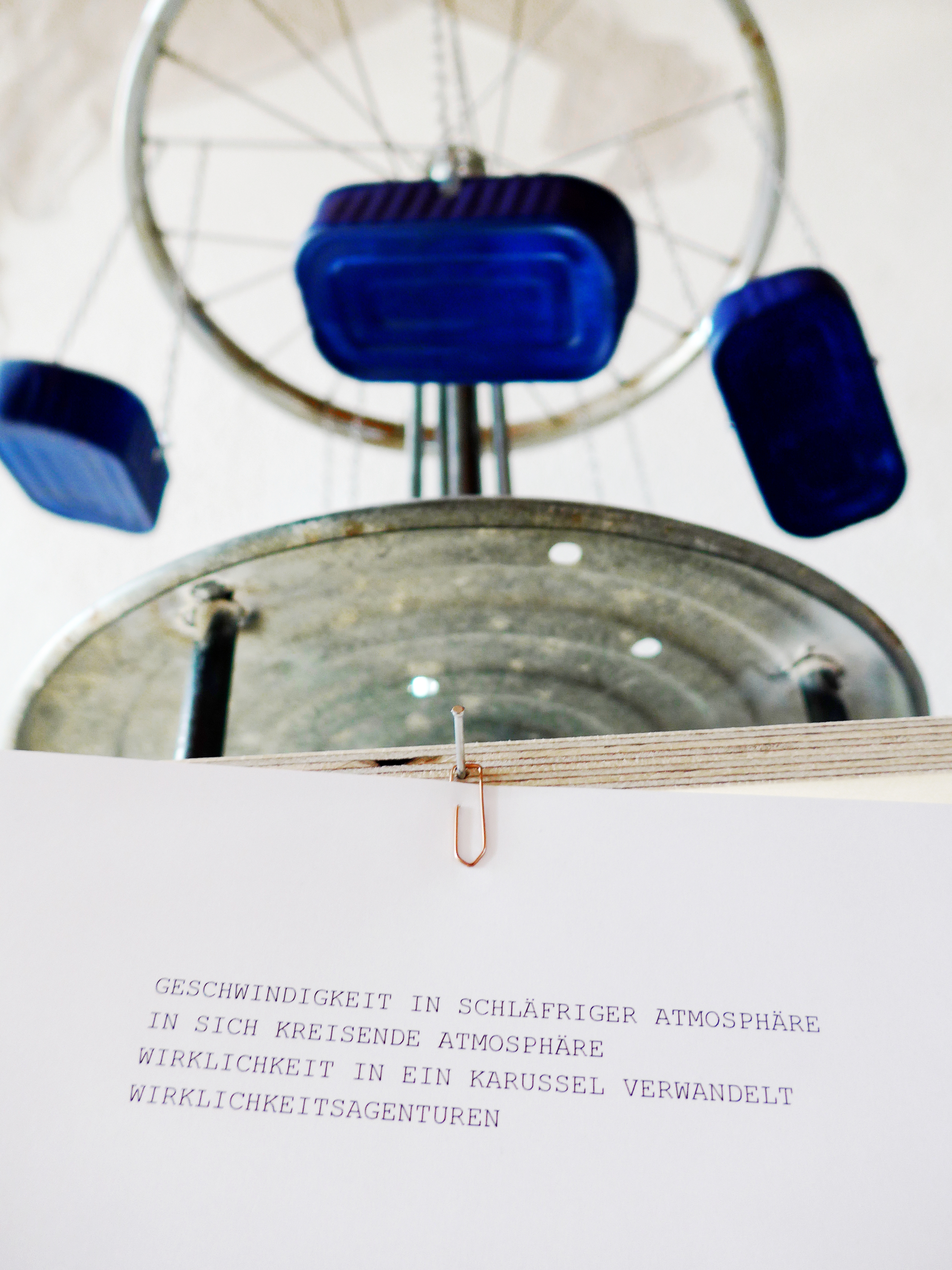
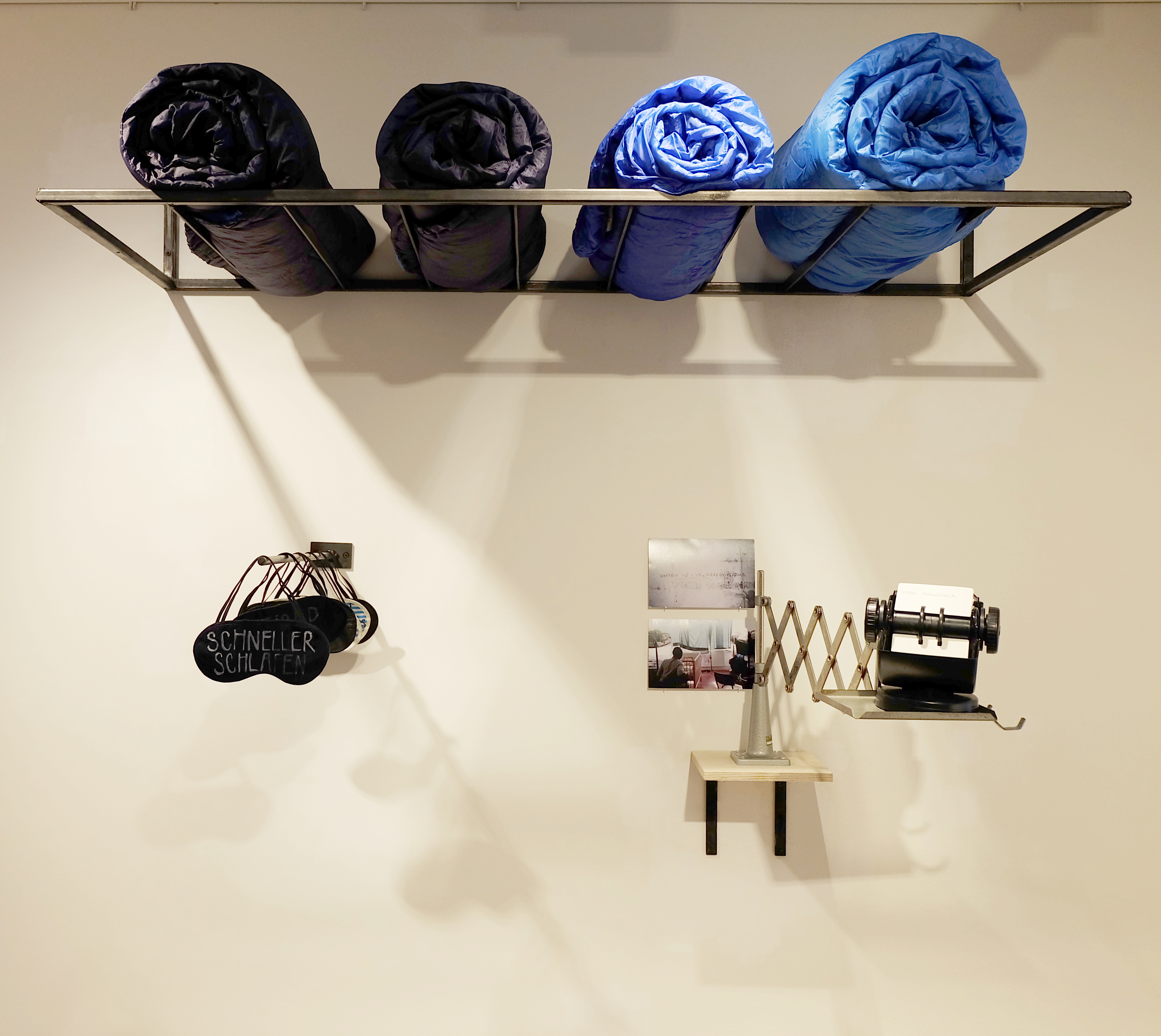
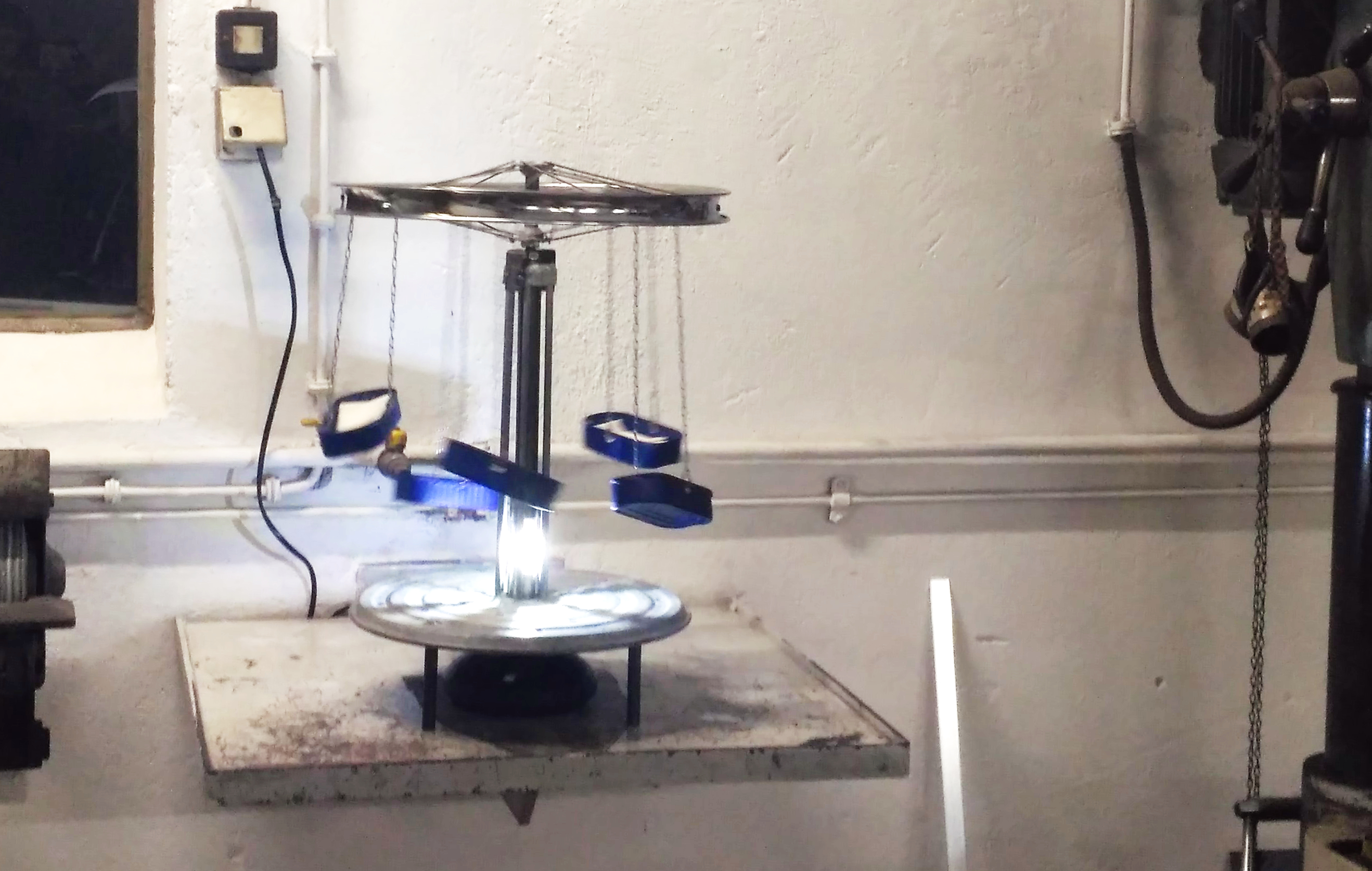
  • Wirklichkeitsagenturen unserer Schlafplatzierungen

    Wirklichkeitsagenturen unserer Schlafplatzierungen

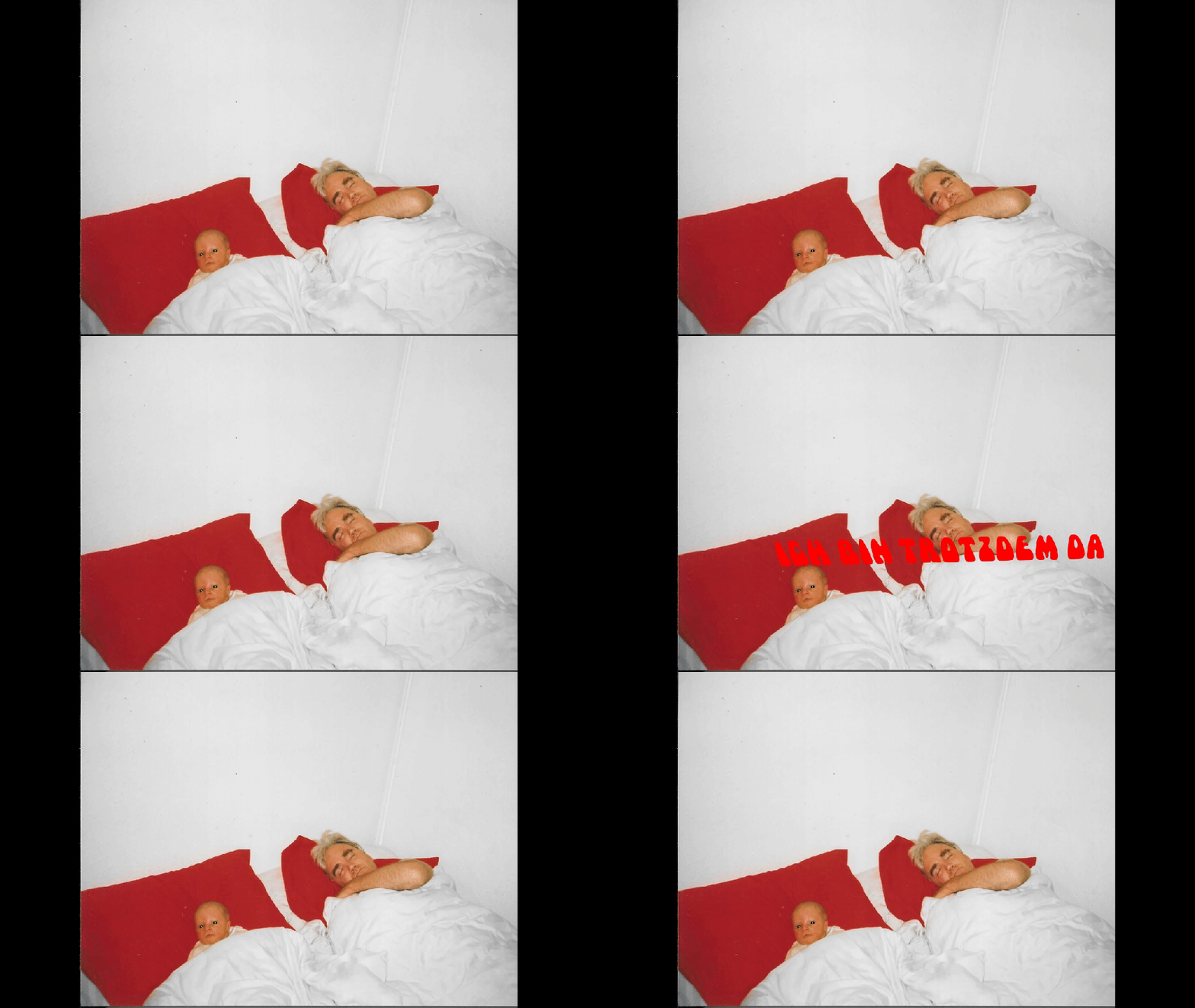
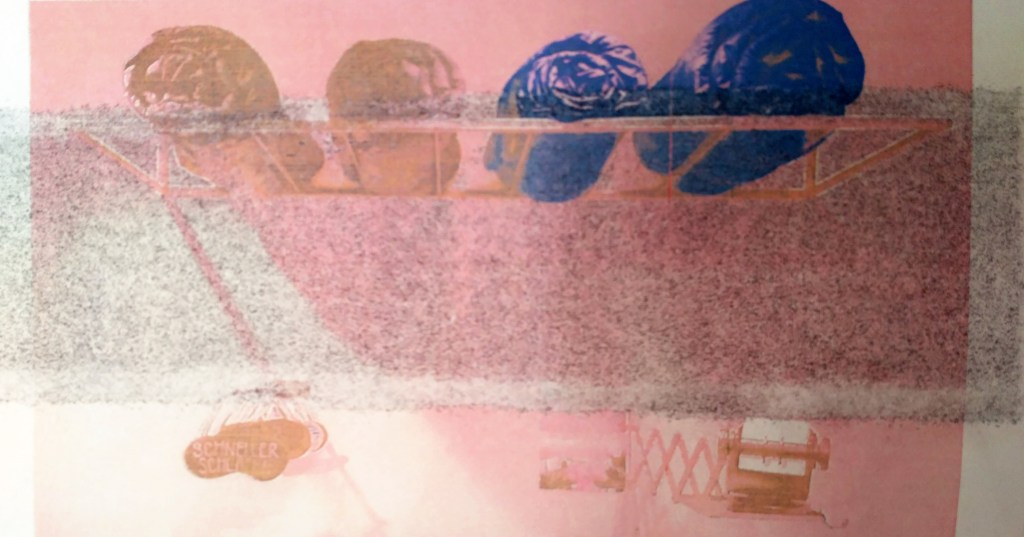
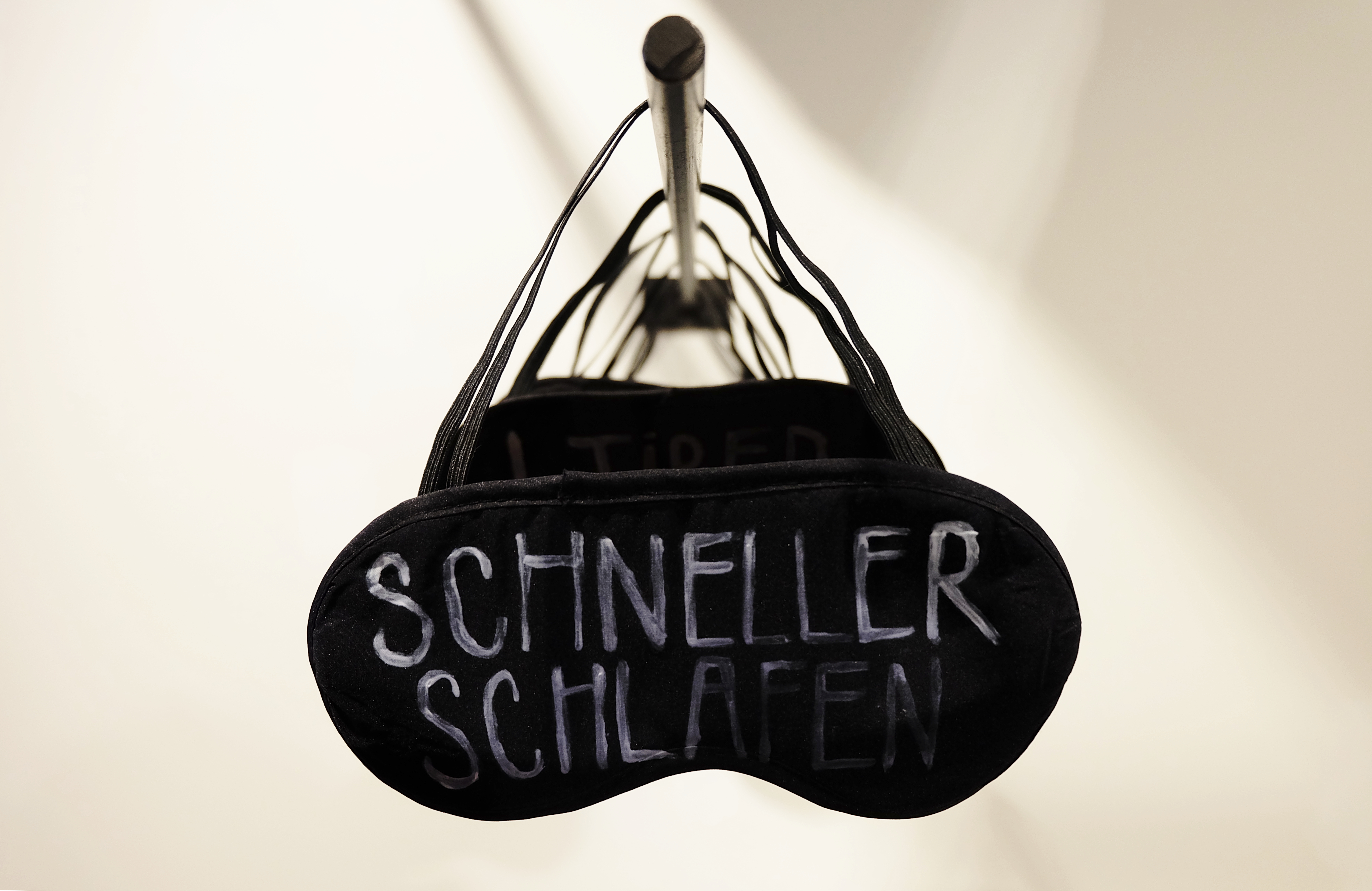
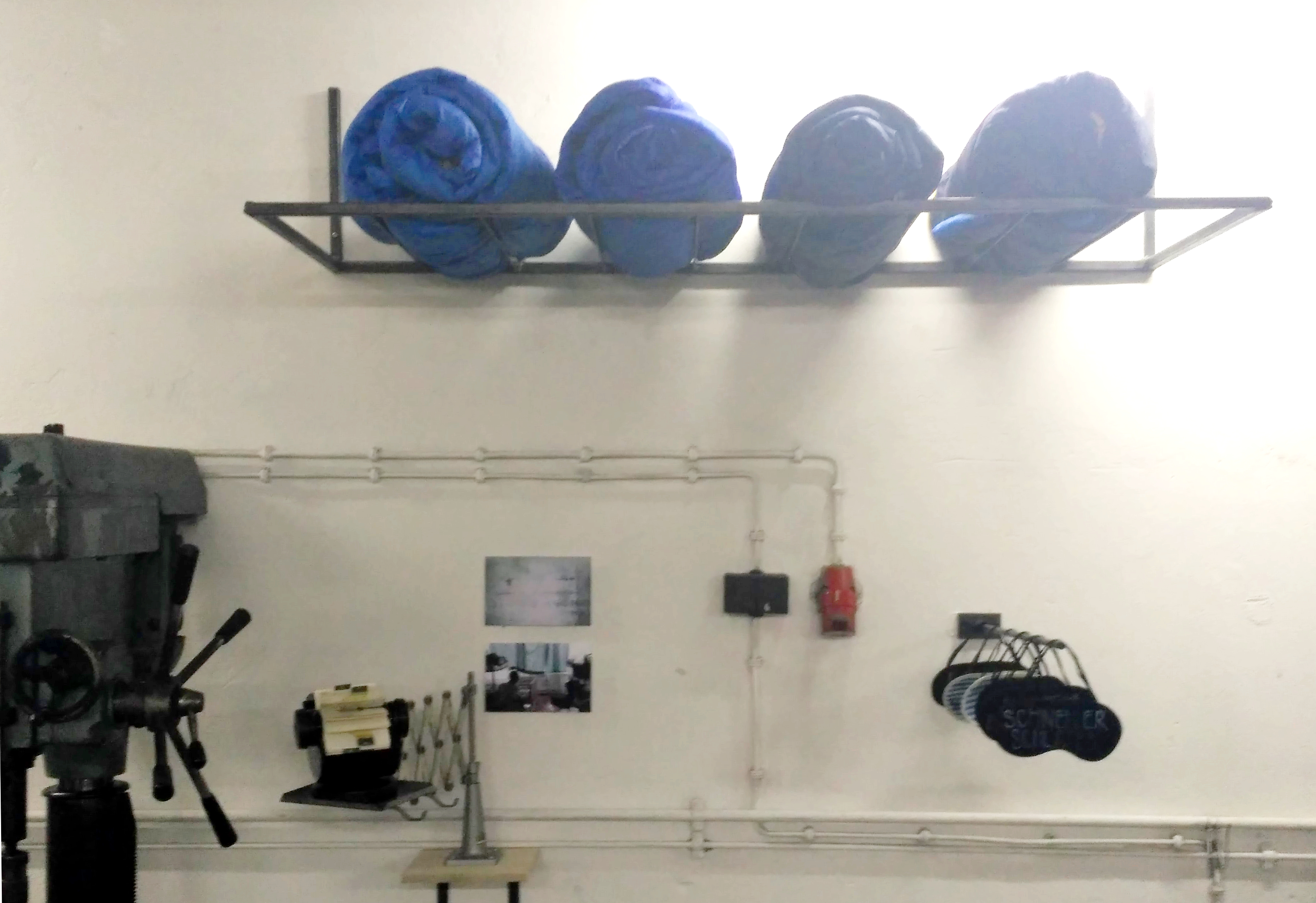
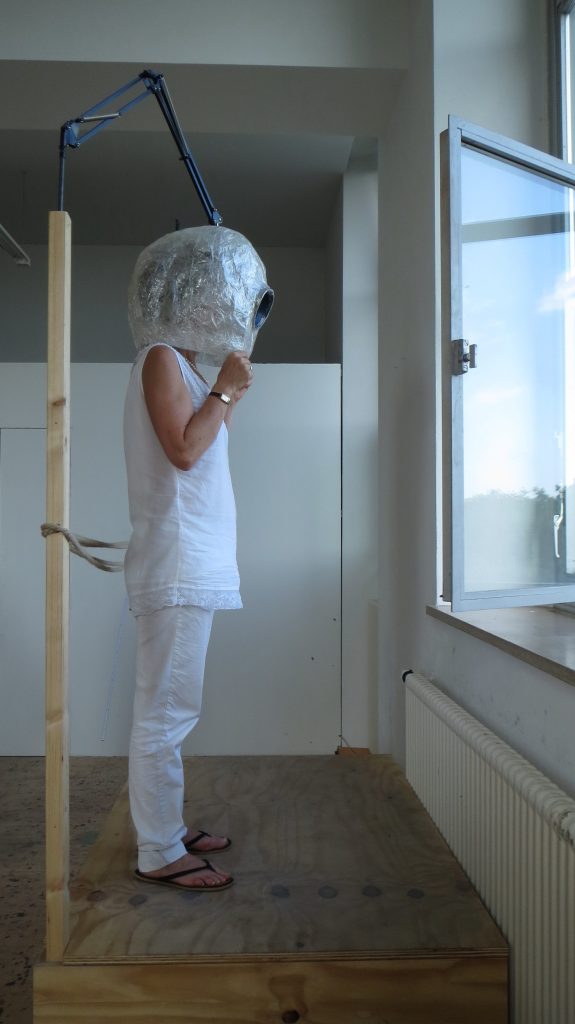
    Can you ever really say ‘I’m asleep’?Isn’t this the drowsy versionof the lying paradox?

    Artistic research on sleep

  • Wir Hunde/Us Dogs by SIGNA

    Wir Hunde/Us Dogs by SIGNA

    Performer of Wir Hunde / Us Dogs
    Performance-Installation by SIGNA
    Directors: Signa and Arthur Köstler
    Volkstheater Vienna, 2016
    Co-production Volkstheater with Wiener Festwochen
    Awarded the Nestroy Special Prize 2016

    Us Dogs/ Wir Hunde entwirft eine fiktionale Welt, in der neben dem Unbehagen im Geschlecht ein Unbehagen in der Gattung (Species Trouble) auftaucht. […]
    ‘Ich fühle mich in meinem Körper unwohl. Fühlst Du Dich in Deinem Körper unwohl, Klaus?’ sind für mich nicht nur Sätze, die verschiedene Schauspieler sprechen, sondern Fragen, die Mon Amie, Coco oder Bello mir persönlich stellen und auf die ich überraschend ehrlich antworte. […]
    Wie fiktionale sind auch unsere Welten stark dadurch determiniert, was in ihnen ereignishaft bzw. erzählenswert ist. Auf den Boden zu pinkeln, die Hände der Besucher abzuschlecken, seine Geschlechtsteile an ihren Beinen zu reiben oder Mülleimer umzuwerfen und deren Inhalt zu fressen, ist in der Welt von Canis Humanus nur bedingt ereignishaft und damit erzählenswert. Aber dass ein Besucher regelmäßig Kuchen mitbringt oder einen Hundsch unsittlich angefasst hat und letztlich das Haus verlassen musste, wird immer wieder erwähnt.
    Klaus Speidel: “Mach Mensch!”, 2016 | Spike Art Magazine

    Da steht man nun vor Darstellern, die sabbern, rülpsen und aus Näpfen saufen, zu Whitney Houston heulen und die Hand lecken, die sie mit Hundekeksen füttert. Es ist diese unheimliche, in manchen Momenten perfekte Aneignung tierischen Verhaltens, die Wir Hunde / Us Dogs so beklemmend macht.
    Eva Biringer | Nachtkritik.de

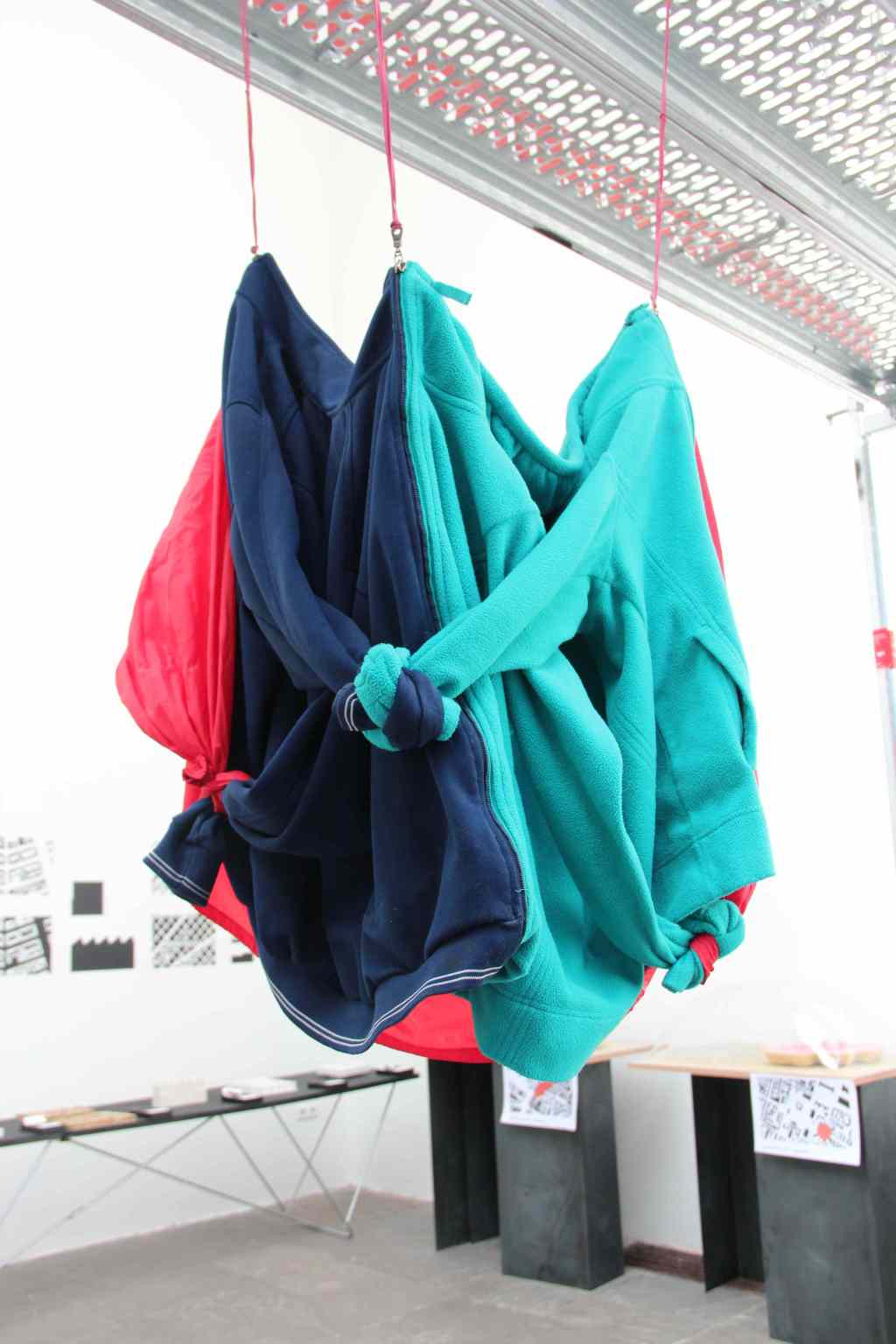
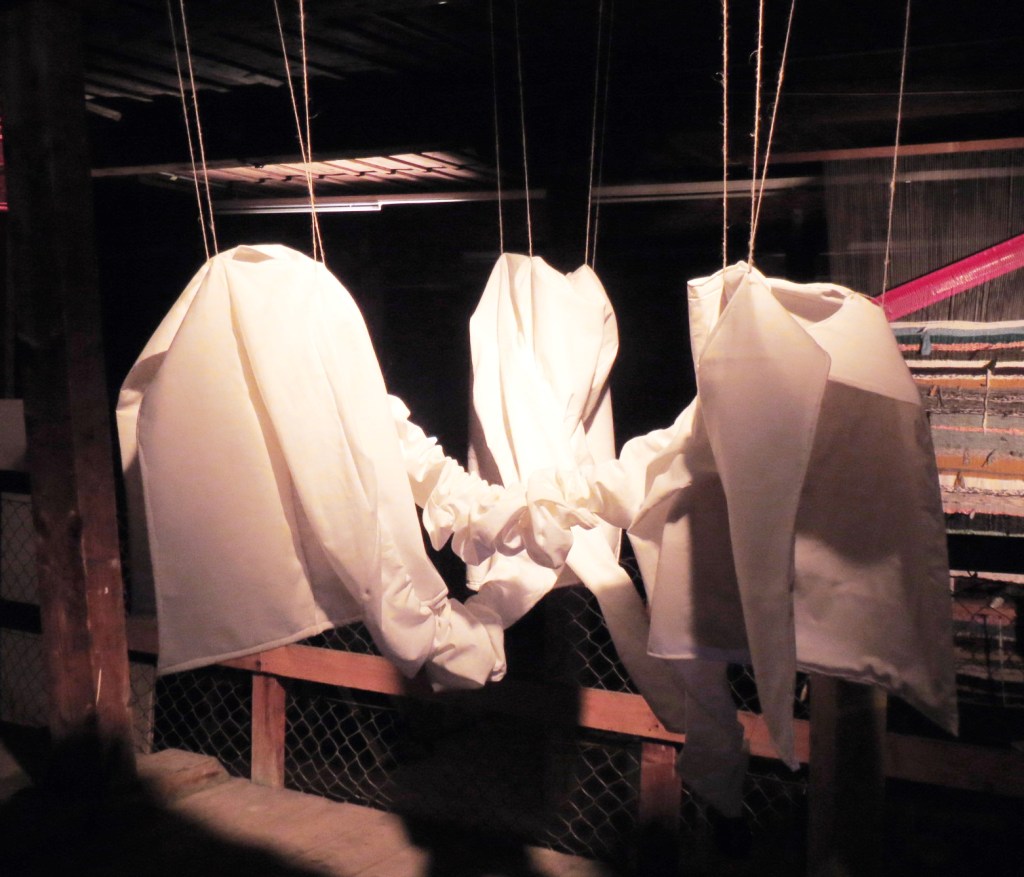
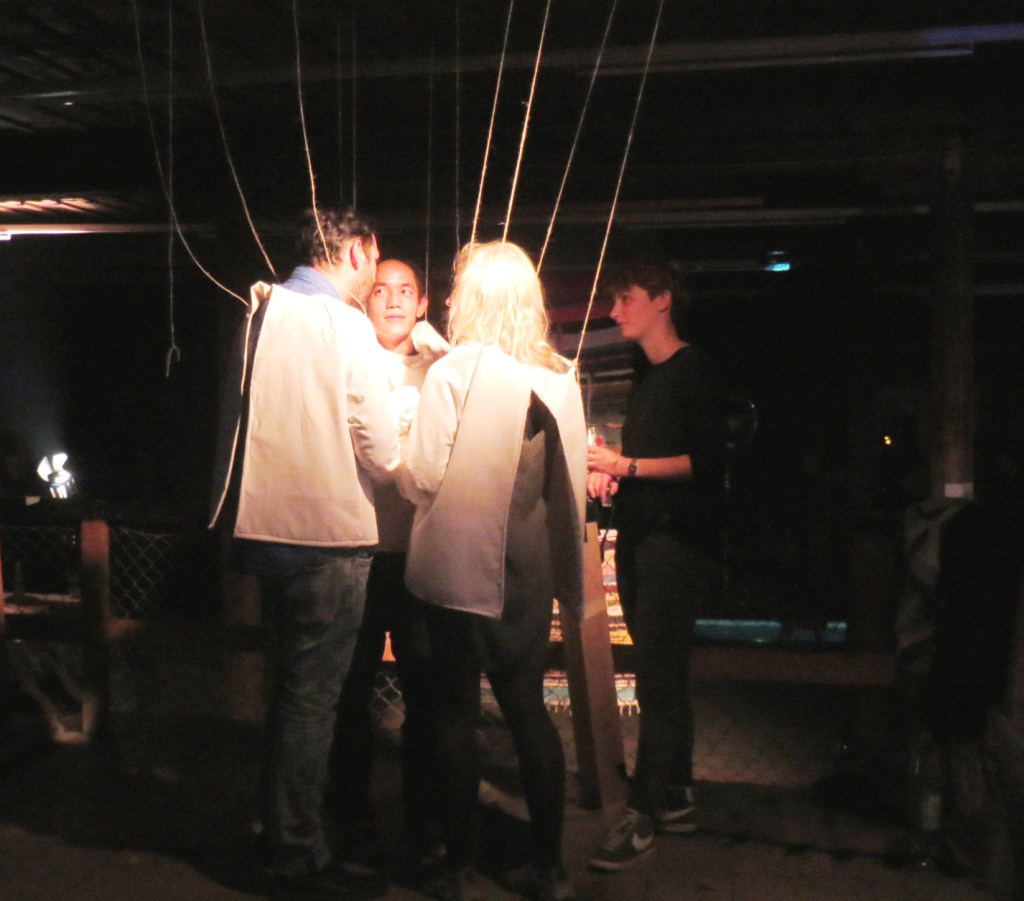
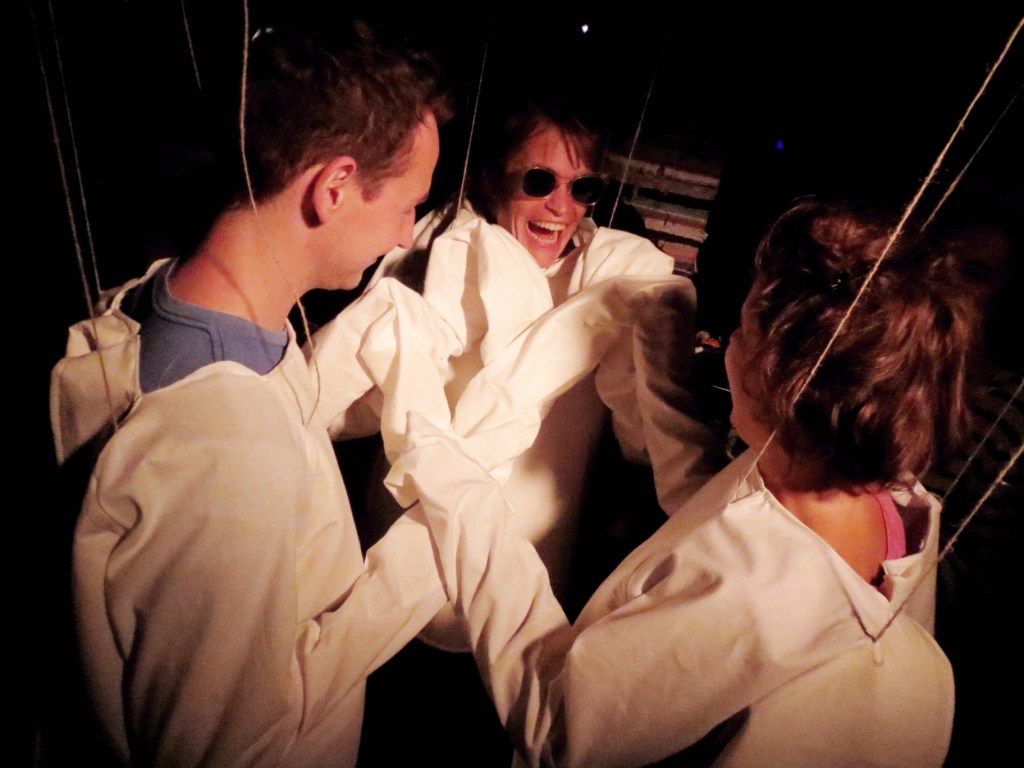
  • Gruppenzwangsjacke

    Gruppenzwangsjacke

    ‘Und jetzt alle!’
    A.L.E. | Angela Neumair, Lea Wilsdorf, Elena Carr

  • Gehschreibe

    Gehschreibe


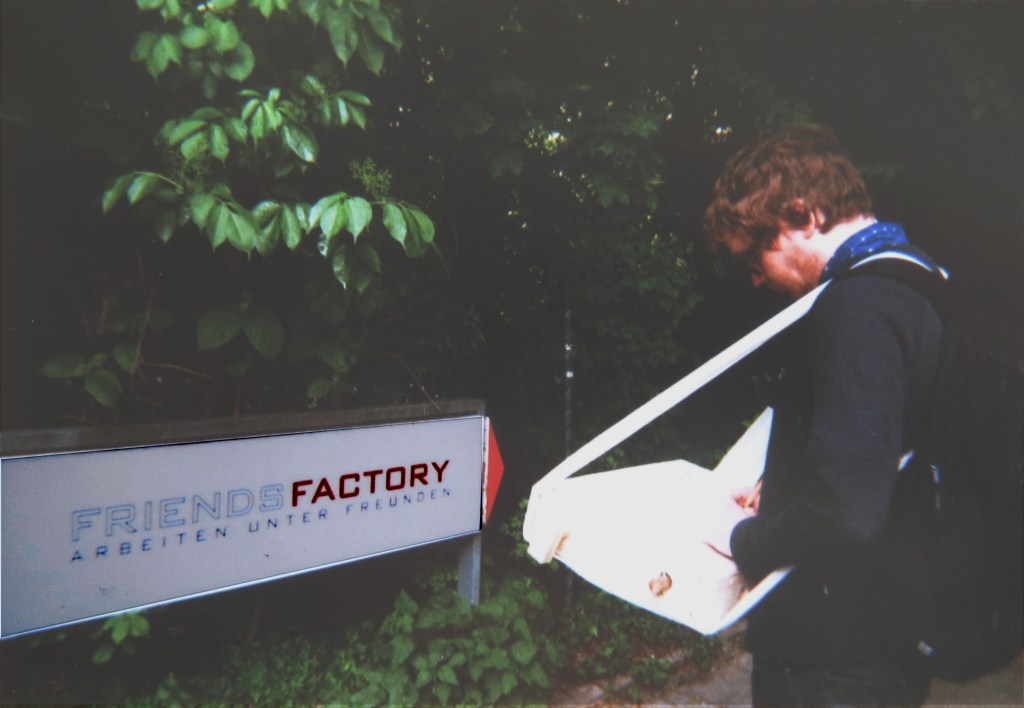
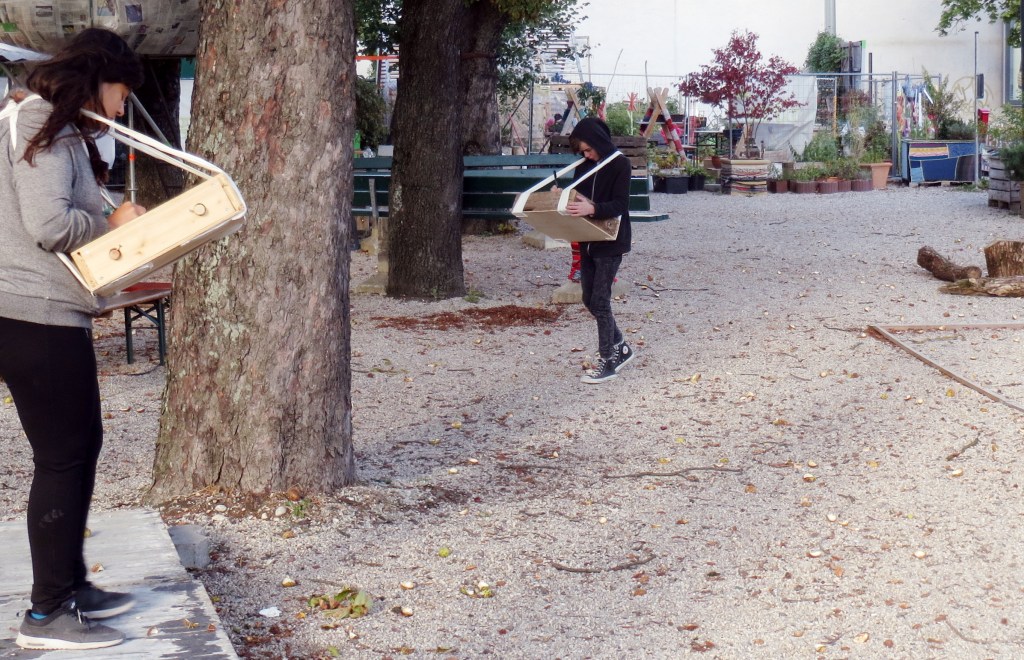
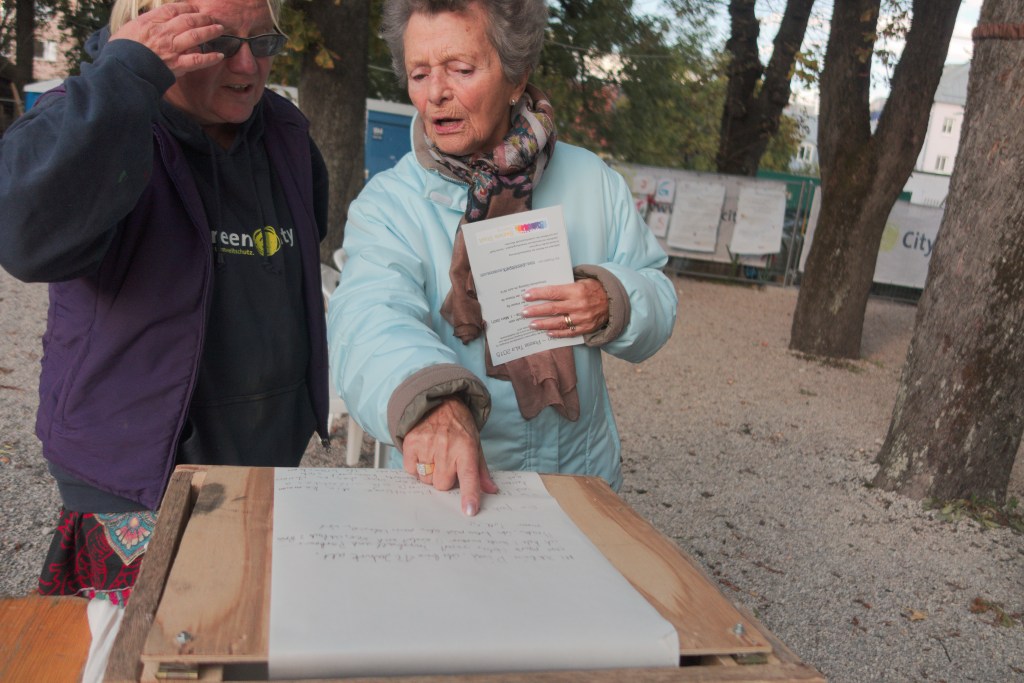
    Gehschreibe | Elena Carr and Jonas Carr

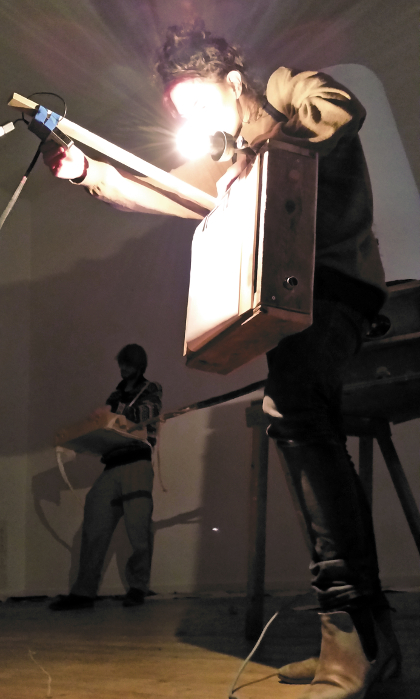
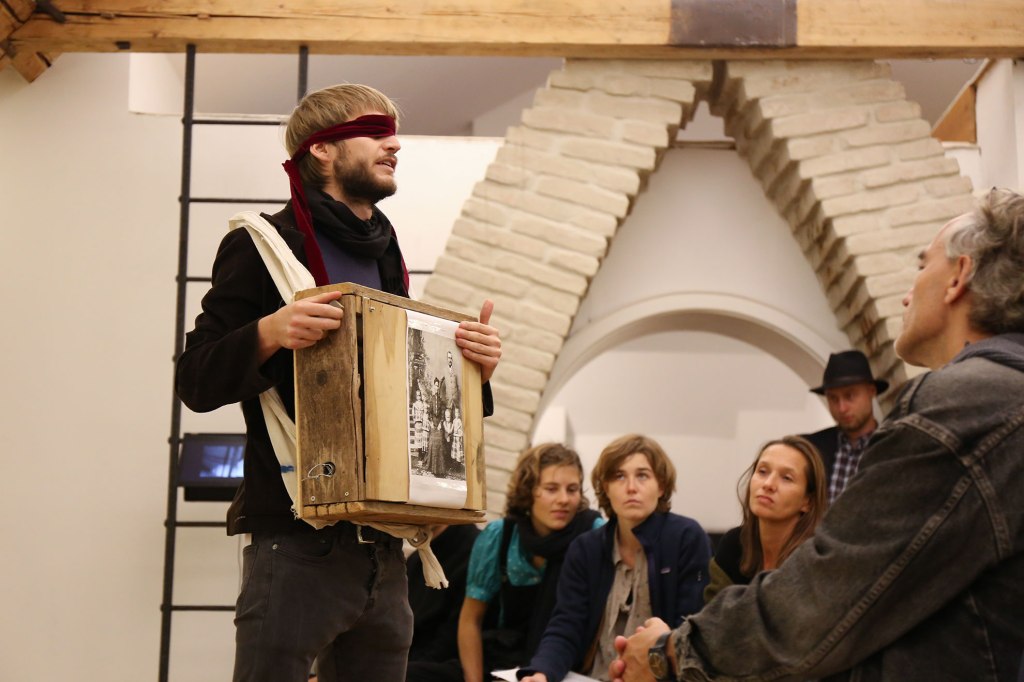
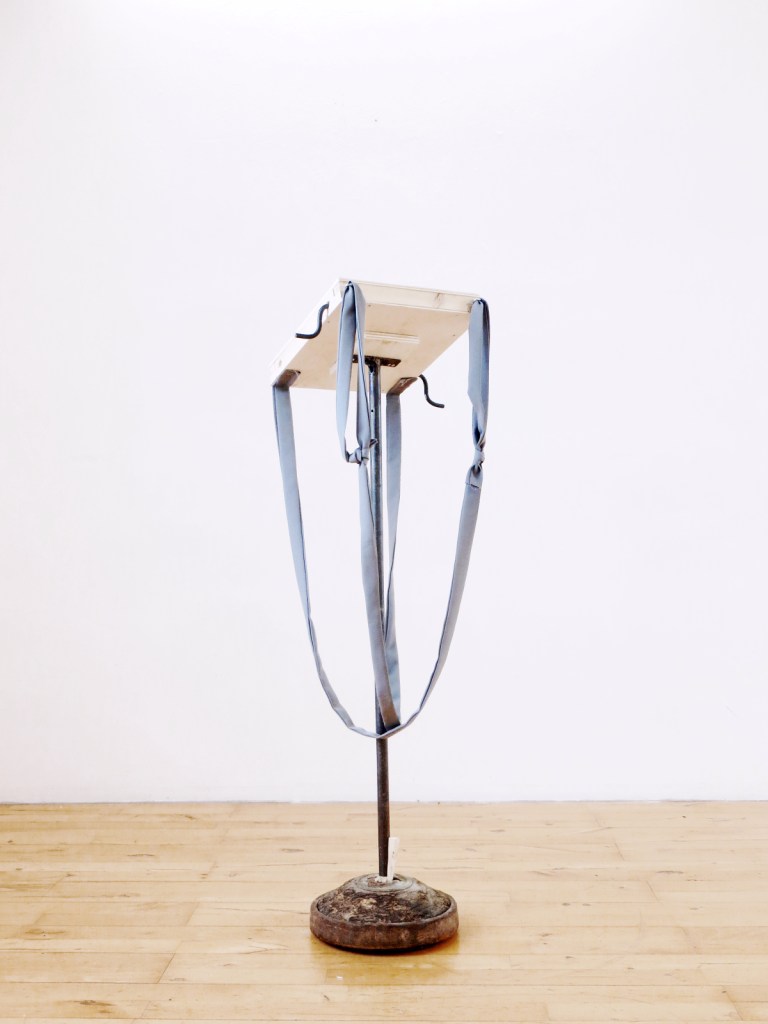
    >> Elena Carr’s artistic medium is space, whereby her sculptural spectrum is oriented less towards specific materials than towards aesthetic potentials of perception and interpretation. She usually develops her objects and installations through various stages and media experimental arrangements, then presents them in different contexts, sometimes as autonomous sculptures, often as scenographic installations for performances or artistic video. An example of this multimedia approach is her so-called Gehschreibe Apparat, a bricolage-style vendor’s tray with various docking stations for analogue and digital apps for spontaneous recording and playback of audiovisual events. A vehicle that is both a costume reference to Oskar Schlemmer‘s Triadic Ballet and Jean Tinguely‘s Metamatics and an ironic commentary on the society of control, as seen in the works of Pierre Huyghe. <<

  • Where the fuck is wonderland?

    Where the fuck is wonderland?

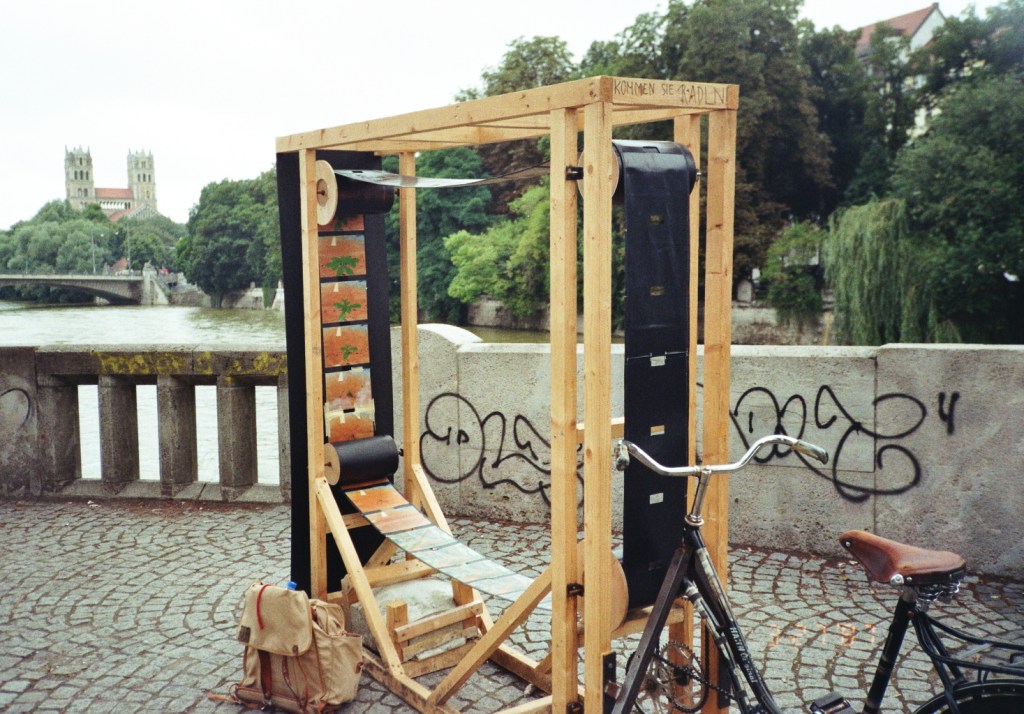
    FAHRRADKINO


    with Franziska Wirtensohn, Michael Wittmann
    Isarbalkon Corneliusbrücke, Munich 2014

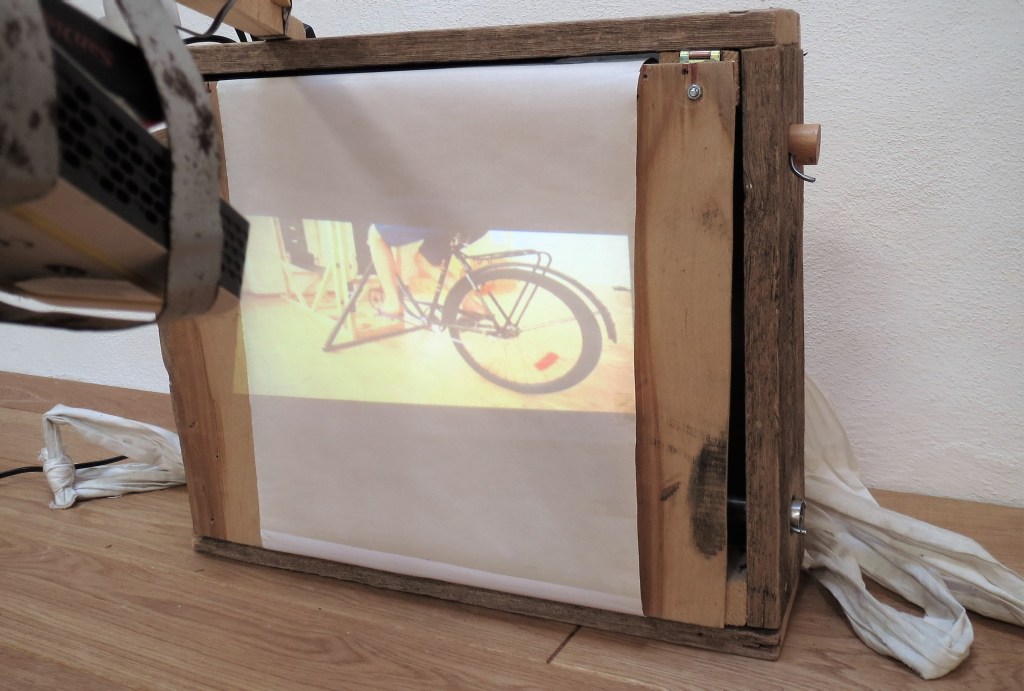
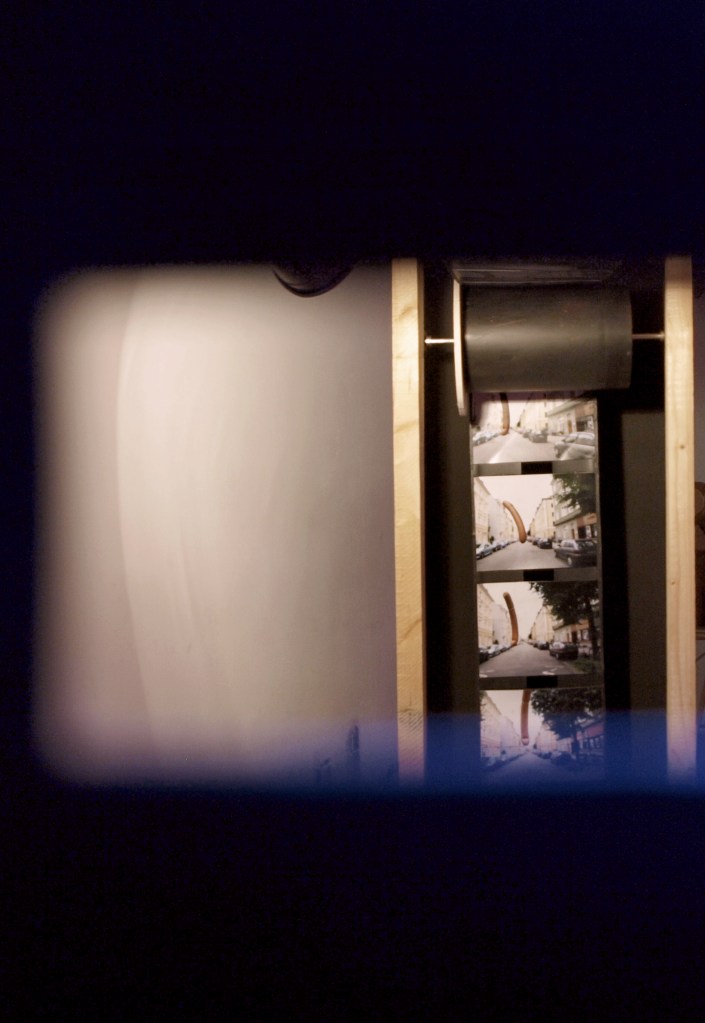
    Film: Intro Peter Lustig [33 single frames]

    The Show you dare not miss

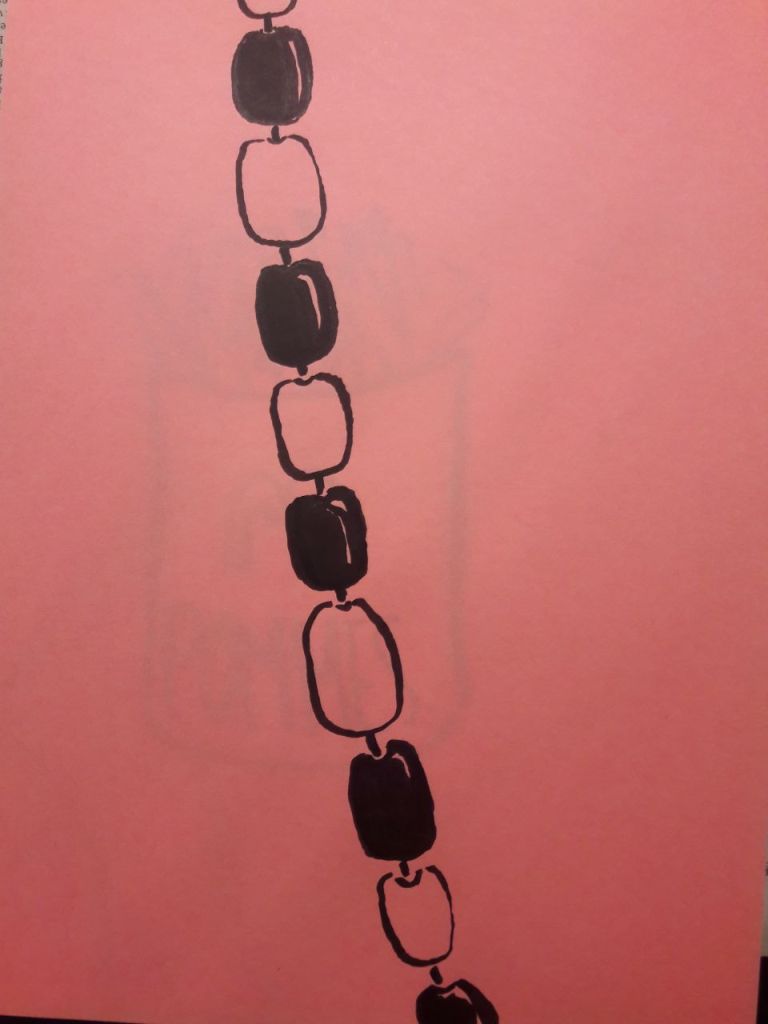
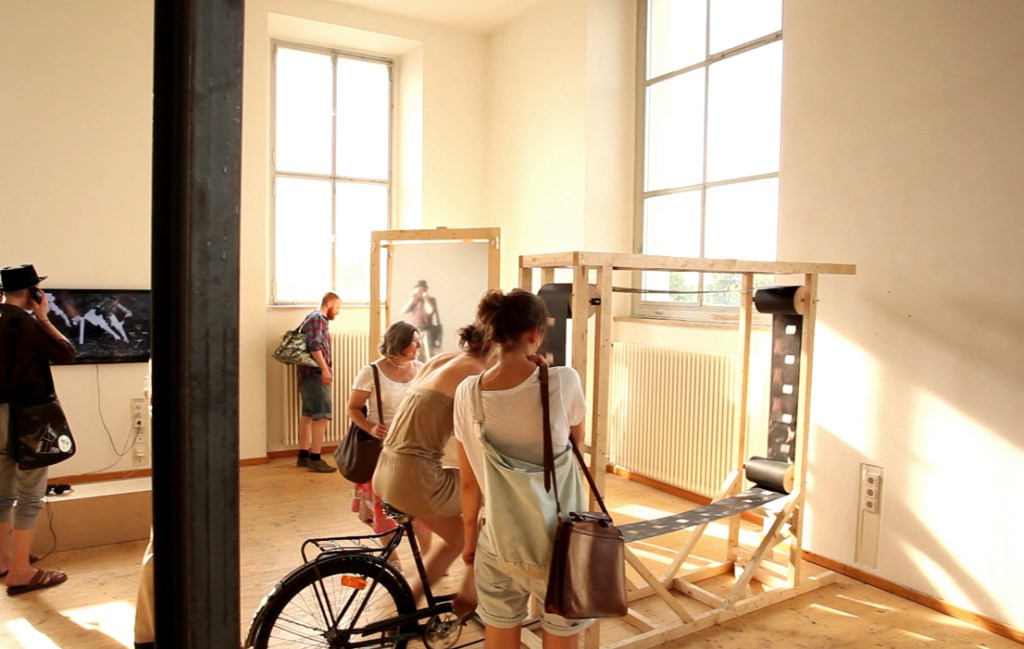
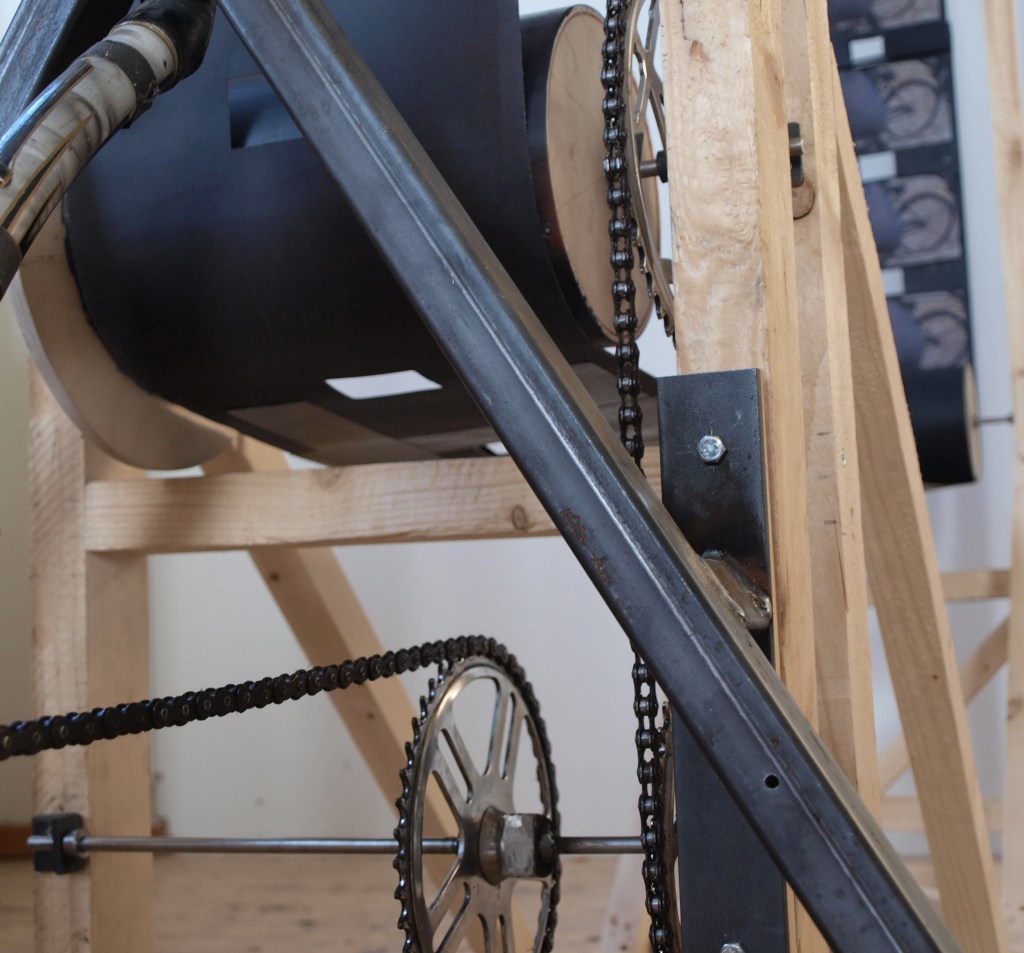
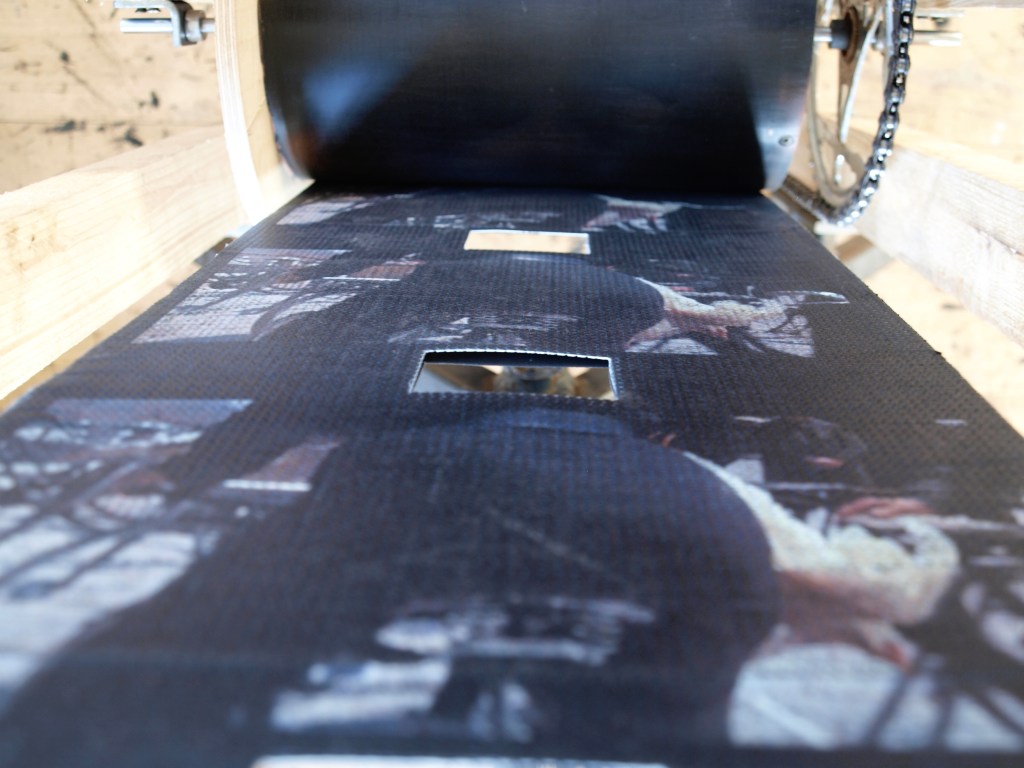
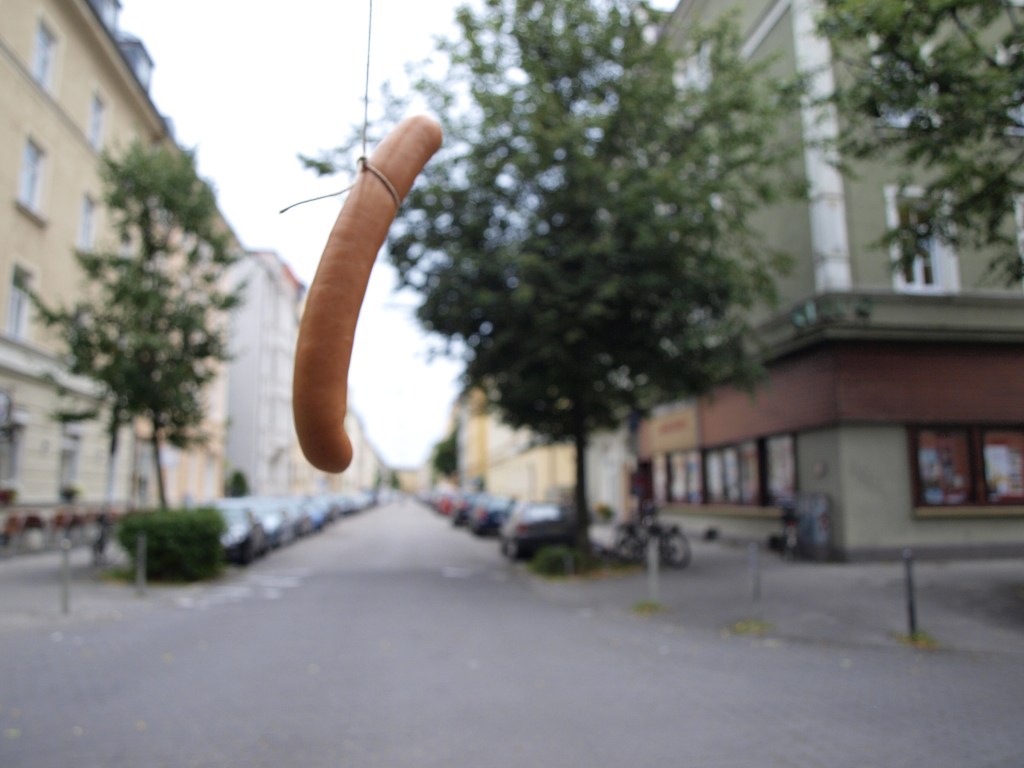
    The visitor pedals the old bicycle. With the help of the stroboscopic effect, the illusion of a continuous movement is created. To run for something can be experienced while pedalling. On interchangeable film strips you can see Fellini’s gaze, in another version you follow a sausage on a hook, like a donkey on a carrot. Rotating around the axis, turning around the centre, circling around the target.
    Access to film sequences, as we know them from the cinema – the illusion machine – is provided. The object that comes to life only functions through the action of the viewer, who becomes the player. They themselves drive their own illusion machinery.
    Step backwards or forwards? Step closer! The sequence of images is set in motion. A bicycle ride – moving, struggling, rotating is simulated. Speed is self-determined. People pedal along according to their own ideas. Who is the donkey in here?


    FRAGENGLOCKE


    >>

    Do you hope in view of the world situation:
    a. For reason?
    b. For a miracle?
    c. That things will continue as before?

    Do you usually know what you hope for?

    Suppose you distinguish between your own hopes and the hopes that others (parents, teachers, comrades, lovers) have for you: Do you feel more depressed when the former or when the latter are not fulfilled?

    <<

    15 Questions from the Questionnaire by Max Frisch in German language
    Spoken by Peter Weiss


    Fragenglocke, sound installation
    with Franziska Wirtensohn, Michael Wittmann | Bonnet: Michaela Andrae
    Exhibition view: Annual Exhibition of the Academy of Fine Arts Munich 2013

  • Ash wednesday of the artists

    Ash wednesday of the artists

    Photo Hans-Rudolf Schulz

    Die Welt Kompakt | 2014

    Visual and spatial design Elena Carr, Franziska Wirtensohn, Michael Wittmann
    Dramaturgy, Reading Maximilian Dorner
    With support in red uniform
    Elisabeth Altnöder, Michaela Andrae, Larissa Böhm, Cedric Carr, Jonas Carr, Matthias Daufratshofer, Katharina Deml, Nora Endrich, Elias Finsterlin, Jan Hashagen, Teresa Hörl, Viola Relle, Katharina Schimpf, Karla Ströbele, Linda Tepfer, Tilo Weber, Raphael Weilguni, Bonifaz Weiß, Lea Wilsdorf, Christine Zehntner
    Live Documented by Bayerisches Fernsehen
    Frauenkirche Munich, 2014